Assembly Magazine logo
search
Ask ASSEMBLY AI
cart
facebook twitter linkedin youtube
  • Sign In
  • Create Account
  • Sign Out
  • My Account
Assembly Magazine logo
  • TRENDS
    • Ask ASSEMBLY AI
    • Trends
    • News
    • New Products
  • INDUSTRIES
    • Aerospace
    • Appliance
    • DFMA Assembly
    • Medical Devices
    • Green Manufacturing
    • Lean Manufacturing
    • Machinery Assembly
    • Electronics Assembly
    • Automotive
  • TECHNOLOGIES
    • Adhesives & Dispensing
    • Assembly Presses
    • Automated Assembly Systems
    • Manufacturing Management
    • Manufacturing Software
    • Motion Control
    • Screwdriving & Riveting
    • Robotics
    • Test & Inspection
    • Plastics & Metal Welding
    • Wire Processing
    • Workstations
  • AUTONOMOUS & ELECTRIC MOBILITY
    • AEM Magazine Archives
    • Autonomy
    • Electrification
    • Mobility Services
    • Assembly & Testing
    • AV/EM News
  • MEDIA
    • Ask ASSEMBLY AI
    • Podcasts
    • Assembly News Now
    • Assembly TV
    • Webinars
    • eBooks
  • EVENTS
    • Calendar
    • The ASSEMBLY Show
  • MORE
    • Exclusives >
      • Plant of the Year
      • Capital Spending
    • Buyers Guide >
      • Supplier Insights
    • Classifieds
    • Featured Products
    • Newsletters
    • Store
    • White Papers
    • Columns
    • Sponsor Insights
  • INFOCENTER
    • Assembly & Test Solutions
  • EMAGAZINE
    • eMagazine
    • Archive Issues
    • Advertise
    • Contact Us
    • Sign Up
ColumnsThe Editorial

A different perspective on trade agreements

By John Sprovieri
September 7, 2016

There’s been a lot of alarmism regarding trade agreements on the presidential campaign trail.

Republican candidate Donald Trump has threatened to withdraw from the North American Free Trade Agreement if Mexico and Canada do not agree to renegotiate it. He has pledged to label China a currency manipulator and impose punitive tariffs on Chinese goods.

Democratic candidate Hillary Clinton has also vowed to impose tariffs on countries that “break the rules.” She has promised to appoint a chief trade prosecutor (a new office) and triple the number of trade enforcement officers.

Both candidates have denounced the controversial Trans-Pacific Partnership trade deal championed by President Obama.

Given the over-the-top rhetoric, you might be surprised to learn that one trade agreement seems to be working.

Four years ago, the U.S.-Colombia Trade Promotion Agreement (CTPA) went into effect. The pact provided for protection of intellectual property rights, equal access for services exports, equal access to government procurement opportunities, and elimination of tariffs. When it took effect in 2012, more than 80 percent of U.S. exports of consumer and industrial products to Colombia immediately became duty-free; the remaining tariffs are to be phased out over 10 years.

So far, the affects have been positive for both countries. In 2011, the year before the CTPA, U.S. goods exports to Colombia totaled $14.3 billion. Our exports reached a high of $20.1 billion in 2014, but fell to $16.3 billion in 2015, primarily due to falling oil prices. Even with that drop, U.S. exports to Colombia have seen a growth rate of 14 percent over the past four years, compared to 1.4 percent growth for U.S. exports worldwide.

Today, Colombia is our 20th largest goods export partner and the third largest in Latin America behind Mexico and Brazil. Manufacturers and farmers, in particular, have benefitted. Manufacturing exports grew from $13.2 billion to $14.5 billion, an increase of 9.8 percent. Agriculture and livestock exports doubled, from $648 million to $1.3 billion.

Before the CTPA, U.S. exporters had seen their share of the Colombian market decline year after year. In 2009, U.S. exports made up 29 percent of Colombian imports, and by 2012, the U.S. share had dropped to a low of 24 percent. Since the CTPA, U.S. market share in Colombia has rebounded, reaching 29 percent in 2015.

At the same time, the overall value of U.S. goods imports from Colombia decreased by 39 percent, from 2011 to 2015, primarily due to falling oil prices. The value of mineral fuel imports from Colombia dropped from $16.8 billion in 2011 to $8.1 billion in 2015, though the quantity of exports has remained relatively steady.

Other Colombian industries performed better. Imports of live plants, especially cut flowers, increased by 8 percent, imports of non-knit apparel increased by 17 percent, and imports of aluminum products tripled.

I’m not an economist, nor am I making any blanket endorsement of free trade here. But the next time you hear either candidate issue dire warnings about the perils of free trade, take them with a hefty grain of salt.

KEYWORDS: international trade U.S. manufacturing

Share This Story

Looking for a reprint of this article?
From high-res PDFs to custom plaques, order your copy today!

John has been with ASSEMBLY magazine since February 1997. John was formerly with a national medical news magazine, and has written for Pathology Today and the Green Bay Press-Gazette. John holds a B.A. in journalism from Northwestern University, Medill School of Journalism.

Recommended Content

JOIN TODAY
To unlock your recommendations.

Already have an account? Sign In

  • Made in the U.S.A.

    Consumer Products Manufacturing: Made in the USA

    Supply chain lessons learned during the coronavirus...
    Automated Assembly Systems
    By: Austin Weber
  • Best Practices for Press-Fit Assembly

    Best Practices for Press-Fit Assembly

    In manufacturing, ironclad formulas for success are hard...
    Assembly Presses
    By: Jim Camillo
  • aem0523leader-tesla1.jpg

    Tesla Rethinks the Assembly Line

    Engineers at Tesla Inc. have developed a new process that...
    Industries
    By: Austin Weber
Manage My Account
  • eMagazine Subscription
  • Assembly Newsletters
  • Online Registration
  • Subscription Customer Service
  • Manage My Preferences

More Videos

Sponsored Content

Sponsored Content is a special paid section where industry companies provide high quality, objective, non-commercial content around topics of interest to the ASSEMBLY audience. All Sponsored Content is supplied by the advertising company and any opinions expressed in this article are those of the author and not necessarily reflect the views of ASSEMBLY or its parent company, BNP Media. Interested in participating in our Sponsored Content section? Contact your local rep!

close
  • ultrasonic welding
    Sponsored bySonobond Ultrasonics

    Engineering Efficiency in High-Performance Assembly: How Ultrasonic Welding Enhances Throughput, Reliability and Quality

  • UV curing system
    Sponsored byDymax

    Why UV Intensity Alone Doesn’t Define Curing Performance

  • wooden pallets
    Sponsored byLEAN Manufacturing Products

    Eliminating Waste on the Shop Floor: Applying Lean Principles to Improve Manufacturing Efficiency

Popular Stories

ASSEMBLY News Now, episode-30: Volvo Redesigns EV Manufacturing

Volvo Redesigns EV Manufacturing

Boeing CEO Kelly Ortberg announces 1 billion investment

Boeing Plans $1 Billion Wichita Investment, Workforce Training Center

GE Appliances Worker on Line

GE Appliances Expands Factory AI With 800 Gemini Enterprise Agents

Watch the latest episode of ANN now!

Events

July 24, 2025

From Shop Floor to CFO: How Manufacturers Are Closing the Loop Between Operations and Finance

On Demand Learn how manufacturers are bridging the gap between the shop floor and ERP systems to gain real-time visibility, streamline operations, and kick-start digital transformation—without waiting years.

Sponsored by:

PicoStratusGreen
July 30, 2025

Buffer Analysis and Design Fundamentals for Manufacturing Excellence

On Demand In this presentation, Dr. Herman Tang shares practical insights from his industry experience and research on buffer management in manufacturing operations.

View All Submit An Event

Poll

Difficult Assembly Processes

Which assembly process gives you the most difficulty?
View Results Poll Archive

Products

Manufacturing Cost Policy Deployment (MCPD) Profitability Scenarios: Systematic and Systemic Improvement of Manufacturing Costs

Manufacturing Cost Policy Deployment (MCPD) Profitability Scenarios: Systematic and Systemic Improvement of Manufacturing Costs

See More Products
Register for webinar - Modernizing Automotive Assembly: Why Upgrading Legacy MES is a Business Imperative

Related Articles

  • NAM Testimony: Trade Agreements Mean Manufacturing Jobs

    See More
  • Premier 6-15.jpg

    Premier Marine Moving its Headquarters to a Different MN Location

    See More
  • A Good Start on US-China Trade Deal

    See More

Related Products

See More Products
  • 4 perspective.jpg

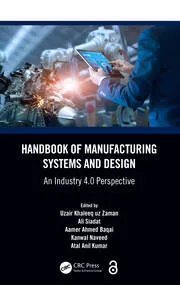
    Handbook of Manufacturing Systems and Design: An Industry 4.0 Perspective

  • Kaizen Assembly: Designing, Constructing, and Managing a Lean Assembly Line

See More Products

Related Directories

  • ON Semiconductor

×

Never miss the latest news and trends driving the manufacturing industry

Stay in the know on the latest assembly trends.

JOIN TODAY!
  • RESOURCES
    • Advertise
    • Contact Us
    • Directories
    • Manufacturing Division
    • Store
    • Want More?
  • SIGN UP TODAY
    • Create Account
    • eMagazine
    • Newsletters
    • Customer Service
    • Manage Preferences
  • SERVICES
    • Marketing Services
    • Reprints
    • Market Research
    • List Rental
    • Survey/Respondent Access
  • STAY CONNECTED
    • LinkedIn
    • Facebook
    • Instagram
    • YouTube
    • X (Twitter)
  • PRIVACY
    • PRIVACY POLICY
    • TERMS & CONDITIONS
    • DO NOT SELL MY PERSONAL INFORMATION
    • PRIVACY REQUEST
    • ACCESSIBILITY

Copyright ©2026. All Rights Reserved BNP Media, Inc. and BNP Media II, LLC.

Design, CMS, Hosting & Web Development :: ePublishing