Assembly Magazine logo
search
Ask ASSEMBLY AI
cart
facebook twitter linkedin youtube
  • Sign In
  • Create Account
  • Sign Out
  • My Account
Assembly Magazine logo
  • TRENDS
    • Ask ASSEMBLY AI
    • Trends
    • News
    • New Products
  • INDUSTRIES
    • Aerospace
    • Appliance
    • DFMA Assembly
    • Medical Devices
    • Green Manufacturing
    • Lean Manufacturing
    • Machinery Assembly
    • Electronics Assembly
    • Automotive
  • TECHNOLOGIES
    • Adhesives & Dispensing
    • Assembly Presses
    • Automated Assembly Systems
    • Manufacturing Management
    • Manufacturing Software
    • Motion Control
    • Screwdriving & Riveting
    • Robotics
    • Test & Inspection
    • Plastics & Metal Welding
    • Wire Processing
    • Workstations
  • AUTONOMOUS & ELECTRIC MOBILITY
    • AEM Magazine Archives
    • Autonomy
    • Electrification
    • Mobility Services
    • Assembly & Testing
    • AV/EM News
  • MEDIA
    • Ask ASSEMBLY AI
    • Podcasts
    • Assembly News Now
    • Assembly TV
    • Webinars
    • eBooks
  • EVENTS
    • Calendar
    • The ASSEMBLY Show
  • MORE
    • Exclusives >
      • Plant of the Year
      • Capital Spending
    • Buyers Guide >
      • Supplier Insights
    • Classifieds
    • Featured Products
    • Newsletters
    • Store
    • White Papers
    • Columns
    • Sponsor Insights
  • INFOCENTER
    • Assembly & Test Solutions
  • EMAGAZINE
    • eMagazine
    • Archive Issues
    • Advertise
    • Contact Us
    • Sign Up
IndustriesColumnsMedical Devices AssemblyMotion ControlRobotics AssemblyOn Campus

Vanderbilt Is at the Forefront of Robotic Surgery

By Austin Weber
September 8, 2016

Robots are used in many large hospitals to deliver supplies and assist doctors with delicate surgical procedures. In the future, robotic surgery will become the routine rather than the exception.

Some of those tools of tomorrow are being developed today at Vanderbilt University’s Medical Engineering and Discovery Lab (MED). It is one of several labs within the Vanderbilt Institute in Surgery and Engineering, an interdisciplinary R&D initiative.

“We are a part of the mechanical engineering department, but we also work closely with physicians at the Vanderbilt Medical Center,” says Robert Webster, an associate professor of mechanical engineering who serves as director of MED.

“The lab is a place where doctors and engineers work side by side to create new lifesaving medical technologies,” adds Webster. “We design and construct devices to make interventional medicine more accurate, less invasive and more effective. Robots have a great deal of potential in making surgery better, so a relatively large percentage of our projects are [focused in that area].

“With a world-class medical center a five-minute walk from the lab, we are often in operating rooms observing surgical procedures and conducting experiments with the devices we build,” Webster points out. “We also patent our work, which enables us to transfer it to commercial products, amplifying its real-world impact.”

MED projects in the past have focused on gastrointestinal surgery, interventional pulmonology, neurosurgery, otolaryngology and urologic surgery. “We also remain on the lookout for new clinical challenges within the body where we can improve the standard of care using engineering,” says Webster, who established the lab in 2008.

Current projects include a surgical robot with tentacle-like, needle-diameter arms that removes tumors from the center of the head through the nose; a parallel robot that reduces invasiveness in cochlear implant surgery, which restores hearing to the deaf; and robotic systems to improve lung and prostate surgery.

“We often combine medical images, mechanics-based models, and advanced sensors and actuators to help doctors treat their patients more effectively,” explains Webster.

“Graduate and undergraduate students in the MED lab receive a unique educational experience in which they work side by side with surgeons,” adds Webster. “They are encouraged to pursue not only ongoing lab projects, but also their own ideas as they learn to be innovators in surgical engineering and robotics.”

A surgical robot with a tiny mechanical wrist developed by Webster and his colleagues was recently cited by The Wall Street Journal as one of six “emerging technologies that could have a big impact on new medicine in coming years”

The robot consists of an arm made of tiny concentric tubes that become smaller as they extend out, similar to a radio antenna, with a mechanical wrist at the end. The wrist is less than 0.0625-inch thick and can bend up to 90 degrees.

“The new device is designed to provide needlescopic tools with a degree of dexterity that they have previously lacked,” claims Webster. “[This will] allow surgeon-operators to perform a number of procedures, such as precise resections and suturing, that haven’t been possible before. It will also allow the use of needles in places that have been beyond their reach, such as the nose, throat, ears and brain.

“We work hard to bridge the traditional ‘valley of death’ between academic benchtop research and widely distributed devices that help a lot of patients,” says Webster. “Accomplishing this requires working with industry partners to commercialize our research.

MED partners with a variety of startup companies, such as Acoustic MedSystems Inc. and Pathfinger Therapeutics Inc. But, it also works with larger firms, such as Intuitive Surgical Inc. and MathWorks Inc.

"We take a patient and surgical problem-centric approach, so we'll build anything that's needed to get the job done," notes Webster. "In determining whether to take on a new project, we look first at the potential clinical impact and second at what particular type of engineering or technology is required.

"Over the next year of two, we plan to introduce courses that will integrate medical students and engineering students on problem-focused teams to innovate [and create new types of] interventional devices and processes," adds Webster.

KEYWORDS: robotics research

Share This Story

Looking for a reprint of this article?
From high-res PDFs to custom plaques, order your copy today!

Austinweber headshot
Austin has been senior editor for ASSEMBLY Magazine since September 1999. He has more than 21 years of b-to-b publishing experience and has written about a wide variety of manufacturing and engineering topics. Austin is a graduate of the University of Michigan.

Recommended Content

JOIN TODAY
To unlock your recommendations.

Already have an account? Sign In

  • Made in the U.S.A.

    Consumer Products Manufacturing: Made in the USA

    Supply chain lessons learned during the coronavirus...
    Automated Assembly Systems
    By: Austin Weber
  • Best Practices for Press-Fit Assembly

    Best Practices for Press-Fit Assembly

    In manufacturing, ironclad formulas for success are hard...
    Assembly Presses
    By: Jim Camillo
  • aem0523leader-tesla1.jpg

    Tesla Rethinks the Assembly Line

    Engineers at Tesla Inc. have developed a new process that...
    Electrification
    By: Austin Weber
Manage My Account
  • eMagazine Subscription
  • Assembly Newsletters
  • Online Registration
  • Subscription Customer Service
  • Manage My Preferences

More Videos

Sponsored Content

Sponsored Content is a special paid section where industry companies provide high quality, objective, non-commercial content around topics of interest to the ASSEMBLY audience. All Sponsored Content is supplied by the advertising company and any opinions expressed in this article are those of the author and not necessarily reflect the views of ASSEMBLY or its parent company, BNP Media. Interested in participating in our Sponsored Content section? Contact your local rep!

close
  • ultrasonic welding
    Sponsored bySonobond Ultrasonics

    Engineering Efficiency in High-Performance Assembly: How Ultrasonic Welding Enhances Throughput, Reliability and Quality

  • UV curing system
    Sponsored byDymax

    Why UV Intensity Alone Doesn’t Define Curing Performance

  • wooden pallets
    Sponsored byLEAN Manufacturing Products

    Eliminating Waste on the Shop Floor: Applying Lean Principles to Improve Manufacturing Efficiency

Popular Stories

ASSEMBLY News Now, episode-30: Volvo Redesigns EV Manufacturing

Volvo Redesigns EV Manufacturing

Robots working at Toyota Plant in Japan

Toyota Deploys Geekplus Robots for Factory Material Handling

can of soda pop

The “Diet Coke Problem” as Manufacturers Face Experts Retiring

Watch the latest episode of ANN now!

Events

July 24, 2025

From Shop Floor to CFO: How Manufacturers Are Closing the Loop Between Operations and Finance

On Demand Learn how manufacturers are bridging the gap between the shop floor and ERP systems to gain real-time visibility, streamline operations, and kick-start digital transformation—without waiting years.

Sponsored by:

PicoStratusGreen
July 30, 2025

Buffer Analysis and Design Fundamentals for Manufacturing Excellence

On Demand In this presentation, Dr. Herman Tang shares practical insights from his industry experience and research on buffer management in manufacturing operations.

View All Submit An Event

Poll

Difficult Assembly Processes

Which assembly process gives you the most difficulty?
View Results Poll Archive

Products

Manufacturing Cost Policy Deployment (MCPD) Profitability Scenarios: Systematic and Systemic Improvement of Manufacturing Costs

Manufacturing Cost Policy Deployment (MCPD) Profitability Scenarios: Systematic and Systemic Improvement of Manufacturing Costs

See More Products
ebook

Related Articles

  • Louisville is at the Forefront of Additive Manufacturing

    See More
  • Assembly Plants at the Forefront of Industry 4.0

    Assembly Plants at the Forefront of Industry 4.0

    See More
  • The Forefront of Automation

    See More

Related Products

See More Products
  • history.jpg

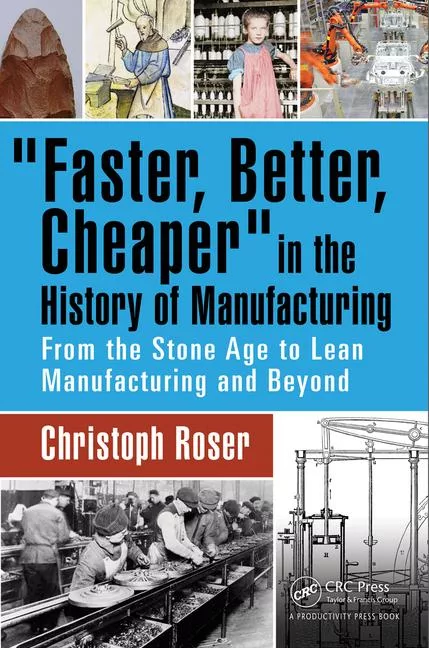
    Faster, Better, Cheaper in the History of Manufacturing: From the Stone Age to Lean Manufacturing and Beyond

  • smart.jpg

    Handbook of Smart Manufacturing Forecasting the Future of Industry 4.0

  • digitalization.jpg

    The Digitalization of the 21st Century Supply Chain

See More Products

Related Directories

  • Automated Assembly Corp.

    Automated Assembly Corporation stands at the forefront of the manufacturing industry, specializing in roll-to-roll assembly capabilities that range from low to high-volume production. Our advanced automation systems are engineered to handle diverse production requirements with precision and efficiency, making us the ideal partner for businesses needing scalable assembly solutions.
  • ATS Automation

×

Never miss the latest news and trends driving the manufacturing industry

Stay in the know on the latest assembly trends.

JOIN TODAY!
  • RESOURCES
    • Advertise
    • Contact Us
    • Directories
    • Manufacturing Division
    • Store
    • Want More?
  • SIGN UP TODAY
    • Create Account
    • eMagazine
    • Newsletters
    • Customer Service
    • Manage Preferences
  • SERVICES
    • Marketing Services
    • Reprints
    • Market Research
    • List Rental
    • Survey/Respondent Access
  • STAY CONNECTED
    • LinkedIn
    • Facebook
    • Instagram
    • YouTube
    • X (Twitter)
  • PRIVACY
    • PRIVACY POLICY
    • TERMS & CONDITIONS
    • DO NOT SELL MY PERSONAL INFORMATION
    • PRIVACY REQUEST
    • ACCESSIBILITY

Copyright ©2026. All Rights Reserved BNP Media, Inc. and BNP Media II, LLC.

Design, CMS, Hosting & Web Development :: ePublishing