Assembly Magazine logo
search
Ask ASSEMBLY AI
cart
facebook twitter linkedin youtube
  • Sign In
  • Create Account
  • Sign Out
  • My Account
Assembly Magazine logo
  • TRENDS
    • Ask ASSEMBLY AI
    • Trends
    • News
    • New Products
  • INDUSTRIES
    • Aerospace
    • Appliance
    • DFMA Assembly
    • Medical Devices
    • Green Manufacturing
    • Lean Manufacturing
    • Machinery Assembly
    • Electronics Assembly
    • Automotive
  • TECHNOLOGIES
    • Adhesives & Dispensing
    • Assembly Presses
    • Automated Assembly Systems
    • Manufacturing Management
    • Manufacturing Software
    • Motion Control
    • Screwdriving & Riveting
    • Robotics
    • Test & Inspection
    • Plastics & Metal Welding
    • Wire Processing
    • Workstations
  • AUTONOMOUS & ELECTRIC MOBILITY
    • AEM Magazine Archives
    • Autonomy
    • Electrification
    • Mobility Services
    • Assembly & Testing
    • AV/EM News
  • MEDIA
    • Ask ASSEMBLY AI
    • Podcasts
    • Assembly News Now
    • Assembly TV
    • Webinars
    • eBooks
  • EVENTS
    • Calendar
    • The ASSEMBLY Show
  • MORE
    • Exclusives >
      • Plant of the Year
      • Capital Spending
    • Buyers Guide >
      • Supplier Insights
    • Classifieds
    • Featured Products
    • Newsletters
    • Store
    • White Papers
    • Columns
    • Sponsor Insights
  • INFOCENTER
    • Assembly & Test Solutions
  • EMAGAZINE
    • eMagazine
    • Archive Issues
    • Advertise
    • Contact Us
    • Sign Up
Appliance AssemblyAutomotive AssemblyMedical Devices AssemblyDFMA AssemblyOn Campus

Louisville is at the Forefront of Additive Manufacturing

By Austin Weber
November 1, 2012

Additive manufacturing is one of the hottest technologies to come along in the last 50 years. It uses three-dimensional printing to transform engineering design files into fully functional components created from glass, metal, plastic or sand.

Leading manufacturers, such as Boeing, Caterpillar, Ford, General Electric, General Motors, Sikorsky and Toyota, are using additive manufacturing to produce a wide variety of prototype parts layer by layer. The University of Louisville’s Rapid Prototyping Center (RPC) has been at the forefront of this technology for almost 20 years.

“We are a joint academic-industrial consortium providing access to world-leading capabilities in additive manufacturing via laser and electron beam powder bed processes for metals, plastics and ceramics,” says Tim Gornet, manager of RPC operations. “Members of the consortium range from Fortune 100 companies to individual inventors.

“[We aid manufacturers] in the entire product development process, including conceptual design, material selection, prototyping, tooling and production, [in addition to] applied and basic research,” adds Gomet. “Getting a quality product to market quickly is critical and correcting design flaws early in that process is essential. [Our] members have used [our facility to save time, money and costly delays in product development].”
In 1993, Louisville became the first U.S. university to buy and operate selective laser sintering equipment. Since then, RPC has funded research in all areas of additive manufacturing.

“This includes the fundamental understanding of the effect of process variables and properties, material development, and design for additive manufacturing and testing,” says Gomet. The RPC works with a broad range of industries, including automotive, aerospace, appliance, medical device and sporting good manufacturers.

As part of Louisville’s J.B. Speed School of Engineering, the Rapid Prototyping Center is equipped with the latest software for solid modeling and part design of new components, in addition to reverse engineering of existing parts. The 8,600-square-foot facility is capable of producing prototype parts and low-volume components using laser sintering, direct metal laser sintering, electron beam melting, ultrasonic consolidation, fused deposition modeling, 3D printing and stereolithography.

There are currently 20 people involved in various additive manufacturing initiatives. “This includes faculty, full-time professional staff, post-doctoral researchers, PhD and Masters students, and cooperative interns,” explains Gomet.
Faculty and staff have been focusing their attention on understanding the issues and challenges of additive manufacturing. “This includes research into the basic physics of the various processes, equipment and process monitoring improvements for closed-loop control feedback and more consistent performance, and advanced designs,” Gomet points out.

“Additive manufacturing can offer engineers far more than prototypes of components—the advantage of almost unlimited geometric flexibility,” claims Gomet. “This allows for parts consolidation to eliminate assembly operations, optimize design performance, and create advanced designs and products that cannot be produced by traditional manufacturing processes.”

Developing ideas and methodologies for engineers to think outside the realm of current manufacturing technologies is a key goal of the Rapid Prototyping Center. “[We] support research and development programs in additive manufacturing and provide student instruction in the application of state-of-the-art technologies,” says Gomet.

Additive manufacturing is an integral part of the curriculum in the mechanical engineering and industrial engineering departments at Louisville. According to Gomet, the RPC is used by students in almost all design courses and is required for Master’s theses and PhD dissertations. The RPC also supports student teams such as the Baja Buggy and SAE Formula competitions.

The University of Louisville offers a course on additive manufacturing and an advanced manufacturing processes course, which focuses heavily on the technology. In addition, additive manufacturing is taught in courses on machine design and product development.

Looking for quick answers on assembly and manufacturing topics? Try Ask ASM, our new smart AI search tool. Ask ASM →

KEYWORDS: additive manufacturing laser sintering prototyping ultrasonics

Share This Story

Looking for a reprint of this article?
From high-res PDFs to custom plaques, order your copy today!

Austinweber headshot
Austin has been senior editor for ASSEMBLY Magazine since September 1999. He has more than 21 years of b-to-b publishing experience and has written about a wide variety of manufacturing and engineering topics. Austin is a graduate of the University of Michigan.

Recommended Content

JOIN TODAY
To unlock your recommendations.

Already have an account? Sign In

  • Made in the U.S.A.

    Consumer Products Manufacturing: Made in the USA

    Supply chain lessons learned during the coronavirus...
    Automated Assembly Systems
    By: Austin Weber
  • Best Practices for Press-Fit Assembly

    Best Practices for Press-Fit Assembly

    In manufacturing, ironclad formulas for success are hard...
    Assembly Presses
    By: Jim Camillo
  • aem0523leader-tesla1.jpg

    Tesla Rethinks the Assembly Line

    Engineers at Tesla Inc. have developed a new process that...
    Automotive Assembly
    By: Austin Weber
Manage My Account
  • eMagazine Subscription
  • Assembly Newsletters
  • Online Registration
  • Subscription Customer Service
  • Manage My Preferences

More Videos

Sponsored Content

Sponsored Content is a special paid section where industry companies provide high quality, objective, non-commercial content around topics of interest to the ASSEMBLY audience. All Sponsored Content is supplied by the advertising company and any opinions expressed in this article are those of the author and not necessarily reflect the views of ASSEMBLY or its parent company, BNP Media. Interested in participating in our Sponsored Content section? Contact your local rep!

close
  • ultrasonic welding
    Sponsored bySonobond Ultrasonics

    Engineering Efficiency in High-Performance Assembly: How Ultrasonic Welding Enhances Throughput, Reliability and Quality

  • UV curing system
    Sponsored byDymax

    Why UV Intensity Alone Doesn’t Define Curing Performance

  • wooden pallets
    Sponsored byLEAN Manufacturing Products

    Eliminating Waste on the Shop Floor: Applying Lean Principles to Improve Manufacturing Efficiency

Popular Stories

ASSEMBLY News Now, episode-30: Volvo Redesigns EV Manufacturing

Volvo Redesigns EV Manufacturing

Boeing CEO Kelly Ortberg announces 1 billion investment

Boeing Plans $1 Billion Wichita Investment, Workforce Training Center

GE Appliances Worker on Line

GE Appliances Expands Factory AI With 800 Gemini Enterprise Agents

Watch the latest episode of ANN now!

Events

July 24, 2025

From Shop Floor to CFO: How Manufacturers Are Closing the Loop Between Operations and Finance

On Demand Learn how manufacturers are bridging the gap between the shop floor and ERP systems to gain real-time visibility, streamline operations, and kick-start digital transformation—without waiting years.

Sponsored by:

PicoStratusGreen
July 30, 2025

Buffer Analysis and Design Fundamentals for Manufacturing Excellence

On Demand In this presentation, Dr. Herman Tang shares practical insights from his industry experience and research on buffer management in manufacturing operations.

View All Submit An Event

Poll

Difficult Assembly Processes

Which assembly process gives you the most difficulty?
View Results Poll Archive

Products

Manufacturing Cost Policy Deployment (MCPD) Profitability Scenarios: Systematic and Systemic Improvement of Manufacturing Costs

Manufacturing Cost Policy Deployment (MCPD) Profitability Scenarios: Systematic and Systemic Improvement of Manufacturing Costs

See More Products
Register for webinar - Modernizing Automotive Assembly: Why Upgrading Legacy MES is a Business Imperative

Related Articles

  • Vanderbilt Is at the Forefront of Robotic Surgery

    See More
  • Assembly Plants at the Forefront of Industry 4.0

    Assembly Plants at the Forefront of Industry 4.0

    See More
  • The benefits of additive manufacturing trump cost

    See More

Related Products

See More Products
  • 0001219.jpeg

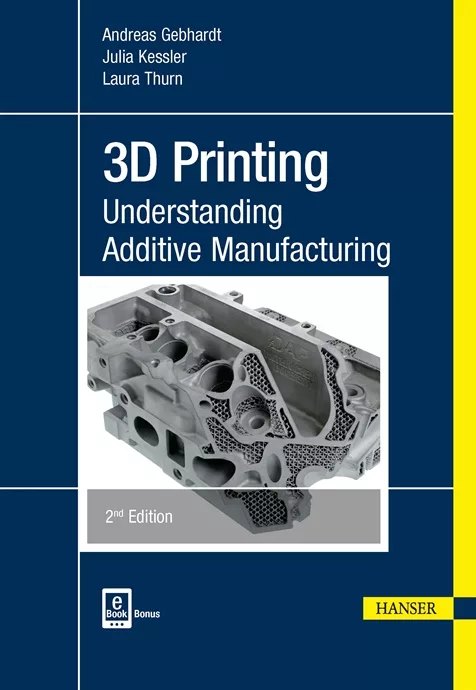
    3D Printing 2E, Understanding Additive Manufacturing

  • additive manu.jpg

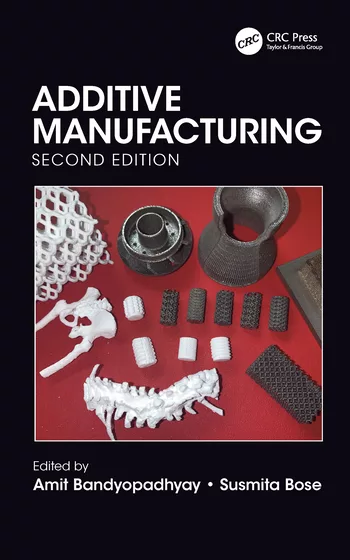
    Additive Manufacturing, Second Edition

  • additive.jpg

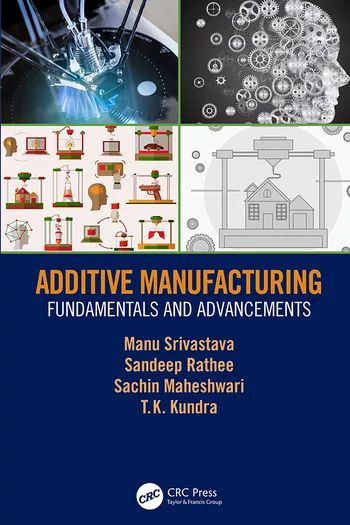
    Additive Manufacturing: Fundamentals and Advancements

See More Products

Related Directories

  • Automated Assembly Corp.

    Automated Assembly Corporation stands at the forefront of the manufacturing industry, specializing in roll-to-roll assembly capabilities that range from low to high-volume production. Our advanced automation systems are engineered to handle diverse production requirements with precision and efficiency, making us the ideal partner for businesses needing scalable assembly solutions.
  • ATS Automation

×

Never miss the latest news and trends driving the manufacturing industry

Stay in the know on the latest assembly trends.

JOIN TODAY!
  • RESOURCES
    • Advertise
    • Contact Us
    • Directories
    • Manufacturing Division
    • Store
    • Want More?
  • SIGN UP TODAY
    • Create Account
    • eMagazine
    • Newsletters
    • Customer Service
    • Manage Preferences
  • SERVICES
    • Marketing Services
    • Reprints
    • Market Research
    • List Rental
    • Survey/Respondent Access
  • STAY CONNECTED
    • LinkedIn
    • Facebook
    • Instagram
    • YouTube
    • X (Twitter)
  • PRIVACY
    • PRIVACY POLICY
    • TERMS & CONDITIONS
    • DO NOT SELL MY PERSONAL INFORMATION
    • PRIVACY REQUEST
    • ACCESSIBILITY

Copyright ©2026. All Rights Reserved BNP Media, Inc. and BNP Media II, LLC.

Design, CMS, Hosting & Web Development :: ePublishing