How to Optimize Backlash in Gear Systems

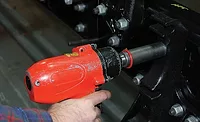
Backlash acts as a buffer to prevent tooth interference, facilitate lubrication, and accommodate thermal expansion and manufacturing imperfections.
Photo courtesy Accu
Backlash in gears plays a pivotal role in the smooth operation and durability of a gear system. When designing a gear system, it’s important to understand what backlash is and why it’s needed.
Backlash refers to the amount of gap between mating gear teeth when the direction of load or motion is reversed. This space allows for the free movement of gear teeth before the opposite tooth faces start to engage. It is a critical parameter in the design and operation of gear assemblies, acting as a buffer to prevent tooth interference, facilitate lubrication, and accommodate thermal expansion and manufacturing imperfections.
Backlash can be viewed as a balancing act in gear design. Too little can lead to gear teeth clashing, creating premature wear, noise and potential failure. On the other hand, excessive backlash introduces play in the gear train, resulting in lost motion, decreased precision and a potential increase in vibration and noise.
Backlash, is therefore a critical design element that impacts the functionality, efficiency and longevity of gear systems.

When designing a gear system, it’s important to understand what backlash is and why it’s needed. Photo courtesy Accu
Why Is Backlash Needed?
Backlash is a deliberate design choice made by engineers to ensure gears operate smoothly and efficiently in all applications. This isn’t to say that all play is engineered, however. Backlash in gears can be attributed to several factors. Understanding these causes is vital for engineers.
There are a number of contributors to backlash in gear systems. These include:
- Manufacturing tolerances and imperfections. No manufacturing process is perfect, and slight deviations from the ideal dimensions are inevitable. These tolerances and imperfections in gear teeth profiles, pitch and spacing contribute to the need for backlash. By designing gears with intentional clearance, engineers can accommodate these small inaccuracies, ensuring gears mesh without interference.
- Thermal expansion. Backlash accommodates the natural expansion and contraction of metal parts due to temperature changes. This prevents binding and wear. This consideration is crucial in applications experiencing significant temperature fluctuations, ensuring gears operate efficiently under varying temperature conditions.
- Elastic deformation. Another factor in backlash is elastic deformation. Under load, gear teeth flex slightly. While typically small, this elastic deformation can be significant in high-load applications. Backlash provides space to allow for this flexure without causing tooth damage or system failure, thereby maintaining the integrity of the gear system under operational stresses.
- Gear lubrication. Proper lubrication is essential for the smooth operation of gears, reducing friction and wear. Backlash creates the space needed for lubricant to flow between gear teeth, ensuring effective lubrication and cooling of the contact surfaces during operation.
- Assembly and alignment. Even with precision engineering, slight tolerance issues in assembly or alignment can occur. Backlash allows for these minor misalignments, ensuring that gears can still engage properly without undue stress on the teeth or bearings, which could otherwise lead to premature wear or failure.
- Wear and tear. Over time, gear teeth can wear down, which can change their size and shape. Backlash mitigates the impact of this wear, allowing gears to continue functioning effectively for longer periods before maintenance or replacement is necessary.

Measuring backlash with precision is essential for diagnosing and correcting issues. Photo courtesy Accu
It is clear to see that backlash in gears is not simply to do with design choices, but it arises from a complex interplay of manufacturing realities, material properties, operational demands and the inevitable wear and tear of mechanical components. Understanding these causes allows engineers to design more robust and reliable gear systems, taking into account the challenges of real-world applications.
Looking for quick answers on assembly and manufacturing topics? Try Ask ASM, our new smart AI search tool. Ask ASM
How to Check if a Gear has Backlash
Determining if a gear has backlash is crucial for maintaining the efficiency and longevity of gear systems. This process identifies the presence of backlash without making precise measurements.
There are numerous ways to check for backlash. First, it can be done via a thorough visual inspection of the gear setup. Engineers should check for signs of spacing between the mating gear teeth when the system is at rest. Although this method doesn’t quantify backlash, visible gaps can indicate its presence, suggesting a closer examination.
Another method is to manually test the gear system by gently rotating or rocking the gear assembly by hand. This method relies on sensing the play or movement between the gears before the opposite teeth make contact. This is a simple way to feel for any looseness or play in the gear train, which is indicative of backlash.

Too little backlash can lead to gear teeth clashing, creating premature wear, noise and potential failure. Photo courtesy Accu
Operational sounds can be a good indicator of backlash too. In a quiet environment, slowly rotate the gears and listen for any clicking or knocking sounds as the gears engage and disengage. Such noises can suggest the presence of too much or too little backlash.
Finally, consult the manufacturer’s guidelines or the design specifications of the gear system. While this won’t directly identify backlash, it does help with understanding the designed-in backlash specifications and determining if a more detailed inspection or measurement is necessary, based on the gear’s operational context and history.
By employing these techniques, it is possible to identify the presence of backlash. Recognizing backlash is the first step towards ensuring gears are operating correctly and within their design specifications, paving the way for further analysis or adjustments to optimize performance and durability.
Measuring Backlash
Once backlash has been confirmed, measuring it with precision is essential for diagnosing and correcting potential issues.
One of the most common and accurate methods for gear backlash measurement is the use of a dial indicator, a precision tool used to measure small distances or angles. While not specifically designed for measuring backlash, the tool has a dial face for reading measurements and houses a small, yet accurate plunger that moves in and out to gauge the distance between surfaces or parts with high accuracy.
For larger gears, or when a backlash measuring tool isn’t available, a lever method can be an alternative. For this, a long lever should be attached to the axle of one of the gears, providing a handle for easier manipulation. Gently apply force to the lever to move the gear in one direction until engagement. This will be the zero point. Apply force in the opposite direction to engage the opposite teeth. Make a note of the angle in degrees between the zero point and this point.

Backlash refers to the amount of gap between mating gear teeth when the direction of load or motion is reversed. This space allows for the free movement of gear teeth before the opposite tooth faces start to engage. Image courtesy Accu
To calculate backlash, it is necessary to convert the angle measurement from degrees to radians. To do this, use this formula: radians = (degrees ×π) / 180. Once the angle of backlash between faces and the pitch diameter is known, you can work out the amount of backlash using this formula: backlash = (backlash angle x pitch diameter) / 2.
For theoretically measuring backlash in gears or in the design phase, CAD software can be used to simulate gear engagements and calculate expected outcomes, offering insights before physical testing.
Comparing to Specifications
After the backlash measurement has been calculated, it’s a good idea to compare it to the gear manufacturer’s specifications or industry standards to determine if it falls within acceptable limits. Adjustments or maintenance may be required if the backlash is outside these parameters.
Measuring backlash in gears accurately is crucial for maintaining the performance, efficiency and longevity of gear systems. When backlash is optimized, engineers can ensure that gear assemblies are properly configured and maintained, minimizing wear and maximizing reliability.
How to Reduce Backlash
Understanding how to reduce gear backlash is crucial for enhancing the precision, efficiency and longevity of gear systems. While it is not advisable to eliminate backlash to zero, there are merits to avoiding unwanted levels. There are practical strategies and adjustments to minimize backlash.
One of the simplest methods to reduce backlash is by adjusting the position of gears relative to each other. This can be done by adding or removing shims behind gear hubs to adjust their axial position, bringing teeth into closer engagement, or axial adjustment. This will allow for the precise axial movement of gears along their shafts to reduce the gap between mating teeth.

Improving the precision of gear manufacturing and assembly processes can reduce backlash. Photo courtesy Accu
Another option is anti-backlash gears, which are specially designed to minimize or eliminate backlash. These gears often incorporate a spring mechanism or split gear design that ensures a constant loaded tooth engagement. While spring-loaded variants are preferred for lighter load gear train, adjustable backlash gears can be operated on the fly. Choosing anti-backlash gears for critical applications can significantly improve system precision and ease of maintenance.
One more option is to use preloaded bearings, which apply a constant force to gear shafts, maintaining the position of gears and reducing the potential for backlash. This method is particularly effective in high-precision applications where even minimal backlash can affect performance.
Finally, improving the precision of gear manufacturing and assembly processes can reduce backlash. This involves producing or purchasing gears with tighter tolerances with minimal tolerance variation. Similarly, engineers can ensure that gears are assembled with meticulous attention to alignment using shims and spacers.
Adjusting for Wear
In systems where gears have already experienced wear, backlash can be reduced by reconditioning gears by machining or replacing worn teeth and then re-shimming. It is also possible to just replace worn-out gears with new ones.
Where systems are controlled by software, such as CNC machines, backlash can be minimized through software compensation algorithms. These algorithms predict and compensate for the effects of backlash, improving the accuracy of motion without physically altering the gear assembly.
For more information on gear systems, visit www.accu.co.uk.
For more information on gear systems and motion control, read these articles:
Self-Lubricating Gears Increase Hard-Drive Efficiency
Gears Aid Actuator Motion on New Mars Rover
Planetary Gearheads Boost Torque, Reduce Speed
Looking for a reprint of this article?
From high-res PDFs to custom plaques, order your copy today!