Adhesives for Assembling Radar Sensors

Adhesive bonding plays a crucial role in manufacturing radar sensors.
Photo courtesy DELO Industrial Adhesives
Over the past 25 years, no aspect of automotive technology has evolved quite as rapidly as advanced driver assistance systems (ADAS). Indeed, technologies such as adaptive cruise control and lane departure warning systems have become standard equipment in many automobiles across most market segments.
Radar is the basis of many ADAS technologies. Forward-facing and rear-corner radar sensors are used for adaptive cruise control, automatic emergency braking, blind spot monitoring and cross-traffic alert systems.
Adhesives play a critical role in assembling ADAS technologies, especially radar sensors. This article will go over the various components of radar sensors, what they do, how they are made, and how adhesives are used to assemble them.
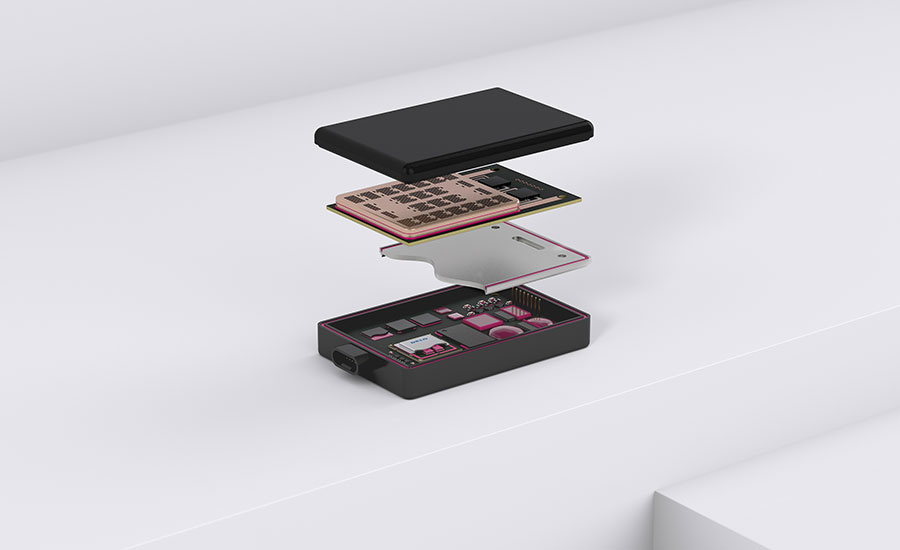
Radar sensors consist of four major parts: the radome, the antenna, the printed circuit board, and the housing. Photo courtesy DELO Industrial Adhesives
Radar sensors consist of four basic components: the radome, the antenna, the printed circuit board (PCB), and the housing. Each of these components often requires more than one bonding process.
Below the radome, antennas are fixed to the PCB with adhesive. Within certain antenna designs, layers can be produced with thin bond lines. These adhesive layers can provide electrical contact or shielding from electromagnetic interference (EMI).
The PCB itself comes with its own functional applications through radar-absorbing or thermally conductive adhesives. Even more bonding tasks come with advanced packaging applications on PCBs, such as encapsulation or pin sealing. The PCB is then bonded inside the housing, and then the housing and radome are bonded to create the final assembly.
Each of these bonding tasks comes with its own adhesive requirements, properties and curing methods for optimal results.
Looking for quick answers on assembly and manufacturing topics? Try Ask ASM, our new smart AI search tool. Ask ASM
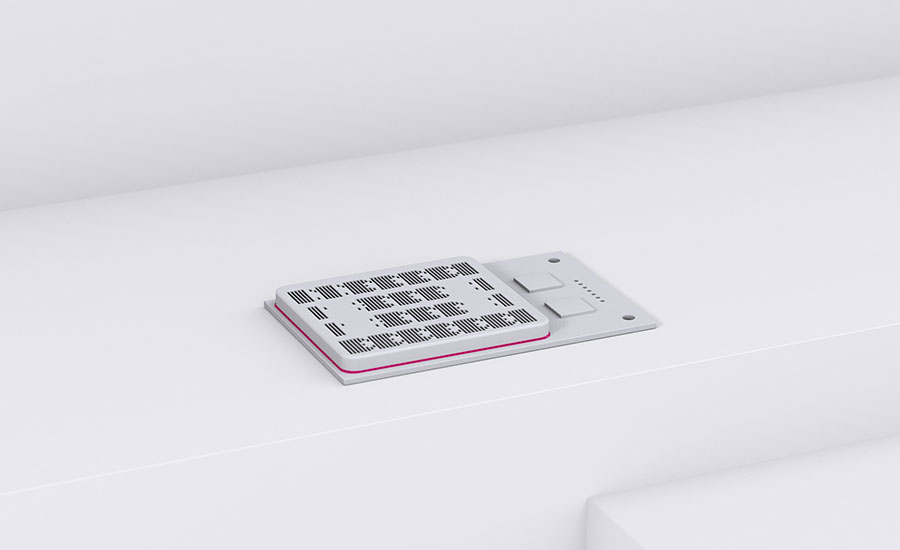
For antenna bonding, dual-initiator adhesive formulas are particularly beneficial. Photo courtesy DELO Industrial Adhesives
Antenna Bonding
For antenna bonding, an ideal adhesive would leverage dual-initiator chemistry. In short, this process consists of preactivation with light followed by additional fixation with UV radiation as a final process step after joining.
By exposing the adhesive to light directly after it’s dispensed onto the surface, preactivation allows the material to begin curing before joining the components, allowing engineers to forego the limitations of heat curing. This offers several advantages, including low energy consumption, low thermal stress, and no need for a time-consuming cool-down phase.
After assembly, a second dose of UV light fully cures the adhesive in just 4 seconds. As a result, the joined components can continue through the assembly process immediately.
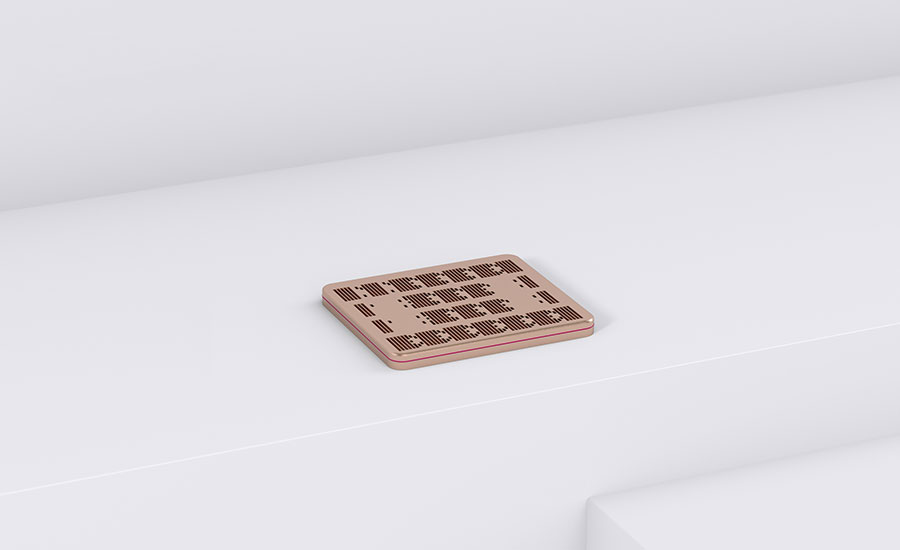
For antenna stacking, the ideal adhesive should enable bond lines less than 20 microns thick. Photo courtesy DELO Industrial Adhesives
Antenna Stacking
As the name of the process suggests, radar antennas are assembled by stacking thin layers one atop the other. Either conductive or nonconductive adhesives are used to fix each layer in place. Specific fillers inside the adhesive enable engineers to achieve a shielding effect against electromagnetic waves. This way, the several channels within 3D antennas can be perfectly isolated from unwanted EMI, ensuring optimal quality of transmitting and receiving signals.
Other important adhesive requirements include excellent peel strength, temperature and humidity resistance, as well as the ability to create bond lines less than 20 microns thick.
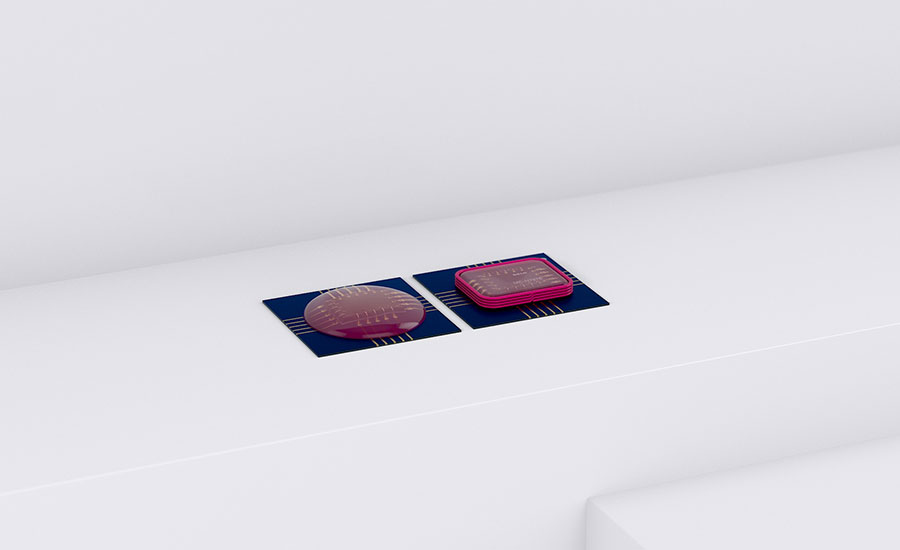
Adhesives can be formulated to improve EMI shielding, contributing to the accuracy of the sensor. Photo courtesy DELO Industrial Adhesives
EMI Shielding
For EMI shielding, using the right adhesives at various levels helps prevent the interaction of parasitic electromagnetic waves, which can influence the accuracy of the sensor or even the functionality of the electronics themselves.
EMI shielding can be achieved in various ways. Different filler materials can make the adhesive either reflect or absorb electromagnetic waves. This can either almost entirely block the wave from sensitive areas or absorb it whilst transferring it into heat. Adhesives can therefore offer multifunctional properties. For example, they can ensure a strong bond while absorbing electromagnetic waves and remaining thermally conductive.
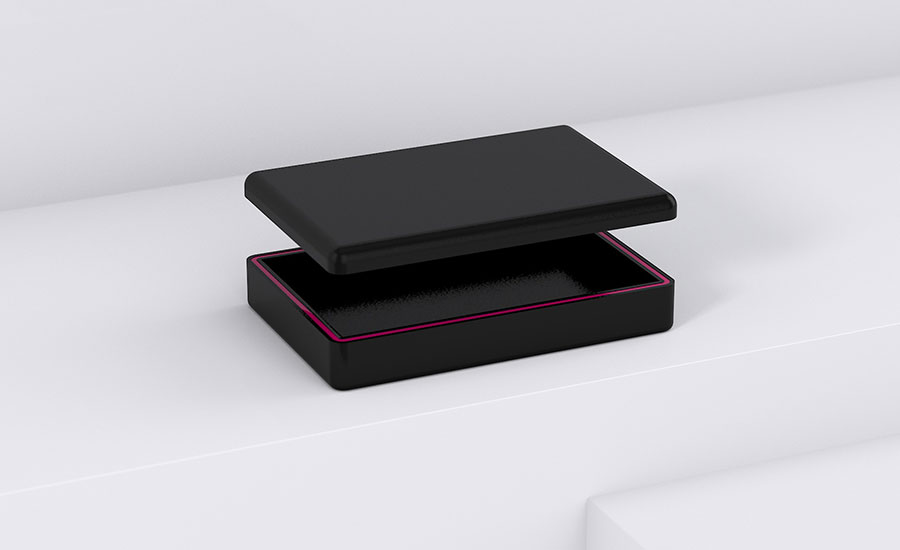
Reliably sealing sensor housings is a simple—but crucial—task for adhesives. Photo courtesy DELO Industrial Adhesives
Housing Bonding and Sealing
For bonding the radar housing, the task is simple: seal the housing and all of its contents, including the PCB and antenna, to the radome. Silicones are the most widely used materials for this. However, special light-activated adhesives are an interesting alternative, demonstrating advanced properties for high-tech applications.
Possessing properties such as 500 percent elongation at tear while offering significantly higher bonding forces than silicones, these modified urethane polymers make housings extremely resistant to pressure or thermal changes. These adhesives also retains their flexibility and structure at temperatures as low as -40 C.
In use, the adhesives are first preactivated via LED light. Brief exposure to UV light with a wavelength of 400 or 460 nanometers activates the adhesive curing process, enabling it to react with ambient humidity. This leaves enough open time for the housing and radome to be joined, reaching functional strength within minutes and allowing for faster processing.
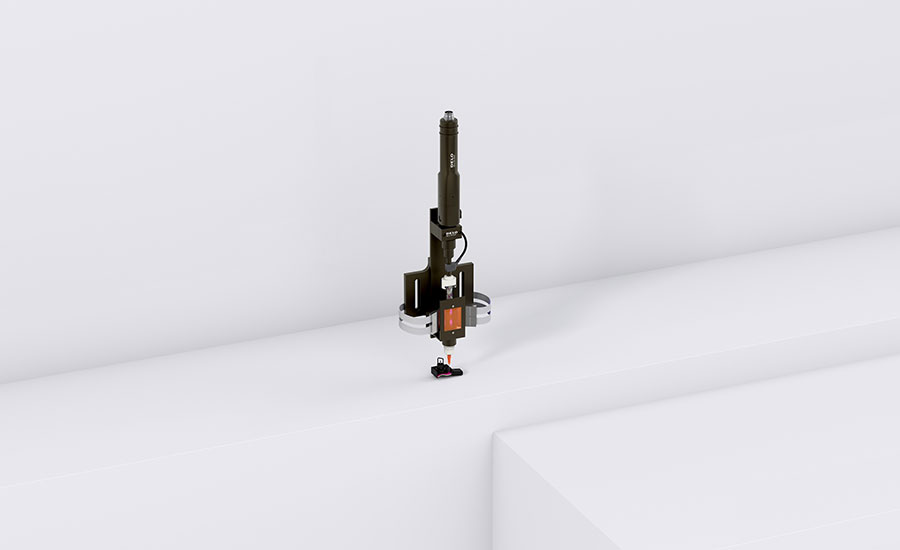
Activation on the Flow offers a continuous 2-in-1 bonding process for several components within a radar sensor (seen here with a temperature and manifold absolute pressure sensor). Photo courtesy DELO Industrial Adhesives
A Promising New Process Option
An emerging new adhesive technology is showing promise for assembly of radar sensors. Known as “activation on the flow (AoF),” the process activates the adhesive as it is being dispensed. In the preactivation stage, it enhances efficiency and precision by offering a continuous 2-in-1 process rather than time-consuming, discrete activation steps, thus increasing throughput. For complex antenna or housing geometries, AoF can also offer maximum design freedom while still being able to leverage light-curing technology in undercuts, for example.
In radar bonding applications, AoF works with the dual-initiator process to further reinforce robust connections. This not only bolsters the mechanical integrity of the radar assembly but also mitigates potential points of failure, ultimately leading to reliable, more durable sensors.
For more information, visit www.delo-adhesives.com.
For more information on adhesives, read these articles:
Transparent Adhesive Assembles Automotive Headlights
What’s New With Epoxies
New Technology for Bonding Automotive Displays
Looking for a reprint of this article?
From high-res PDFs to custom plaques, order your copy today!