Assembly Magazine logo
search
Ask ASSEMBLY AI
cart
facebook twitter linkedin youtube
  • Sign In
  • Create Account
  • Sign Out
  • My Account
Assembly Magazine logo
  • TRENDS
    • Ask ASSEMBLY AI
    • Trends
    • News
    • New Products
  • INDUSTRIES
    • Aerospace
    • Appliance
    • DFMA Assembly
    • Medical Devices
    • Green Manufacturing
    • Lean Manufacturing
    • Machinery Assembly
    • Electronics Assembly
    • Automotive
  • TECHNOLOGIES
    • Adhesives & Dispensing
    • Assembly Presses
    • Automated Assembly Systems
    • Manufacturing Management
    • Manufacturing Software
    • Motion Control
    • Screwdriving & Riveting
    • Robotics
    • Test & Inspection
    • Plastics & Metal Welding
    • Wire Processing
    • Workstations
  • AUTONOMOUS & ELECTRIC MOBILITY
    • AEM Magazine Archives
    • Autonomy
    • Electrification
    • Mobility Services
    • Assembly & Testing
    • AV/EM News
  • MEDIA
    • Ask ASSEMBLY AI
    • Podcasts
    • Assembly News Now
    • Assembly TV
    • Webinars
    • eBooks
  • EVENTS
    • Calendar
    • The ASSEMBLY Show
  • MORE
    • Exclusives >
      • Plant of the Year
      • Capital Spending
    • Buyers Guide >
      • Supplier Insights
    • Classifieds
    • Featured Products
    • Newsletters
    • Store
    • White Papers
    • Columns
    • Sponsor Insights
  • INFOCENTER
    • Assembly & Test Solutions
  • EMAGAZINE
    • eMagazine
    • Archive Issues
    • Advertise
    • Contact Us
    • Sign Up
ColumnsAerospace AssemblyAppliance AssemblyAutomotive AssemblyMedical Devices AssemblyMachinery AssemblyElectronics AssemblyThe Editorial

NAM Proposes ‘Manufacturing Investment Accelerator’
By John Sprovieri
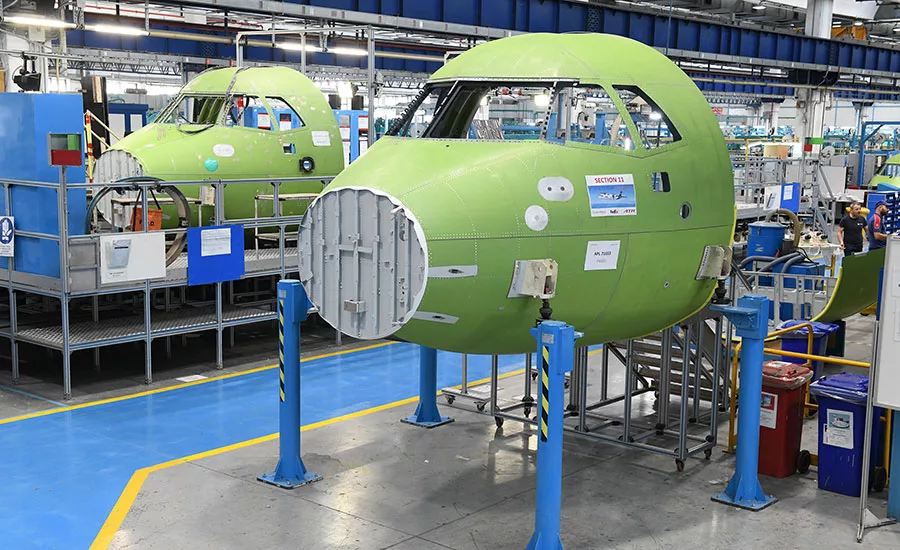
aerospace assembly
Photo courtesy Leonardo SpA

Even if U.S. manufacturing was operating at full capacity, it could produce only 84 percent of the inputs necessary to meet demand.
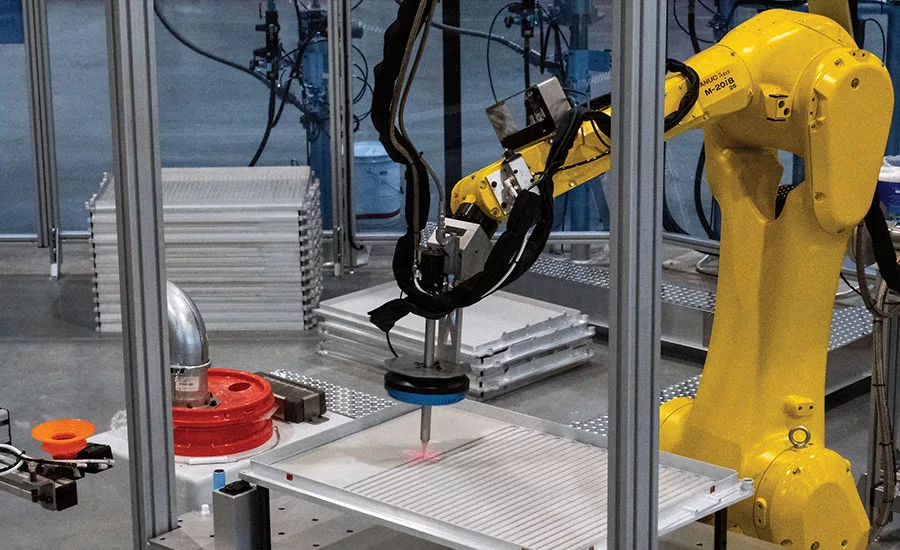
industrial robot
Photo courtesy Lion Electric

The NAM argues that tariffs on industrial machinery, such as robots, that is not made in the U.S. are hindering growth of domestic manufacturing.

aerospace assembly
industrial robot
July 4, 2025

On May 30, the National Association of Manufacturers (NAM) released the results of its Manufacturers’ Outlook Survey for the second quarter of 2025. They were not good

Manufacturers’ optimism has dropped to 55.4 percent, the lowest level since the height of the COVID-19 pandemic in the second quarter of 2020. Trade uncertainty remained the top business concern for the second consecutive quarter, cited by 77 percent of respondents.

Given that the Trump Administration’s shotgun approach to tariffs is the source of that uncertainty, the NAM recently unveiled a proposal, the U.S. Manufacturing Investment Accelerator Program, intended to boost domestic manufacturing investment.

“President Trump’s administration is prioritizing policies that spur more investment and innovation in manufacturing in the U.S.—a goal that manufacturers share. As the administration pursues reciprocal trade deals, the NAM is seeking zero-for-zero tariff outcomes with our top export markets,” says NAM president and CEO Jay Timmons. “As these deals materialize, manufacturers need a runway of predictable access to the critical inputs necessary to make things in America, empowering them to invest, create jobs, grow and compete. The U.S. Manufacturing Investment Accelerator Program is a manufacturing ‘speed pass’ that will unlock long-term investments needed to maintain America’s edge in the global economy.”

The reasoning behind the NAM’s proposal is that the U.S. cannot produce everything and anything domestically. Even if U.S. manufacturing was operating at full capacity—every machine turned on, every job filled—it could produce only 84 percent of the inputs necessary to meet demand. That means that at least 16 percent of manufacturing inputs must be imported to grow domestic manufacturing.

Tariffs on critical manufacturing inputs dramatically increase the cost of these must-use, must-import inputs, thus hindering the very investment needed to grow manufacturing jobs in the U.S. These inputs are raw materials, critical minerals and energy resources—as well as some manufacturing machinery, such as robots and machine tools, that are necessary to enable U.S. production.

“The [accelerator program] offers a way to bring in essential inputs that aren’t produced in the U.S. without added cost burdens—and it rewards manufacturers that expand production, invest in new equipment and create jobs here at home,” adds Timmons. “Every dollar of imported manufacturing inputs has a multiplier effect, generating $1.40 on average in manufacturing output in the U.S. This proposal is a practical, pro-growth approach that supports President Trump’s trade priorities and turns his goal to strengthen manufacturing in America for the long term into reality.”

Specifically, the accelerator program offers the following proposals:

  • The administration should use existing authorities to issue general licenses that allow manufacturers to import essential inputs duty-free. These inputs include raw materials, machinery, components and R&D not readily available domestically. Eligible manufacturers would self-certify under defined criteria and be subject to post-entry verification by U.S. Customs and Border Protection. The Treasury Department, which has experience with general licensing frameworks, would be tasked with implementation.
  • The administration should provide a rebate to offset tariff costs incurred on must-import inputs when manufacturers are investing or expanding manufacturing in the U.S. Rebates would apply to new or expanded manufacturing facilities; technological upgrades and equipment modernization; hiring of full-time manufacturing employees; and domestic R&D expenditures. 
  • To ensure the program remains responsive and effective in generating manufacturing expansion in the U.S., the NAM recommends convening a Quarterly Manufacturing Dialogue between manufacturers and key federal agencies, including U.S. Treasury, the Office of the U.S. Trade Representative, the Department of Commerce, and the Small Business Administration. This forum would allow for real-time feedback, operational updates and continuous improvement of the program to better serve manufacturers in America.

This makes sense to us. What do you think? 

See more articles from our July 2025 issue!

Looking for quick answers on assembly and manufacturing topics? Try Ask ASM, our new smart AI search tool. Ask ASM →

KEYWORDS: manufacturing investment tariffs

Share This Story

Looking for a reprint of this article?
From high-res PDFs to custom plaques, order your copy today!

John has been with ASSEMBLY magazine since February 1997. John was formerly with a national medical news magazine, and has written for Pathology Today and the Green Bay Press-Gazette. John holds a B.A. in journalism from Northwestern University, Medill School of Journalism.

Recommended Content

JOIN TODAY
To unlock your recommendations.

Already have an account? Sign In

  • Made in the U.S.A.

    Consumer Products Manufacturing: Made in the USA

    Supply chain lessons learned during the coronavirus...
    Automated Assembly Systems
    By: Austin Weber
  • Best Practices for Press-Fit Assembly

    Best Practices for Press-Fit Assembly

    In manufacturing, ironclad formulas for success are hard...
    Assembly Presses
    By: Jim Camillo
  • aem0523leader-tesla1.jpg

    Tesla Rethinks the Assembly Line

    Engineers at Tesla Inc. have developed a new process that...
    Assembly and Testing
    By: Austin Weber
Manage My Account
  • eMagazine Subscription
  • Assembly Newsletters
  • Online Registration
  • Subscription Customer Service
  • Manage My Preferences

More Videos

Sponsored Content

Sponsored Content is a special paid section where industry companies provide high quality, objective, non-commercial content around topics of interest to the ASSEMBLY audience. All Sponsored Content is supplied by the advertising company and any opinions expressed in this article are those of the author and not necessarily reflect the views of ASSEMBLY or its parent company, BNP Media. Interested in participating in our Sponsored Content section? Contact your local rep!

close
  • ultrasonic welding
    Sponsored bySonobond Ultrasonics

    Engineering Efficiency in High-Performance Assembly: How Ultrasonic Welding Enhances Throughput, Reliability and Quality

  • UV curing system
    Sponsored byDymax

    Why UV Intensity Alone Doesn’t Define Curing Performance

  • wooden pallets
    Sponsored byLEAN Manufacturing Products

    Eliminating Waste on the Shop Floor: Applying Lean Principles to Improve Manufacturing Efficiency

Popular Stories

ASSEMBLY News Now, episode-30: Volvo Redesigns EV Manufacturing

Volvo Redesigns EV Manufacturing

automated consumer goods assembly system

Best Practices for Cycle Time Optimization

Boeing CEO Kelly Ortberg announces 1 billion investment

Boeing Plans $1 Billion Wichita Investment, Workforce Training Center

Watch the latest episode of ANN now!

Events

July 24, 2025

From Shop Floor to CFO: How Manufacturers Are Closing the Loop Between Operations and Finance

On Demand Learn how manufacturers are bridging the gap between the shop floor and ERP systems to gain real-time visibility, streamline operations, and kick-start digital transformation—without waiting years.

Sponsored by:

PicoStratusGreen
July 30, 2025

Buffer Analysis and Design Fundamentals for Manufacturing Excellence

On Demand In this presentation, Dr. Herman Tang shares practical insights from his industry experience and research on buffer management in manufacturing operations.

View All Submit An Event

Poll

Difficult Assembly Processes

Which assembly process gives you the most difficulty?
View Results Poll Archive

Products

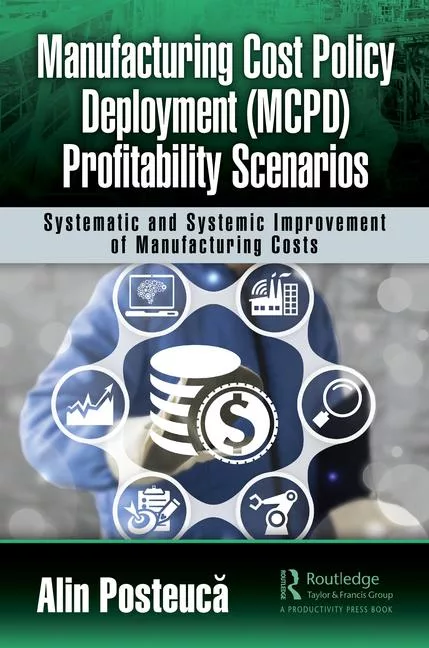
Manufacturing Cost Policy Deployment (MCPD) Profitability Scenarios: Systematic and Systemic Improvement of Manufacturing Costs

Manufacturing Cost Policy Deployment (MCPD) Profitability Scenarios: Systematic and Systemic Improvement of Manufacturing Costs

See More Products
Register for webinar - Modernizing Automotive Assembly: Why Upgrading Legacy MES is a Business Imperative

Related Articles

  • Are Manufacturing Companies a Good Investment? Part I

    See More
  • Increasing Investment

    See More
  • Tougher customer requirements drive investment at Bendix

    Tougher customer requirements drive investment at Bendix

    See More

Related Products

See More Products
  • investment.jpg

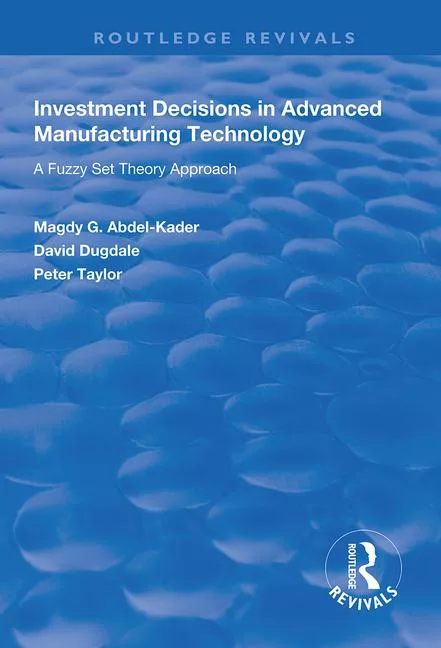
    Investment Decisions in Advanced Manufacturing Technology

  • 9781138498730.jpg

    Manufacturing Cost Policy Deployment (MCPD) Profitability Scenarios: Systematic and Systemic Improvement of Manufacturing Costs

  • history.jpg

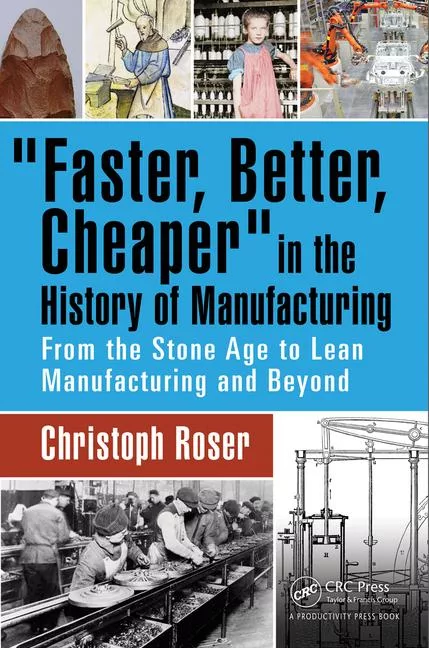
    Faster, Better, Cheaper in the History of Manufacturing: From the Stone Age to Lean Manufacturing and Beyond

See More Products

Events

View AllSubmit An Event
  • April 22, 2026

    Recruiting Basics for Manufacturing Hiring Managers

    On Demand From interviewing and onboarding techniques that help new hires feel like part of the team to approaches for creating a diverse and inclusive workforce, this webinar covers it all.
View AllSubmit An Event
×

Never miss the latest news and trends driving the manufacturing industry

Stay in the know on the latest assembly trends.

JOIN TODAY!
  • RESOURCES
    • Advertise
    • Contact Us
    • Directories
    • Manufacturing Division
    • Store
    • Want More?
  • SIGN UP TODAY
    • Create Account
    • eMagazine
    • Newsletters
    • Customer Service
    • Manage Preferences
  • SERVICES
    • Marketing Services
    • Reprints
    • Market Research
    • List Rental
    • Survey/Respondent Access
  • STAY CONNECTED
    • LinkedIn
    • Facebook
    • Instagram
    • YouTube
    • X (Twitter)
  • PRIVACY
    • PRIVACY POLICY
    • TERMS & CONDITIONS
    • DO NOT SELL MY PERSONAL INFORMATION
    • PRIVACY REQUEST
    • ACCESSIBILITY

Copyright ©2026. All Rights Reserved BNP Media, Inc. and BNP Media II, LLC.

Design, CMS, Hosting & Web Development :: ePublishing