Assembly Magazine logo
search
Ask ASSEMBLY AI
cart
facebook twitter linkedin youtube
  • Sign In
  • Create Account
  • Sign Out
  • My Account
Assembly Magazine logo
  • TRENDS
    • Ask ASSEMBLY AI
    • Trends
    • News
    • New Products
  • INDUSTRIES
    • Aerospace
    • Appliance
    • DFMA Assembly
    • Medical Devices
    • Green Manufacturing
    • Lean Manufacturing
    • Machinery Assembly
    • Electronics Assembly
    • Automotive
  • TECHNOLOGIES
    • Adhesives & Dispensing
    • Assembly Presses
    • Automated Assembly Systems
    • Manufacturing Management
    • Manufacturing Software
    • Motion Control
    • Screwdriving & Riveting
    • Robotics
    • Test & Inspection
    • Plastics & Metal Welding
    • Wire Processing
    • Workstations
  • AUTONOMOUS & ELECTRIC MOBILITY
    • AEM Magazine Archives
    • Autonomy
    • Electrification
    • Mobility Services
    • Assembly & Testing
    • AV/EM News
  • MEDIA
    • Ask ASSEMBLY AI
    • Podcasts
    • Assembly News Now
    • Assembly TV
    • Webinars
    • eBooks
  • EVENTS
    • Calendar
    • The ASSEMBLY Show
  • MORE
    • Exclusives >
      • Plant of the Year
      • Capital Spending
    • Buyers Guide >
      • Supplier Insights
    • Classifieds
    • Featured Products
    • Newsletters
    • Store
    • White Papers
    • Columns
    • Sponsor Insights
  • INFOCENTER
    • Assembly & Test Solutions
  • EMAGAZINE
    • eMagazine
    • Archive Issues
    • Advertise
    • Contact Us
    • Sign Up
ColumnsManufacturing ManagementThe Editorial

Will Ban on Noncompete Agreements Affect Manufacturing?
By John Sprovieri
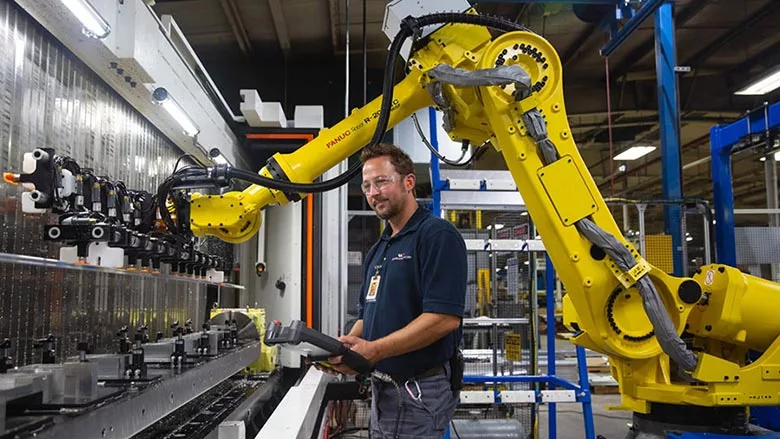
employee working in manufacturing facility

In April, the Federal Trade Commission approved a final rule that bans noncompete agreements for employees nationwide.

Photo courtesy Wisconsin Technical College System

June 11, 2024

In April, the Federal Trade Commission approved a final rule that bans noncompete agreements for employees nationwide.

Known simply as “noncompetes,” these agreements between employer and employee prevent the employee from starting a similar business or working for a competitor after leaving the company. The agreement typically limits the employee to a certain geographic area and period of time after their employment ends.

According to the FTC, noncompetes often force workers to either stay in a job they want to leave or bear other significant harms and costs, such as being forced to switch to a lower-paying field, being forced to relocate, being forced to leave the workforce altogether, or being forced to defend against expensive litigation. An estimated 30 million workers—nearly one in five Americans—are subject to a noncompete.

“Noncompete clauses keep wages low, suppress new ideas, and rob the American economy of dynamism, including from the more than 8,500 new startups that would be created a year once noncompetes are banned,” said FTC Chair Lina M. Khan in a press release. “The FTC’s final rule to ban noncompetes will ensure Americans have the freedom to pursue a new job, start a new business, or bring a new idea to market.”

The FTC estimates that banning noncompetes will increase the formation of new businesses by 2.7 percent per year. The commission also expects the rule to result in higher earnings for workers, with estimated earnings increasing for the average worker by an additional $524 per year, and it is expected to lower health care costs by up to $194 billion over the next decade. In addition, the final rule is expected to help drive innovation, leading to an estimated average increase of 17,000 to 29,000 more patents each year for the next 10 years under the final rule.

Under the final rule, existing noncompetes for senior executives can remain in force, but employers are banned from entering into new noncompetes, even if they involve senior executives. The rule defines “senior executives” as employees “in policy-making positions” who make at least $151,164 annually.

The agency approved the final rule more than a year after it first proposed the ban in January 2023. The agency received more than 20,000 comments from the public about the rule, which will become law 120 days after it is published in the Federal Register.

Looking for quick answers on assembly and manufacturing topics? Try Ask ASM, our new smart AI search tool. Ask ASM →

Employers argue that noncompetes protect their trade secrets and provide an incentive to invest in employees—because they ensure that workers won’t leave to join a competitor as soon as they are trained. (Here in the Chicago area, for example, school bus companies have become free de facto training centers for people seeking commercial driver’s licenses.)

Unions, including the AFL-CIO and the Service Employees International Union, support the ban.

Needless to say, the ink was barely dry before the ban was challenged in court. The U.S. Chamber of Commerce has filed a suit in a U.S. District Court in Texas, arguing that the FTC did not have authority to issue rules that define unlawful methods of competition. The suit calls the ban “a vast overhaul of the national economy, and applies to a host of contracts that could not harm competition in any way.” It said the agency didn’t have the power to issue a ban and, even if it did, a categorical ban on such agreements isn’t lawful.

The National Association of Manufacturers (NAM) is also against the ban. “The FTC’s rule banning noncompete agreements is unprecedented and threatens manufacturers’ ability to attract and retain talent,” said Chris Netram, NAM’s managing vice president of policy in a statement. “In addition, [the ban] puts at risk the security of intellectual property and trade secrets—anathema to an industry that accounts for 53 percent of all private-sector R&D.

“An NAM survey found that 66 percent of respondents—manufacturers of all sizes—said the ban would interfere with their operations, and nearly half said it would impact employee training programs. The ban could force manufacturers to revamp their human capital operations completely, enact burdensome controls, or silo parts of their operations from each other, which would result in less training for employees, less collaboration, less innovation and less efficiency.” 

Calling the ban “a vast overhaul of the national economy” seems a bit overwrought. If employers were truly concerned about retaining workers, they could pay better wages and treat their people more like family.

I wonder how the ban will affect the assembly automation industry. Ours is a business of specialized knowledge, tricks of the trade, and, importantly, trusted relationships. Experienced engineers and technicians who know how to handle tricky parts and processes are hard to come by. Now, there’s extra incentive to keep them happy.

See more articles from our June 2024 issue!

KEYWORDS: manufacturing employment

Share This Story

Looking for a reprint of this article?
From high-res PDFs to custom plaques, order your copy today!

John has been with ASSEMBLY magazine since February 1997. John was formerly with a national medical news magazine, and has written for Pathology Today and the Green Bay Press-Gazette. John holds a B.A. in journalism from Northwestern University, Medill School of Journalism.

Recommended Content

JOIN TODAY
To unlock your recommendations.

Already have an account? Sign In

  • Made in the U.S.A.

    Consumer Products Manufacturing: Made in the USA

    Supply chain lessons learned during the coronavirus...
    Automated Assembly Systems
    By: Austin Weber
  • Best Practices for Press-Fit Assembly

    Best Practices for Press-Fit Assembly

    In manufacturing, ironclad formulas for success are hard...
    Assembly Presses
    By: Jim Camillo
  • aem0523leader-tesla1.jpg

    Tesla Rethinks the Assembly Line

    Engineers at Tesla Inc. have developed a new process that...
    Electrification
    By: Austin Weber
Manage My Account
  • eMagazine Subscription
  • Assembly Newsletters
  • Online Registration
  • Subscription Customer Service
  • Manage My Preferences

More Videos

Sponsored Content

Sponsored Content is a special paid section where industry companies provide high quality, objective, non-commercial content around topics of interest to the ASSEMBLY audience. All Sponsored Content is supplied by the advertising company and any opinions expressed in this article are those of the author and not necessarily reflect the views of ASSEMBLY or its parent company, BNP Media. Interested in participating in our Sponsored Content section? Contact your local rep!

close
  • ultrasonic welding
    Sponsored bySonobond Ultrasonics

    Engineering Efficiency in High-Performance Assembly: How Ultrasonic Welding Enhances Throughput, Reliability and Quality

  • UV curing system
    Sponsored byDymax

    Why UV Intensity Alone Doesn’t Define Curing Performance

  • wooden pallets
    Sponsored byLEAN Manufacturing Products

    Eliminating Waste on the Shop Floor: Applying Lean Principles to Improve Manufacturing Efficiency

Popular Stories

ASSEMBLY News Now, episode-30: Volvo Redesigns EV Manufacturing

Volvo Redesigns EV Manufacturing

Boeing CEO Kelly Ortberg announces 1 billion investment

Boeing Plans $1 Billion Wichita Investment, Workforce Training Center

GE Appliances Worker on Line

GE Appliances Expands Factory AI With 800 Gemini Enterprise Agents

Watch the latest episode of ANN now!

Events

July 24, 2025

From Shop Floor to CFO: How Manufacturers Are Closing the Loop Between Operations and Finance

On Demand Learn how manufacturers are bridging the gap between the shop floor and ERP systems to gain real-time visibility, streamline operations, and kick-start digital transformation—without waiting years.

Sponsored by:

PicoStratusGreen
July 30, 2025

Buffer Analysis and Design Fundamentals for Manufacturing Excellence

On Demand In this presentation, Dr. Herman Tang shares practical insights from his industry experience and research on buffer management in manufacturing operations.

View All Submit An Event

Poll

Difficult Assembly Processes

Which assembly process gives you the most difficulty?
View Results Poll Archive

Products

Manufacturing Cost Policy Deployment (MCPD) Profitability Scenarios: Systematic and Systemic Improvement of Manufacturing Costs

Manufacturing Cost Policy Deployment (MCPD) Profitability Scenarios: Systematic and Systemic Improvement of Manufacturing Costs

See More Products
Register for webinar - Modernizing Automotive Assembly: Why Upgrading Legacy MES is a Business Imperative

Related Articles

  • How will Brexit affect manufacturing?

    See More
  • asb0223edit1.jpg

    Does Automation Affect Manufacturing Skills?

    See More
  • Nanotechnology Poised to Affect Manufacturing Worldwide

    See More

Related Products

See More Products
  • foreman.jpg

    The Foreman on the Assembly Line

  • 9781138498730.jpg

    Manufacturing Cost Policy Deployment (MCPD) Profitability Scenarios: Systematic and Systemic Improvement of Manufacturing Costs

  • history.jpg

    Faster, Better, Cheaper in the History of Manufacturing: From the Stone Age to Lean Manufacturing and Beyond

See More Products

Related Directories

  • ON Semiconductor

×

Never miss the latest news and trends driving the manufacturing industry

Stay in the know on the latest assembly trends.

JOIN TODAY!
  • RESOURCES
    • Advertise
    • Contact Us
    • Directories
    • Manufacturing Division
    • Store
    • Want More?
  • SIGN UP TODAY
    • Create Account
    • eMagazine
    • Newsletters
    • Customer Service
    • Manage Preferences
  • SERVICES
    • Marketing Services
    • Reprints
    • Market Research
    • List Rental
    • Survey/Respondent Access
  • STAY CONNECTED
    • LinkedIn
    • Facebook
    • Instagram
    • YouTube
    • X (Twitter)
  • PRIVACY
    • PRIVACY POLICY
    • TERMS & CONDITIONS
    • DO NOT SELL MY PERSONAL INFORMATION
    • PRIVACY REQUEST
    • ACCESSIBILITY

Copyright ©2026. All Rights Reserved BNP Media, Inc. and BNP Media II, LLC.

Design, CMS, Hosting & Web Development :: ePublishing