New & Noteworthy
New Fasteners Solve Unique Challenges
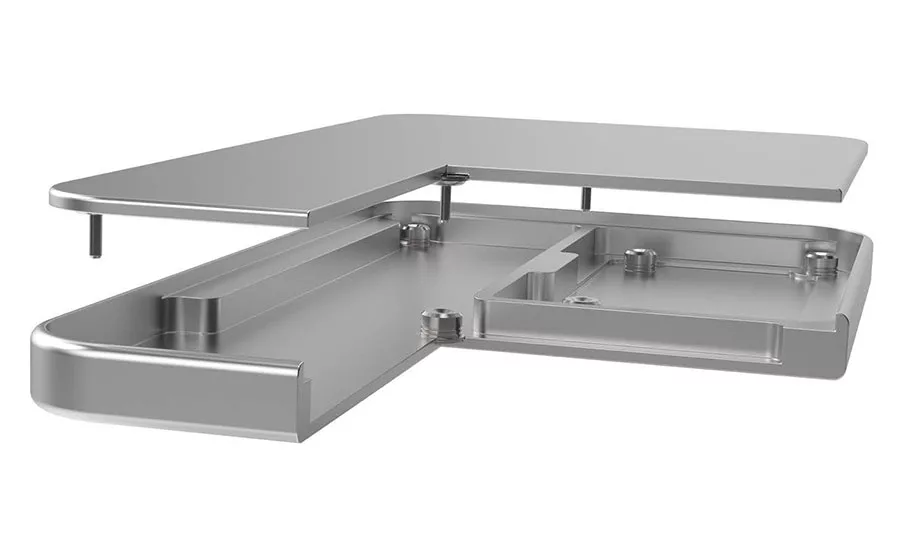
Image courtesy of Penn Engineering & Manufacturing Corp.
Fasteners are certainly not a one-size-fits-all product. There are fasteners for steel, aluminum and plastics. There are fasteners designed to be tamper-proof, and there are fasteners designed to be installed and reinstalled multiple times.
The products featured in this month’s “New & Noteworthy” reflect that diversity. Can they work in your assembly?
Hidden Fasteners Allow for Disassembly
The Ghost fastening system for metal parts enables engineers to create an assembly with tight security and sleek aesthetics, while still allowing disassembly by authorized personnel. Once engaged, the fully concealed fasteners provide no visible evidence of their position or disassembly method.
The system consists of a two-part self-clinching fastener. A headed pin is pressed into one side of the assembly (typically, a lid or panel); a retainer is pressed into the other side (the base assembly or housing). The pin has some radial float to facilitate alignment and assembly. To assemble the components, each pin is aligned with its matching retainer and gentle pressure is applied until fasteners snap together with a pinch-lock grip.
A magnetic release tool—custom-made for each assembly—actuates internal components in the retainer, unlocking the grip and instantly releasing the pin. Any attempt to pry apart the assembly without the release tool will be immediately evident.
Two pin styles are available. The MRPS smooth floating pin accommodates variable engagement depth and tolerance stack-up. The MRHPS grooved floating pin provides greater performance and decreased deflection under loading.
Applications include telecommunications equipment, servers, consumer products, appliances, automotive electronics and automotive trim.
Looking for quick answers on assembly and manufacturing topics? Try Ask ASM, our new smart AI search tool. Ask ASM
Penn Engineering & Manufacturing Corp.
www.pemnet.com

Image courtesy of Semblex Corp.
Thread-Forming Screw Fastens Light Alloys
The ALtracs Xt is a thread-forming screw for fastening light alloys with a maximum tensile strength of 470 MPa and a hardness of up to 140 HB. The thread-flank geometry compensates for the difference in strength between the fastener and the materials that it’s joining, lowering the risk of premature failure of the female thread.
This allows high clamp loads to be realized at low installation depths. At a relatively short installation depth of approximately twice the fastener diameter, ALtracs Xt can generate clamp loads comparable to a class 10.9 machine screw without damaging the female thread. This high clamp load is retained in the joint even under the influence of thermal and dynamic stress, thanks to a more homogeneous load distribution.
The fastener can be driven directly into conical holes that have been cast into the part. Additional machining is not required, and the fastener provides some forgiveness to tolerances in the diameter and draft angle of the cast hole.
Compared to a conventional machine screw, ALtracs Xt has a reduced flank angle of 33 degrees instead of 60 degrees. By reducing the flank angle of the screw, the thread tooth of the formed female thread will become more prominent. Combined with the female thread’s cold-work hardening, this ensures a high load-bearing capacity of each thread pitch, even when faced with thermal stress.
Thread forming with ALtracs Xt generates play-free thread engagement between the screw and the component. The large contact area between the male and female thread provides high thread friction. This ensures a high dynamic safety without the need for thread-lockers.
Compared to older thread designs, the thread contour is rounder, leaving out areas that do not improve the joint strength but only cause friction. The thread-forming profile has also been improved. The first four threads have been optimized to reduce friction, so thread-forming torques can be reduced.
Semblex Corp.
www.semblex.com
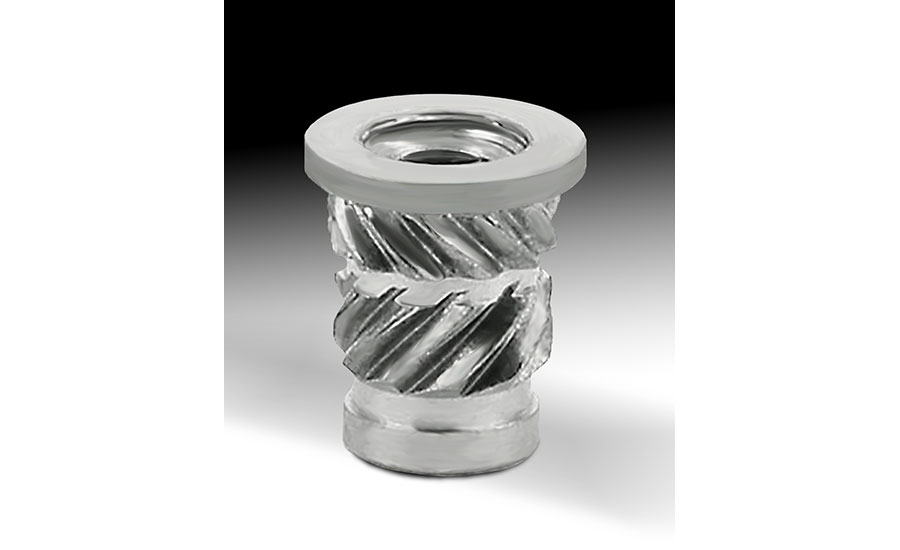
Image courtesy of E-Z LOK
Metal Inserts Provide Strong Threads in Plastics
Stainless steel and brass threaded inserts are installed in plastic parts after molding. They enable plastic parts to be securely fastened with machine screws, rather than thread-forming or thread-cutting screws. Available in both tapered and straight designs, and with inch or metric threads, the inserts provide superior torque and pull-out resistance.
E-Z Sonic heat-staking inserts for thermoplastics are installed with a heated tool to melt the plastic around the fastener. They work well with 3D-printed parts and products made from similar materials.
E-Z Sonic ultrasonic inserts are installed with an ultrasonic horn. Straight inserts allow for thinner boss walls. Flush models are installed even with or below the material surface, while flanged models are ideal for electrical connections or for additional pull-out resistance in reverse installations. The inserts feature a lead-in pilot to facilitate installation and are available in thread sizes from #2 to 3/8.
Tapered E-Z Sonic ultrasonic inserts are designed to reduce installation time without compromising performance. Internal threads range from #2 to 3/8 and from M2.5 to M6.
E-Z Press inserts can be used with both thermoset plastics and thermoplastics. Available in flush, flanged and reverse slot models, they are designed for “cold” installation with a rubber mallet or an arbor press.
E-Z LOK
www.ezlok.com
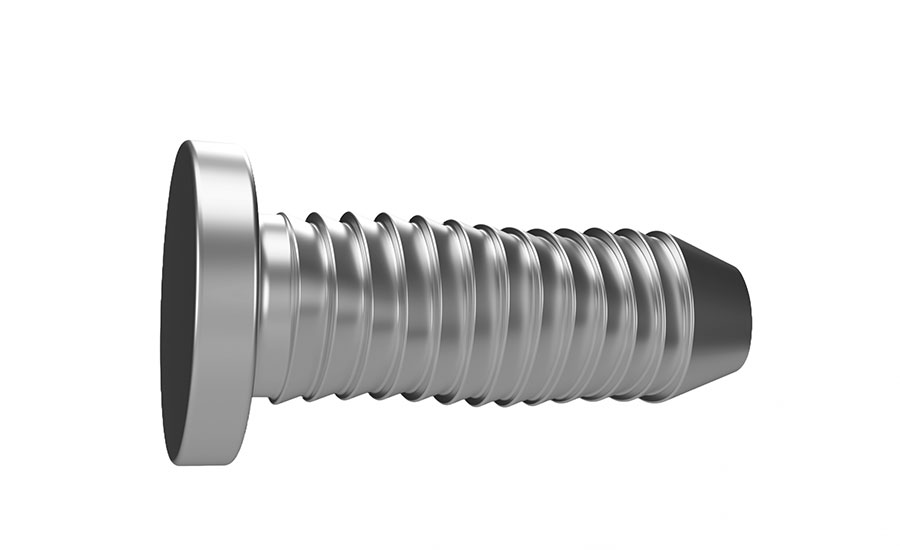
Image courtesy of Arnold Umformtechnik
Press-Fit Fasteners Install Quickly
The Tripress Plus fastener has a polygonal cross-section that twists along the shaft. Locking threads on the shaft ensure high pull-out forces and enable the clamped part to be fixed rapidly. The fastener can be pressed into cast or drilled holes in plastics, light metals and steel. It can be installed more quickly than threaded fasteners, and it works independently from preload forces. It can be inserted with a press automatically, semiautomatically or manually.
The fastener’s advantages include lighter weight, less installation space, and shorter positioning and installation time. There is no dependency between speed and pitch, since the fastener is pressed-in purely axially. The fastener is also tamper-proof, because it is not possible to loosen it without destroying the part.
Applications include automotive components, such as control units, charging modules and power electronics.
Arnold Umformtechnik
www.arnold-fastening.com
Looking for a reprint of this article?
From high-res PDFs to custom plaques, order your copy today!