ADAS Technology Increases Complexity of Assembly
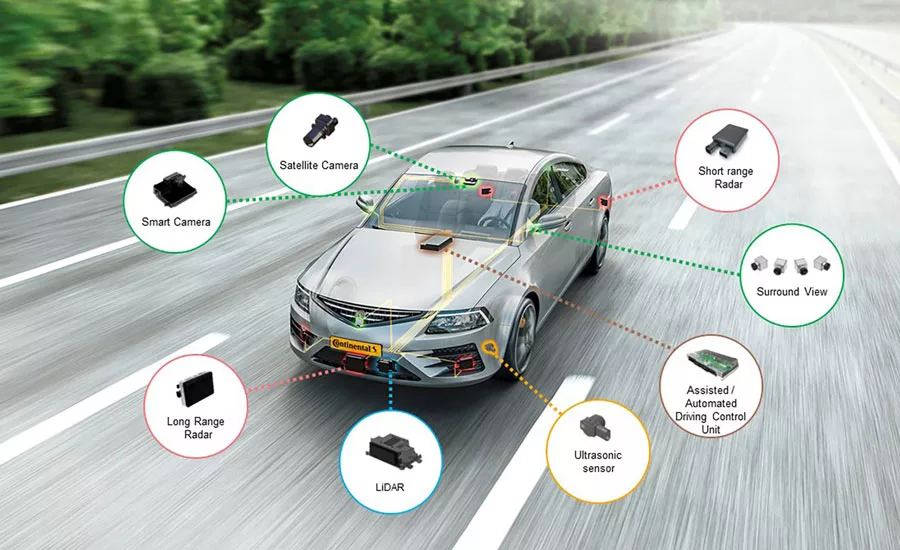
Ranging from lane-keeping assistance to automatic emergency braking, ADAS technologies rely on a network of sensors, cameras and sophisticated software.

Human expertise remains vital for configuring, calibrating and validating these ADAS technologies.
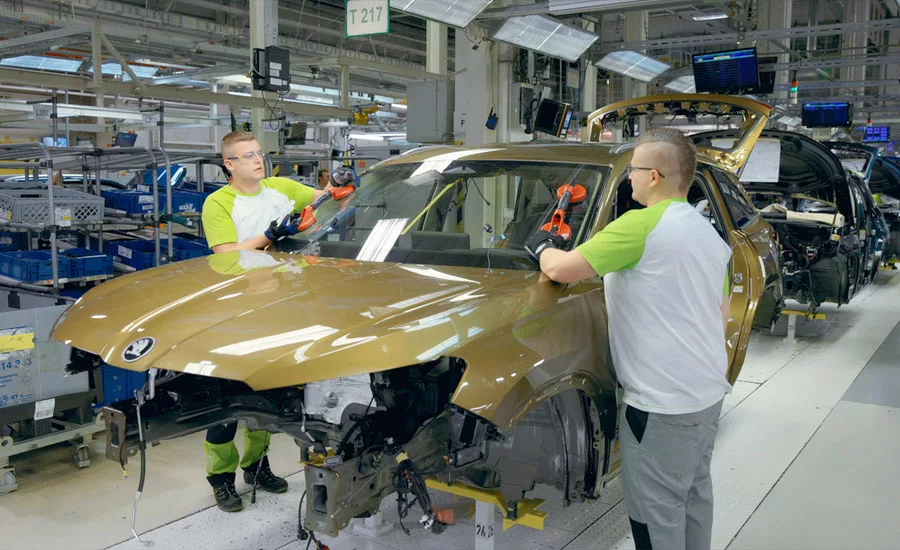
Modern windshields frequently house forward-facing cameras, rain and light sensors, and perhaps even head-up display projectors.
We are finishing work on a dictionary of terminology related to advanced driver assistance systems (ADAS) for SAE International. This is the fourth dictionary in a series. This has led me to think about the impact of these modern systems on manufacturing.
Even before ADAS and connected vehicles, vehicle manufacturing and assembly required precision. This is one of the reasons for gauge repeatability and reproducibility efforts. We must understand the capability of our assembly tools and how assemblers use them.
ADAS technology has transformed the automotive landscape, making vehicles safer and smarter. Ranging from lane-keeping assistance to automatic emergency braking, these systems rely on a network of sensors, cameras and sophisticated software.
While this technology has made the roads safer, it has made assembly more complex. Assembly processes that were once relatively mundane, such as windshield installation, now require more effort and precision.
The Evolution of Windshield Assembly
Traditionally, windshield installation was a straightforward process focused on structural integrity and weatherproofing, although there have been times when an antenna was integrated. Today, the process is far more complex.
Modern windshields frequently house forward-facing cameras, rain and light sensors, and perhaps even head-up display projectors. These integrated technologies require the glass to meet strict optical standards, since even minor distortions can affect sensor performance and, by extension, vehicle safety.
The windshield’s role has expanded from a passive safety device to an active participant in advanced safety systems. This evolution means that assembly teams must treat the windshield as both a structural and a technological component, ensuring that every installation meets exacting specifications.
Looking for quick answers on assembly and manufacturing topics? Try Ask ASM, our new smart AI search tool. Ask ASM
Each sensor requires precise placement and alignment to function correctly. For example, a forward-facing camera must be mounted at a specific angle and height to interpret lane markings accurately and detect obstacles.
The integration of ADAS sensors into the windshield assembly process introduces new challenges. Sensors and cameras must be mounted with millimeter-level accuracy. Specialized mounting brackets and adhesives, often developed in partnership with OEMs, ensure each sensor is positioned exactly as designed. Even a slight deviation can result in system malfunctions or false alerts.
Windshields are now made from advanced materials that balance strength, optical clarity, and weight to support these technologies. Miniaturized sensors and modular mounting systems help streamline the assembly process and require careful handling to avoid damage or misalignment.
Sensors must be protected from vibration, moisture and temperature fluctuations. Assembly teams use specific techniques and materials to shield sensitive electronics, ensuring long-term reliability.
Calibration: The Critical Step
Calibration is essential after installation. Even a perfectly installed sensor can be misaligned if the calibration process is skipped or performed incorrectly. Calibration ensures that each sensor’s digital “view” matches factory specifications, enabling accurate detection and response.
Static calibration is performed in a controlled environment using specialized targets and tools to align sensors precisely. Dynamic calibration involves on-road testing, allowing the system to self-adjust using real-world data. Some vehicles require both methods to ensure optimal system performance.
Calibration is required after windshield replacement, sensor replacement, alignment, collision repair, or suspension changes. Skipping this step can compromise the entire ADAS suite, leading to safety risks and potential liability issues.
Quality Control and Automation
The complexity of ADAS assembly has driven increased automation on factory lines, ensuring repeatability and precision. However, human expertise remains vital for configuring, calibrating and validating these systems. Strict adherence to OEM specifications and thorough documentation are essential for compliance and future servicing.
A typical ADAS-equipped windshield replacement involves:
- Careful removal of the old windshield to avoid damaging integrated sensors or brackets.
- Installation of a new, OEM-approved windshield with pre-installed mounts and sensors.
- Precise alignment and securement of all sensor components.
- Comprehensive calibration using specialized equipment and procedures.
- Final system checks to verify that all ADAS features function as intended.
Failure to follow these steps can result in system malfunctions, false warnings, or even complete loss of ADAS functionality.
ADAS Technologies
Here’s a rundown of common ADAS technologies and their implications for assembly.
Forward-facing camera
What it does: Captures images of roads, lane markings, signs and vehicles for features like lane keeping, collision warning and traffic sign recognition.
Assembly implications: Requires precise alignment and mounting, often on the windshield; post-assembly calibration is critical for accuracy.
Surround view camera
What it does: Provides a 360-degree view for parking and low-speed maneuvering assistance.
Assembly implications: Must be discreetly placed around the vehicle with exact alignment for seamless image stitching and system calibration.
Long-range radar
What it does: Detects distant objects for adaptive cruise control and emergency braking and measures speed and distance.
Assembly implications: It needs secure, vibration-resistant mounting (often in the grille or bumper), exact orientation to the vehicle centerline, and calibration after assembly.
Short-range radar
What it does: Used for blind spot monitoring and cross-traffic alert, detects nearby moving objects.
Assembly implications: Mounted in bumpers, robust and weather-sealed, with precise positioning to avoid false positives.
LiDAR
What it does: Provides high-resolution 3D mapping for obstacle detection, navigation and collision avoidance.
Assembly implications: It requires robust, weather-sealed housing, precise orientation, complex integration with electronics, and calibration after installation.
Ultrasonic sensors
What it does: Detects close objects for parking assistance and low-speed maneuvers.
Assembly implications: Embedded in bumpers, mounted at specific heights and angles, sensitive to misalignment and dirt ingress.
GPS
What it does: Determines vehicle position and orientation for navigation and some ADAS functions.
Assembly implications: Antenna placement must ensure a clear sky view and secure mounting to avoid signal loss or interference.
Sensor electronic control unit
What it does: Processes data from cameras, radar and other sensors to make real-time driving decisions.
Assembly implications: Must be protected from electrical disturbances; requires stable power and secure data connections; often needs cooling.
For manufacturers and repair shops alike, investing in training, advanced tools and strict process control is not just a matter of quality but safety. The future of automotive assembly will continue to be defined by the precision required to integrate ever-more sophisticated technologies into every vehicle that rolls off the line.
Editor’s note: The author of numerous books on project management, Jon has held engineering and management positions at Volvo Trucks, PACCAR and other companies. Email Jon at jon.quigley@valuetransform.com
For more information on ADAS technology and automotive assembly, read these articles:
What’s New With ADAS Technology
Hella Shines Bright in ADAS Technology
Renesas Powers Next-Gen EVs
Looking for a reprint of this article?
From high-res PDFs to custom plaques, order your copy today!