Are You Ready for Consumer-Driven Manufacturing?
Manufacturers can use AI and analytics to base production on real-time consumer demand and feedback.
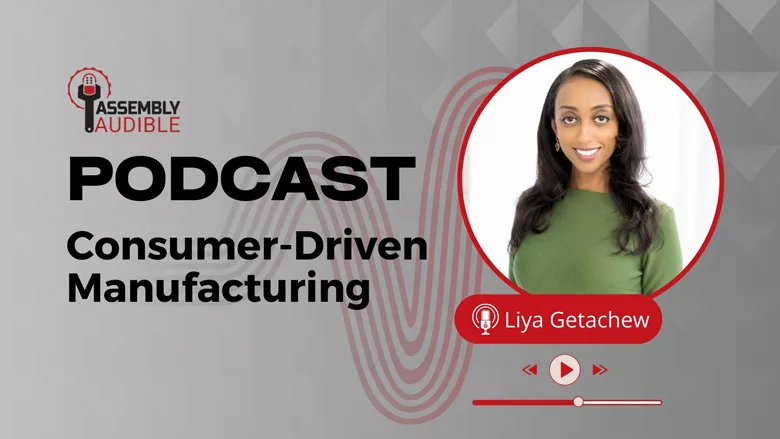
What is consumer-driven manufacturing? We explored the topic on a recent ASSEMBLY Audible podcast episode with guest Liya Getachew, principal at Sendero Consulting. During the conversation, Liya provided insights on how manufacturers must transform their operations by building agile production lines, leveraging consumer insights, and translating data into production decisions.
Q: What is consumer-driven manufacturing, and how does it differ from a traditional production model?
Getachew: Consumer-driven manufacturing is all about flipping the old model on its head. Instead of producing based on forecasts and hoping the market responds, production is really driven by real-time consumer demand and feedback.
Traditional manufacturing has historically relied on a push system, utilizing historical data, forecasts, and demand. In contrast, consumer-driven manufacturing is more of a pull system, where you respond to live demand signals, literally pulling products from the factory floor only when they're needed and where they're needed.
Q: What are the factors or considerations involved in transforming an operation to become consumer-driven?
Getachew: Technology and data are foundational. You need a technology stack that can capture and process real-time information. The Internet of Things plays a significant role here, as it enables companies to personalize in real-time and make faster, smarter decisions.
Second, you have operational agility. The physical side of the business has to be just as flexible as the data. That means moving away from rigid mass production lines towards modular systems that can pivot quickly to handle custom orders and shift volumes on the fly.
And third, and probably most important, are the people. The technology alone won't make a consumer-driven model. You need the right mindset. That means fostering collaboration, innovation and learning; creating cross-functional teams; and bringing folks together from design, packaging, production and consumer insights. That's all critical. Then, you need to empower those teams to make decisions without the layers of approvals.
Q: What are some of the tools that can aid a manufacturer in becoming more consumer-driven?
Getachew: Several tools and approaches support this type of transformation. First, you need a real-time data and visibility platform, like supply chain visibility software. Think of them as a single source of truth that pulls information from your ERP tool, warehouse management system, transportation management system, and even IoT sensors.
Looking for quick answers on assembly and manufacturing topics? Try Ask ASM, our new smart AI search tool. Ask ASM
These tools let you see exactly what's happening with your supply chain. That kind of visibility is critical for making quick decisions as the market shifts.
Then, you can tie that with AI and analytics. That's where data really becomes actionable. With predictive analytics, you can flag potential disruptions before they happen, optimize inventory, and even spot emerging consumer trends.
On the operations side, smart factories, modular systems, and digital twins provide flexibility to pivot quickly, whether that's retooling a new product or handling custom orders. And my favorite is testing changes virtually before making them all.
Listen to the entire conversation on ASSEMBLY Audible.
Looking for a reprint of this article?
From high-res PDFs to custom plaques, order your copy today!