Assembly Magazine logo
search
Ask ASSEMBLY AI
cart
facebook twitter linkedin youtube
  • Sign In
  • Create Account
  • Sign Out
  • My Account
Assembly Magazine logo
  • TRENDS
    • Ask ASSEMBLY AI
    • Trends
    • News
    • New Products
  • INDUSTRIES
    • Aerospace
    • Appliance
    • DFMA Assembly
    • Medical Devices
    • Green Manufacturing
    • Lean Manufacturing
    • Machinery Assembly
    • Electronics Assembly
    • Automotive
  • TECHNOLOGIES
    • Adhesives & Dispensing
    • Assembly Presses
    • Automated Assembly Systems
    • Manufacturing Management
    • Manufacturing Software
    • Motion Control
    • Screwdriving & Riveting
    • Robotics
    • Test & Inspection
    • Plastics & Metal Welding
    • Wire Processing
    • Workstations
  • AUTONOMOUS & ELECTRIC MOBILITY
    • AEM Magazine Archives
    • Autonomy
    • Electrification
    • Mobility Services
    • Assembly & Testing
    • AV/EM News
  • MEDIA
    • Ask ASSEMBLY AI
    • Podcasts
    • Assembly News Now
    • Assembly TV
    • Webinars
    • eBooks
  • EVENTS
    • Calendar
    • The ASSEMBLY Show
  • MORE
    • Exclusives >
      • Plant of the Year
      • Capital Spending
    • Buyers Guide >
      • Supplier Insights
    • Classifieds
    • Featured Products
    • Newsletters
    • Store
    • White Papers
    • Columns
    • Sponsor Insights
  • INFOCENTER
    • Assembly & Test Solutions
  • EMAGAZINE
    • eMagazine
    • Archive Issues
    • Advertise
    • Contact Us
    • Sign Up

Are You Ready for Embedded Passives?

By John Sprovieri
August 4, 2005
Embedding passive components directly into a circuit board can improve performance, enable more functionality and reduce cost per function.

Though the concept may seem anathema to this magazine, it is nevertheless axiomatic that the best assembly is often no assembly. If a feature can be molded, machined or fabricated into a part, assemblers can save the cost of fastening, welding or bonding it.

This principle is relatively easy to follow if you're designing the plastic housing for a kitchen appliance. But, if the product is an electronics assembly, which has always been predicated on populating a printed circuit board (PCB) with various active and passive components, the task is more difficult. Today, that may be changing, thanks to advances in technology for embedded passives.

Resistors, capacitors and other passives account for as much as 95 percent of all the components in an electronics assembly, and they can occupy up to 40 percent of the surface area of a PCB. For example, the average cell phone has 445 passives, outnumbering integrated circuits (ICs) by a ratio of 25-to-1.

Embedding resistors and capacitors directly into the circuit board has a number of benefits, not the least of which is that it shifts responsibility for adding these components from the assembler to the board fabricator. Embedding passives can dramatically reduce the overall part count for a PCB assembly. Fewer parts to place means lower inventory and assembly costs, and more reliable assemblies, especially if the board has lots of tiny components, like 0201s. Fewer surface-mount passives also frees up space, enabling designers to reduce the size of the board or add more active components.

Embedding passives gives designers more flexibility for routing ICs with high I/O counts, and it enhances frequency response by reducing parasitic inductance. Embedded passives can be located directly below ICs. Shortening the distance between passive and active components results in better signal transmission and less cross talk, especially at high frequencies.

The high operating frequencies of today's electronic devices are challenging standard circuit designs. With only two surfaces available for component placement, signal routing can become long and complex. Because the inductance of a signal trace is directly proportional to its length and inversely proportional to its width, lengthy traces can lead to problems with capacitive and inductive decoupling.

Embedding passives solves this problem. Locating passives in the inner layers of the board shortens many traces. Relocating traces inside the board also decreases the number of traces arranged in close, parallel lines, which reduces cross talk.

Because of these advantages, embedded passives are increasingly being used in cell phones, pagers, personal digital assistants and other products with high package densities and high operating frequencies. Consumer electronics aren't the only devices that can benefit from embedded passives, though. Embedded passives are also being used in automotive, aerospace and military applications. For example, Delphi Delco Electronics Systems (Kokomo, IN) is experimenting with using embedded passives in engine control modules.

Looking for quick answers on assembly and manufacturing topics? Try Ask ASM, our new smart AI search tool. Ask ASM →

Share This Story

Looking for a reprint of this article?
From high-res PDFs to custom plaques, order your copy today!

John has been with ASSEMBLY magazine since February 1997. John was formerly with a national medical news magazine, and has written for Pathology Today and the Green Bay Press-Gazette. John holds a B.A. in journalism from Northwestern University, Medill School of Journalism.

Recommended Content

JOIN TODAY
To unlock your recommendations.

Already have an account? Sign In

  • Made in the U.S.A.

    Consumer Products Manufacturing: Made in the USA

    Supply chain lessons learned during the coronavirus...
    Automated Assembly Systems
    By: Austin Weber
  • Best Practices for Press-Fit Assembly

    Best Practices for Press-Fit Assembly

    In manufacturing, ironclad formulas for success are hard...
    Assembly Presses
    By: Jim Camillo
  • aem0523leader-tesla1.jpg

    Tesla Rethinks the Assembly Line

    Engineers at Tesla Inc. have developed a new process that...
    Industries
    By: Austin Weber
Manage My Account
  • eMagazine Subscription
  • Assembly Newsletters
  • Online Registration
  • Subscription Customer Service
  • Manage My Preferences

More Videos

Sponsored Content

Sponsored Content is a special paid section where industry companies provide high quality, objective, non-commercial content around topics of interest to the ASSEMBLY audience. All Sponsored Content is supplied by the advertising company and any opinions expressed in this article are those of the author and not necessarily reflect the views of ASSEMBLY or its parent company, BNP Media. Interested in participating in our Sponsored Content section? Contact your local rep!

close
  • ultrasonic welding
    Sponsored bySonobond Ultrasonics

    Engineering Efficiency in High-Performance Assembly: How Ultrasonic Welding Enhances Throughput, Reliability and Quality

  • UV curing system
    Sponsored byDymax

    Why UV Intensity Alone Doesn’t Define Curing Performance

  • wooden pallets
    Sponsored byLEAN Manufacturing Products

    Eliminating Waste on the Shop Floor: Applying Lean Principles to Improve Manufacturing Efficiency

Popular Stories

ASSEMBLY News Now, episode-30: Volvo Redesigns EV Manufacturing

Volvo Redesigns EV Manufacturing

Boeing CEO Kelly Ortberg announces 1 billion investment

Boeing Plans $1 Billion Wichita Investment, Workforce Training Center

GE Appliances Worker on Line

GE Appliances Expands Factory AI With 800 Gemini Enterprise Agents

Watch the latest episode of ANN now!

Events

July 24, 2025

From Shop Floor to CFO: How Manufacturers Are Closing the Loop Between Operations and Finance

On Demand Learn how manufacturers are bridging the gap between the shop floor and ERP systems to gain real-time visibility, streamline operations, and kick-start digital transformation—without waiting years.

Sponsored by:

PicoStratusGreen
July 30, 2025

Buffer Analysis and Design Fundamentals for Manufacturing Excellence

On Demand In this presentation, Dr. Herman Tang shares practical insights from his industry experience and research on buffer management in manufacturing operations.

View All Submit An Event

Poll

Difficult Assembly Processes

Which assembly process gives you the most difficulty?
View Results Poll Archive

Products

Manufacturing Cost Policy Deployment (MCPD) Profitability Scenarios: Systematic and Systemic Improvement of Manufacturing Costs

Manufacturing Cost Policy Deployment (MCPD) Profitability Scenarios: Systematic and Systemic Improvement of Manufacturing Costs

See More Products
Register for webinar - Modernizing Automotive Assembly: Why Upgrading Legacy MES is a Business Imperative

Related Articles

  • autonomous mobile robots

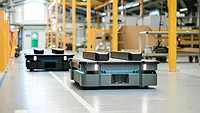
    Are You Ready for the Future? Asian Manufacturers Are

    See More
  • Are you ready for Industry 4.0?

    See More
  • ASSEMBLY Audible: Are You Ready for Consumer-Driven Manufacturing?

    Are You Ready for Consumer-Driven Manufacturing?

    See More

Related Products

See More Products
  • continuous.jpg

    Continuous and Embedded Learning for Organizations

  • testing.jpg

    Testing Complex and Embedded Systems

  • project management.jpg

    Project Management of Complex and Embedded Systems

See More Products

Related Directories

  • D3 Embedded

  • ARS srl

×

Never miss the latest news and trends driving the manufacturing industry

Stay in the know on the latest assembly trends.

JOIN TODAY!
  • RESOURCES
    • Advertise
    • Contact Us
    • Directories
    • Manufacturing Division
    • Store
    • Want More?
  • SIGN UP TODAY
    • Create Account
    • eMagazine
    • Newsletters
    • Customer Service
    • Manage Preferences
  • SERVICES
    • Marketing Services
    • Reprints
    • Market Research
    • List Rental
    • Survey/Respondent Access
  • STAY CONNECTED
    • LinkedIn
    • Facebook
    • Instagram
    • YouTube
    • X (Twitter)
  • PRIVACY
    • PRIVACY POLICY
    • TERMS & CONDITIONS
    • DO NOT SELL MY PERSONAL INFORMATION
    • PRIVACY REQUEST
    • ACCESSIBILITY

Copyright ©2026. All Rights Reserved BNP Media, Inc. and BNP Media II, LLC.

Design, CMS, Hosting & Web Development :: ePublishing