Assembly Magazine logo
search
Ask ASSEMBLY AI
cart
facebook twitter linkedin youtube
  • Sign In
  • Create Account
  • Sign Out
  • My Account
Assembly Magazine logo
  • TRENDS
    • Ask ASSEMBLY AI
    • Trends
    • News
    • New Products
  • INDUSTRIES
    • Aerospace
    • Appliance
    • DFMA Assembly
    • Medical Devices
    • Green Manufacturing
    • Lean Manufacturing
    • Machinery Assembly
    • Electronics Assembly
    • Automotive
  • TECHNOLOGIES
    • Adhesives & Dispensing
    • Assembly Presses
    • Automated Assembly Systems
    • Manufacturing Management
    • Manufacturing Software
    • Motion Control
    • Screwdriving & Riveting
    • Robotics
    • Test & Inspection
    • Plastics & Metal Welding
    • Wire Processing
    • Workstations
  • AUTONOMOUS & ELECTRIC MOBILITY
    • AEM Magazine Archives
    • Autonomy
    • Electrification
    • Mobility Services
    • Assembly & Testing
    • AV/EM News
  • MEDIA
    • Ask ASSEMBLY AI
    • Podcasts
    • Assembly News Now
    • Assembly TV
    • Webinars
    • eBooks
  • EVENTS
    • Calendar
    • The ASSEMBLY Show
  • MORE
    • Exclusives >
      • Plant of the Year
      • Capital Spending
    • Buyers Guide >
      • Supplier Insights
    • Classifieds
    • Featured Products
    • Newsletters
    • Store
    • White Papers
    • Columns
    • Sponsor Insights
  • INFOCENTER
    • Assembly & Test Solutions
  • EMAGAZINE
    • eMagazine
    • Archive Issues
    • Advertise
    • Contact Us
    • Sign Up
TechnologiesColumnsOn Campus

UMaine Engineers Develop Lighter, Stronger Printed Parts
By Austin Weber
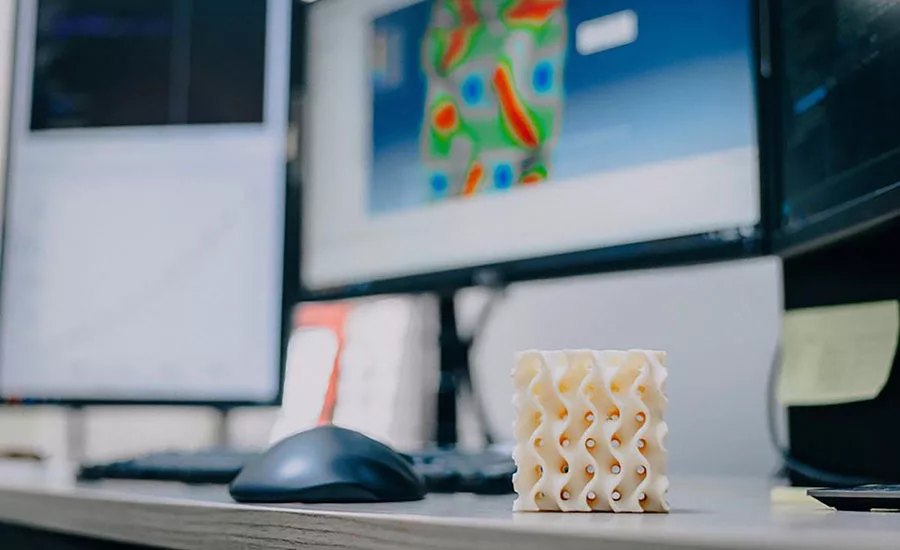
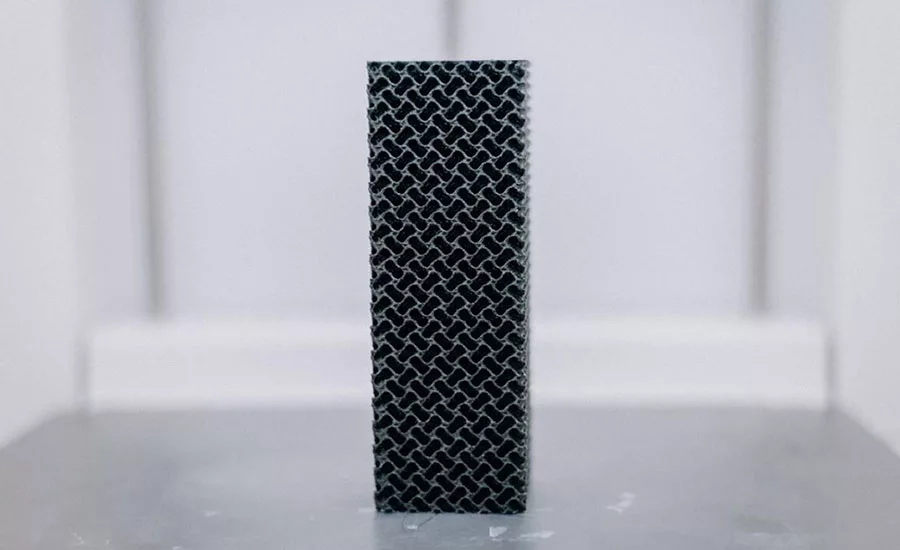
3D-printed object with a gyroid infill
Photo courtesy University of Maine

A new method can more accurately predict the strength of lightweight 3D-printed objects.

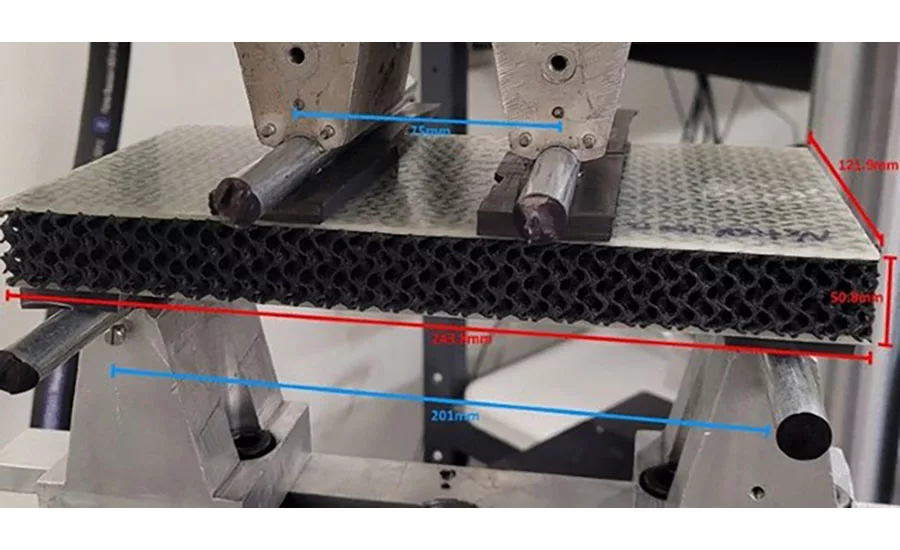
testing gyroid sandwich specimens
Photo courtesy University of Maine

Engineers tested gyroid sandwich specimens in a four-point bending fixture.

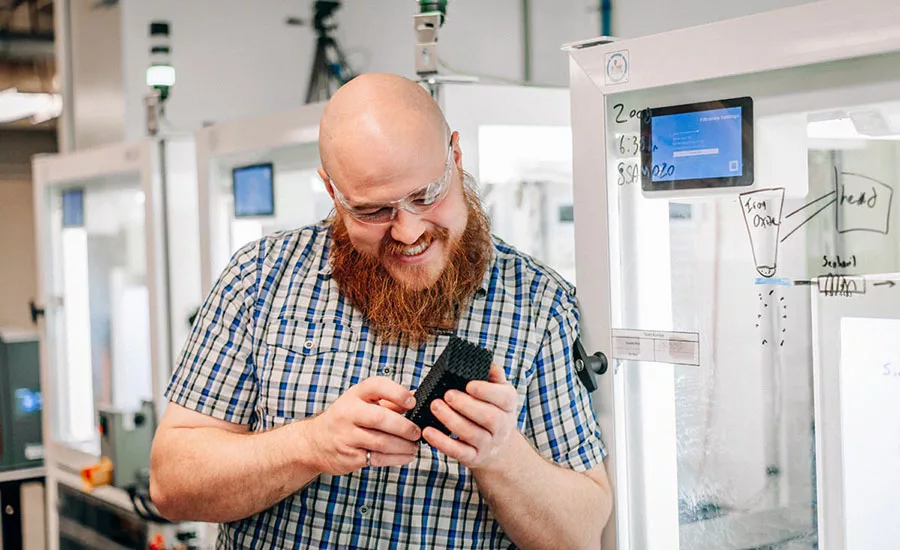
engineer inspecting a 3D-printed part
Photo courtesy University of Maine

By understanding the precise strength of gyroid-infilled structures, engineers can reduce material use.

complex internal patterns in a 3D-printed part
Photo courtesy University of Maine

Complex internal patterns contribute to a printed part’s overall performance.
3D-printed object with a gyroid infill
testing gyroid sandwich specimens
engineer inspecting a 3D-printed part
complex internal patterns in a 3D-printed part
November 7, 2025

At the University of Maine’s Advanced Structures and Composites Center (ASCC), additive manufacturing is big in more ways than one. The facility specializes in printing large stuff. In the past, it has produced everything from boats to homes.

But, engineers are also interested in studying how much smaller parts can be created. They recently explored how to make printed parts lighter and stronger.

The engineers developed a new method to more accurately predict the strength of lightweight 3D-printed objects. Their goal was to create more robust, reliable components by controlling strength when creating plastic components. Potential applications include automotive, aerospace and medical device products.

Philip Bean, Ph.D., an ASCC research engineer, and his colleagues applied advanced computer modeling with physical experiments to provide a more comprehensive understanding of how small printed parts perform under stress.

They focused on gyroid infill, an intricate, repeating internal structure commonly employed in additive manufacturing to minimize weight while preserving structural integrity. By utilizing computer simulations to analyze the gyroid’s response to various forces, Bean and his colleagues validated their predictions through experiments on prototype parts.

“Infill is the internal structure inside a 3D-printed part,” explains Bean. “Different infill patterns have different tradeoffs, but gyroids are especially attractive. They are strong, quick to print, and unlike most patterns behave isotropically, meaning their properties are the same in all directions. This makes analysis and design much simpler.

“Our research focused on characterizing the mechanical behavior of gyroid infills, which we see as a crucial step toward enabling engineers to design stronger, more efficient lightweight components,” says Bean.

Looking for quick answers on assembly and manufacturing topics? Try Ask ASM, our new smart AI search tool. Ask ASM →

“Until now, little work has been done to rigorously characterize 3D-printed infill structures,” claims Bean. “Our study provides a simple relationship between gyroid density and its mechanical properties, making it possible to predict performance more accurately.”

According to Bean, additive manufacturing has several advantages over traditional subtractive manufacturing methods. For instance, the ability to mass-produce lightweight parts that have an external skin and sparse internal infill decreases weight and the amount of material required to manufacture the part.

“This skin-infill structure [enables] a part to have a prescribed external geometry while varying the placement of material internally to optimize stiffness or strength,” explains Bean. “To design a part which takes full advantage of the skin-infill structure, however, it is first necessary to characterize the structural properties of the infill.”

A variety of infills are commonly used in additive manufacturing. Each has benefits and drawbacks.

The most common type are 2D infills, such as rectilinear infill, which are generated using the same pattern for every layer. These infills have the advantage of simplicity, which makes them quick and reliable to manufacture. However, the infill geometry results in highly anisotropic structural properties.

Another variety are 3D infills, such as cubic infills, which consist of a structure that spatially repeats in all three directions. Many of these exhibit cubic symmetry, which more closely approximates isotropic behavior. This benefit, however, comes at the cost of added complexity, which can cause issues with manufacturing reliability.

“One such infill that is particularly promising for future design work is the gyroid, a 3D infill based on a mathematical construct known as a triply periodic minimal surface,” says Bean. “This infill is nearly isotropic, is manufactured rapidly and is generally considered to be stronger than other infill patterns.

“All of these properties are useful for manufacturing parts, but very little data is available on which to base structural designs,” notes Bean.

The final category of infills is the least well defined. It consists of those infills that don’t fall into either of the previous categories due to their nonperiodic nature, which often arises from optimization processes.

“These can take several forms, including using graded infills, internal structures containing voids, or internal structures with repeating optimized lattice structures, which can be tuned to have specific elastic properties or graded to have spatially varying properties,” explains Bean. “These repeating structures often take the form of standard rectangular, rhombic or hexagonal infill patterns.

“Our specimens were simple rectangular shapes,” says Bean. “For compression testing, we used specimens measuring 2-by-2-by-6 inches. For shear testing, we used composite sandwich panels measuring 4.8-by-9.6-by-1 inches.

“Our study was not aimed at improving a particular part, but at developing tools for engineers,” Bean points out. “By characterizing how gyroid infill behaves across different print densities, we [created] a foundation that allows designers to optimize strength and weight in their own applications.

“Because engineers can now link density to strength, they can confidently vary gyroid density within a part and still know how the structure will behave.,” claims Bean. “This enables lighter components without sacrificing reliability.

“By providing predictive models for gyroids, our method allows engineers to design optimized parts that use less material while maintaining or even improving performance,” says Bean. “This has potential benefits anywhere plastic parts are used.”

The ASCC’s results are based primarily on finite element simulations, which Bean and his colleagues validated using standard compression (ASTM D695) and shear (ASTM C393) tests.

“The findings offer insights into how this complex internal pattern contributes to a part’s overall performance, a factor often not possible with conventional analytical methods,” notes Bean.

“This work allows us to design 3D-printed parts with greater confidence and efficiency,” adds Bean. “By understanding the precise strength of these gyroid-infilled structures, we can reduce material use and improve performance across industries.”

See more articles from our November 2025 issue!

KEYWORDS: additive manufacturing lightweighting university research

Share This Story

Looking for a reprint of this article?
From high-res PDFs to custom plaques, order your copy today!

Austinweber headshot
Austin has been senior editor for ASSEMBLY Magazine since September 1999. He has more than 21 years of b-to-b publishing experience and has written about a wide variety of manufacturing and engineering topics. Austin is a graduate of the University of Michigan.

Recommended Content

JOIN TODAY
To unlock your recommendations.

Already have an account? Sign In

  • Made in the U.S.A.

    Consumer Products Manufacturing: Made in the USA

    Supply chain lessons learned during the coronavirus...
    Automated Assembly Systems
    By: Austin Weber
  • Best Practices for Press-Fit Assembly

    Best Practices for Press-Fit Assembly

    In manufacturing, ironclad formulas for success are hard...
    Assembly Presses
    By: Jim Camillo
  • aem0523leader-tesla1.jpg

    Tesla Rethinks the Assembly Line

    Engineers at Tesla Inc. have developed a new process that...
    Automotive Assembly
    By: Austin Weber
Manage My Account
  • eMagazine Subscription
  • Assembly Newsletters
  • Online Registration
  • Subscription Customer Service
  • Manage My Preferences

More Videos

Sponsored Content

Sponsored Content is a special paid section where industry companies provide high quality, objective, non-commercial content around topics of interest to the ASSEMBLY audience. All Sponsored Content is supplied by the advertising company and any opinions expressed in this article are those of the author and not necessarily reflect the views of ASSEMBLY or its parent company, BNP Media. Interested in participating in our Sponsored Content section? Contact your local rep!

close
  • ultrasonic welding
    Sponsored bySonobond Ultrasonics

    Engineering Efficiency in High-Performance Assembly: How Ultrasonic Welding Enhances Throughput, Reliability and Quality

  • UV curing system
    Sponsored byDymax

    Why UV Intensity Alone Doesn’t Define Curing Performance

  • wooden pallets
    Sponsored byLEAN Manufacturing Products

    Eliminating Waste on the Shop Floor: Applying Lean Principles to Improve Manufacturing Efficiency

Popular Stories

ASSEMBLY News Now, episode-30: Volvo Redesigns EV Manufacturing

Volvo Redesigns EV Manufacturing

Robots working at Toyota Plant in Japan

Toyota Deploys Geekplus Robots for Factory Material Handling

can of soda pop

The “Diet Coke Problem” as Manufacturers Face Experts Retiring

Watch the latest episode of ANN now!

Events

July 24, 2025

From Shop Floor to CFO: How Manufacturers Are Closing the Loop Between Operations and Finance

On Demand Learn how manufacturers are bridging the gap between the shop floor and ERP systems to gain real-time visibility, streamline operations, and kick-start digital transformation—without waiting years.

Sponsored by:

PicoStratusGreen
July 30, 2025

Buffer Analysis and Design Fundamentals for Manufacturing Excellence

On Demand In this presentation, Dr. Herman Tang shares practical insights from his industry experience and research on buffer management in manufacturing operations.

View All Submit An Event

Poll

Difficult Assembly Processes

Which assembly process gives you the most difficulty?
View Results Poll Archive

Products

Manufacturing Cost Policy Deployment (MCPD) Profitability Scenarios: Systematic and Systemic Improvement of Manufacturing Costs

Manufacturing Cost Policy Deployment (MCPD) Profitability Scenarios: Systematic and Systemic Improvement of Manufacturing Costs

See More Products
ebook

Related Articles

  • Assembling Printed Parts

    Assembling 3D Printed Parts

    See More
  • Purdue 12-16

    Can Purdue Database Help Researchers Apply Machine Learning to 3D-Printed Parts in Machines?

    See More
  • GM Test 7-25

    GM Tries RoboGlove, 3D-Printed Parts at Assembly Plants

    See More

Related Products

See More Products
  • Joining of Plastics 3e Handbook for Designers and Engineers

  • finite.jpg

    Finite Element Analysis for Engineers

  • The First Snap-Fit Handbook 2e: Creating and Managing Attachments for Plastics Parts

See More Products

Related Directories

  • Graphic Parts International

    Graphic Parts International (G.P.I.),a division of The A.W.T. World Trade Group, is the world's premier manufacturer of replacement parts and provider of remanufacturing services for the screen printing industry. G.P.I. maintains a giant inventory of parts, accessories, and supplies for screen printers.
  • Printed Circuits Corp.

    PCC is an electronic manufacturing services provider. We offer Quick turnaround services in Circuit Card Assembly, PCB Design, Fabrication, Reverse Engineering of PCB and Wire Harness. We can do small and medium quantity high quality and fast turnaround of PCB Fabrication, and Assemblies. All in one stop.
×

Never miss the latest news and trends driving the manufacturing industry

Stay in the know on the latest assembly trends.

JOIN TODAY!
  • RESOURCES
    • Advertise
    • Contact Us
    • Directories
    • Manufacturing Division
    • Store
    • Want More?
  • SIGN UP TODAY
    • Create Account
    • eMagazine
    • Newsletters
    • Customer Service
    • Manage Preferences
  • SERVICES
    • Marketing Services
    • Reprints
    • Market Research
    • List Rental
    • Survey/Respondent Access
  • STAY CONNECTED
    • LinkedIn
    • Facebook
    • Instagram
    • YouTube
    • X (Twitter)
  • PRIVACY
    • PRIVACY POLICY
    • TERMS & CONDITIONS
    • DO NOT SELL MY PERSONAL INFORMATION
    • PRIVACY REQUEST
    • ACCESSIBILITY

Copyright ©2026. All Rights Reserved BNP Media, Inc. and BNP Media II, LLC.

Design, CMS, Hosting & Web Development :: ePublishing