Assembly Magazine logo
search
Ask ASSEMBLY AI
cart
facebook twitter linkedin youtube
  • Sign In
  • Create Account
  • Sign Out
  • My Account
Assembly Magazine logo
  • TRENDS
    • Ask ASSEMBLY AI
    • Trends
    • News
    • New Products
  • INDUSTRIES
    • Aerospace
    • Appliance
    • DFMA Assembly
    • Medical Devices
    • Green Manufacturing
    • Lean Manufacturing
    • Machinery Assembly
    • Electronics Assembly
    • Automotive
  • TECHNOLOGIES
    • Adhesives & Dispensing
    • Assembly Presses
    • Automated Assembly Systems
    • Manufacturing Management
    • Manufacturing Software
    • Motion Control
    • Screwdriving & Riveting
    • Robotics
    • Test & Inspection
    • Plastics & Metal Welding
    • Wire Processing
    • Workstations
  • AUTONOMOUS & ELECTRIC MOBILITY
    • AEM Magazine Archives
    • Autonomy
    • Electrification
    • Mobility Services
    • Assembly & Testing
    • AV/EM News
  • MEDIA
    • Ask ASSEMBLY AI
    • Podcasts
    • Assembly News Now
    • Assembly TV
    • Webinars
    • eBooks
  • EVENTS
    • Calendar
    • The ASSEMBLY Show
  • MORE
    • Exclusives >
      • Plant of the Year
      • Capital Spending
    • Buyers Guide >
      • Supplier Insights
    • Classifieds
    • Featured Products
    • Newsletters
    • Store
    • White Papers
    • Columns
    • Sponsor Insights
  • INFOCENTER
    • Assembly & Test Solutions
  • EMAGAZINE
    • eMagazine
    • Archive Issues
    • Advertise
    • Contact Us
    • Sign Up
TechnologiesManufacturing SoftwareAutomated Assembly SystemsRobotics AssemblyPlastics & Metal Welding Assembly

Manufacturing Software

Software Saves Time When Programming Robotic Welding
By Vanessa S. Stiles
robotic cell
Photo courtesy Visual Components

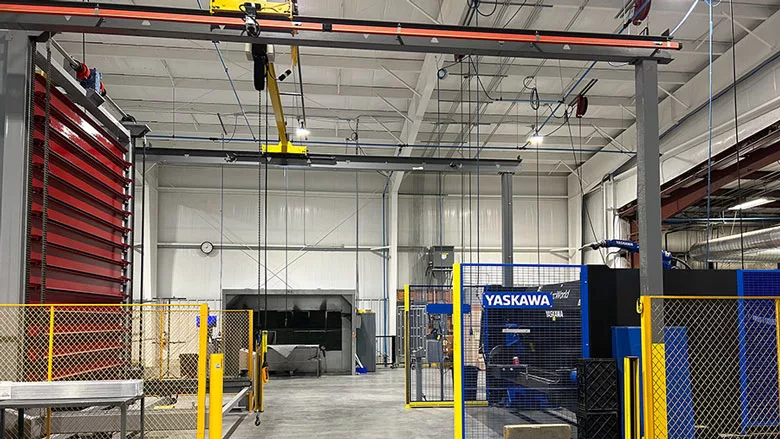
Berlin Gardens relies on robotic cells for welding aluminum fixtures to the bottoms of furniture pieces.

November 21, 2025

Robotic automation has revolutionized manufacturing across many industries, but automated systems require the programming skills of people, and this can create a production bottleneck. This is especially true when robots require reprogramming for a variety of products, as the cumulative programming hours create a drain on the company. 

For Berlin Gardens, an Ohio manufacturer of outdoor furniture, the need to cut down the time spent programming robotic welding arms led to an investment in offline programming using digital twins.

Berlin Gardens began in 1988 as a greenhouse selling flowers in the heart of Ohio Amish country. Currently located in Millersburg, OH, the company has evolved to specialize in manufacturing high-quality outdoor plastic furniture and backyard structures, employing state-of-the-art machinery alongside time-honored crafting techniques. Under the leadership of Sam Yoder since 2008, the company has expanded its workforce to 250 employees.

In the past 15 years, the plastic furniture industry has transformed significantly. What was once a novel concept has now become a competitive and bustling market segment. Berlin Gardens has established itself as a key player by blending technology with a lean manufacturing approach, constantly refining processes to balance the pursuit of quality with the need for speedy fabrication. At the core of its success is a company culture that prioritizes employee satisfaction.

Berlin Gardens relies on robotic cells for welding aluminum fixtures to the bottoms of furniture pieces. However, the time spent programming robots began to conflict with the company’s culture.

“Our lead programmer would spend hours on end in the back of the cell to make sure he had the robot in the right position to program each point,” says Derrick Yoder, the aluminum production manager at Berlin Gardens. “We could spend up to 13 hours on a single program, and a lot of those would be after-hours or on weekends.” 

To compound this, the task of positioning the robot at the right angle for a specific weld would put physical strain on the programming team, reducing job satisfaction and increasing costs. “With a welding application, it’s very easy to have a bad part due to the robot being at the wrong angle during the weld,” Yoder explains.

Looking for quick answers on assembly and manufacturing topics? Try Ask ASM, our new smart AI search tool. Ask ASM →

Additionally, many of the joints were similar. “They are symmetrical and square, with a lot of repetition,” he explains. The monotony for the programming team became a sore point for a management team, who are committed to keeping workers engaged and interested. These factors made offline programming an especially tempting option to consider. 
 

programming robot paths in a welding cell

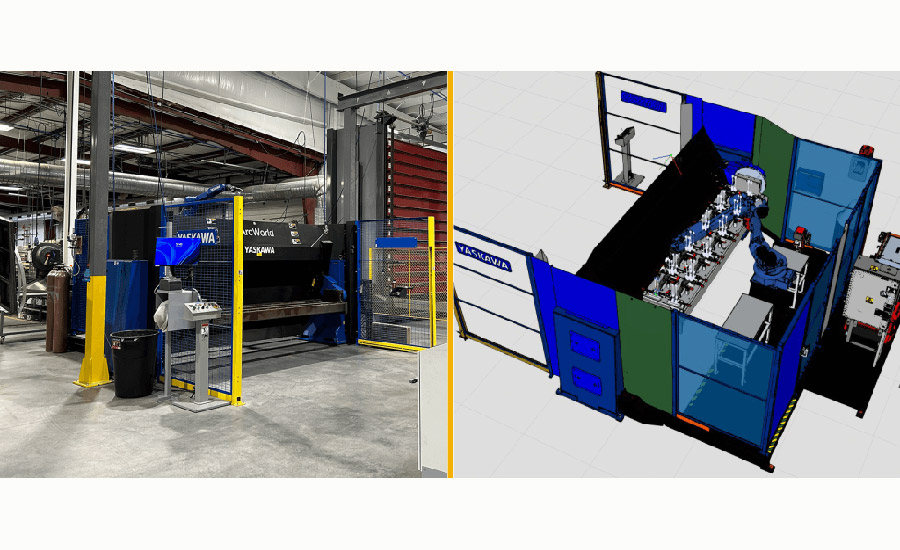
For one assembly, programming the robot manually required 13 hours. With offline programming, the same task can be completed in under three hours. Photo courtesy Visual Components

Moving to Offline Programming

Offline programming (OLP) is the use of software to program robotic cells outside of the production environment. It benefits manufacturers by eliminating the need to halt production to reprogram the robots and by cutting down on the time needed to program them. The technology would be perfect for Berlin Gardens, but the company first had to find a supplier to work with.

“We had looked into several different companies, but none of them seemed to fit what we needed them to do,” Yoder explains.

Eventually, the company found Visual Components’ OLP Software. “The ease of use was the first thing that came to mind for us,” Yoder notes. “Andy, one of our lead programmers, had little to no experience with computers.” 

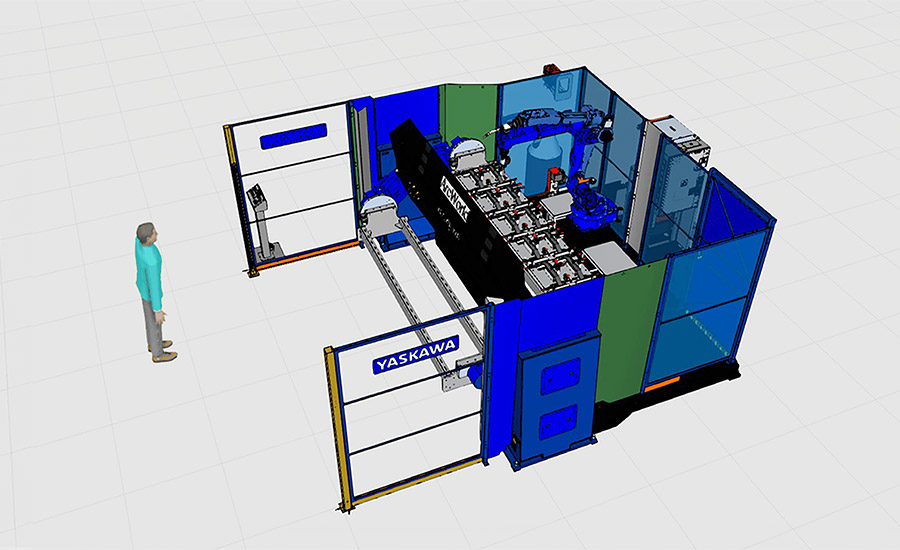
As an Amish worker, he rarely had use for computers outside work, but he found the software exceptionally user-friendly and efficient. With just a couple of clicks, he could program multiple robot paths for the Yaskawa robot cell on a single platform. 
programming robot paths in a welding cell

With just a few clicks, engineers can program multiple robot paths in a welding cell. Photo courtesy Visual Components

Yoder was blown away by the reduction in repetitive work. “The biggest difference was the number of points programmed by simply selecting a joint in the software,” he explains.

When an engineer chooses a single weld in the CAD file, the software automatically generates multiple lines of programming code for the robot. “And it’s not all simple movements,” he continues. “We have different fixtures where it takes a bit of maneuvering to place the welds, but the software handles them just fine with accuracy.” 

Additionally, the knowledge could be stored in the software for future robot programmers to reuse or optimize.

While the ease of use and reduction in repetitive work were welcome, the efficiency gains exceeded expectations. For one complex fixture, programming manually had previously required 13 hours to get into production. With offline programming, it could now be completed in under three hours, an 80 percent reduction in programming time. “That gives you a small glimpse into the labor saved,” Yoder says, “not to mention the efficiency of how the program runs.”
programming robot paths in a welding cell

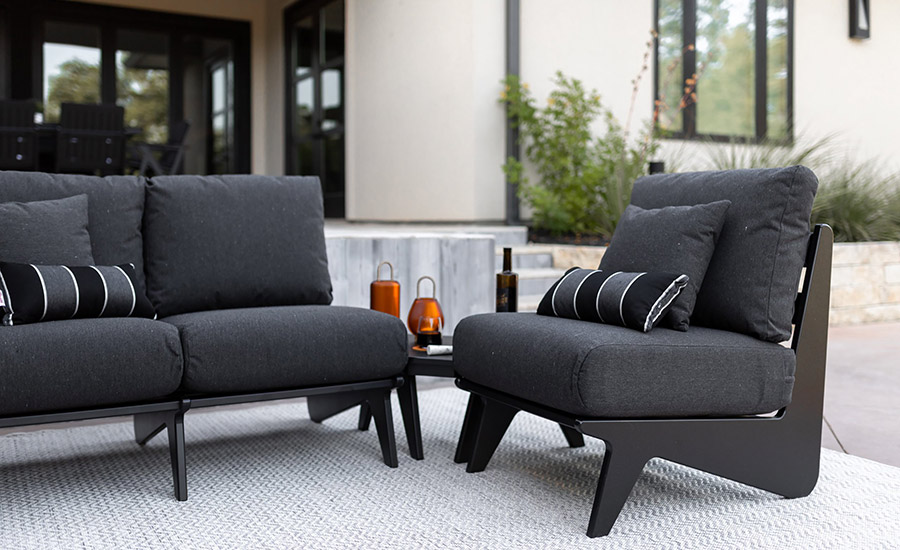
Berlin Gardens specializes in manufacturing high-quality outdoor plastic furniture and backyard structures. Photo courtesy Visual Components

Cutting out that programming time has led to significant labor savings and has enhanced the overall operational agility of the company. Pivoting between projects is no longer a matter of shutting down the welding cell and painstakingly reprogramming the robots over the course of a dozen hours. Instead, new projects can be prepared within a single shift, and the programming team can continuously refine the robotic paths. 

“Before, everything was very repetitive and hours were invested to manually move the robot,” Yoder reflects. “Pain points for our team were intensified when inconsistent robot moves caused inefficiencies. The OLP software changed that because everything can be controlled with the same movements each time.”

Vitally to Berlin Gardens, OLP efficiencies were achievable and aligned with the core values of the company. “We improved safety for our employees by keeping them out of the back of the cell,” Yoder adds. “Most importantly, employees have a more enjoyable job experience.”

For more information on OLP software, visit www.visualcomponents.com.

See more articles from our December 2025 issue!

For more information on robot programming software and digital twins, read these articles:

Software Simplifies Programming of Robots
Self-Programming Robot Sets its Own Weld Path
Long Live the Robot Teach Pendant

KEYWORDS: flexible assembly furniture manufacturing robot programming robotic welding

Share This Story

Looking for a reprint of this article?
From high-res PDFs to custom plaques, order your copy today!

Vanessa S. Stiles // Contributing Writer

Recommended Content

JOIN TODAY
To unlock your recommendations.

Already have an account? Sign In

  • Made in the U.S.A.

    Consumer Products Manufacturing: Made in the USA

    Supply chain lessons learned during the coronavirus...
    Automated Assembly Systems
    By: Austin Weber
  • Best Practices for Press-Fit Assembly

    Best Practices for Press-Fit Assembly

    In manufacturing, ironclad formulas for success are hard...
    Assembly Presses
    By: Jim Camillo
  • aem0523leader-tesla1.jpg

    Tesla Rethinks the Assembly Line

    Engineers at Tesla Inc. have developed a new process that...
    Assembly and Testing
    By: Austin Weber
Manage My Account
  • eMagazine Subscription
  • Assembly Newsletters
  • Online Registration
  • Subscription Customer Service
  • Manage My Preferences

More Videos

Sponsored Content

Sponsored Content is a special paid section where industry companies provide high quality, objective, non-commercial content around topics of interest to the ASSEMBLY audience. All Sponsored Content is supplied by the advertising company and any opinions expressed in this article are those of the author and not necessarily reflect the views of ASSEMBLY or its parent company, BNP Media. Interested in participating in our Sponsored Content section? Contact your local rep!

close
  • ultrasonic welding
    Sponsored bySonobond Ultrasonics

    Engineering Efficiency in High-Performance Assembly: How Ultrasonic Welding Enhances Throughput, Reliability and Quality

  • UV curing system
    Sponsored byDymax

    Why UV Intensity Alone Doesn’t Define Curing Performance

  • wooden pallets
    Sponsored byLEAN Manufacturing Products

    Eliminating Waste on the Shop Floor: Applying Lean Principles to Improve Manufacturing Efficiency

Popular Stories

ASSEMBLY News Now, episode-30: Volvo Redesigns EV Manufacturing

Volvo Redesigns EV Manufacturing

automated consumer goods assembly system

Best Practices for Cycle Time Optimization

Toyota factory workers assembling vehicles on an automotive production line using advanced manufacturing automation and Factory of the Future technologies in a high-volume assembly plant

Tariffs, AI and Automation Reshape Global Manufacturing Strategy

Watch the latest episode of ANN now!

Events

July 24, 2025

From Shop Floor to CFO: How Manufacturers Are Closing the Loop Between Operations and Finance

On Demand Learn how manufacturers are bridging the gap between the shop floor and ERP systems to gain real-time visibility, streamline operations, and kick-start digital transformation—without waiting years.

Sponsored by:

PicoStratusGreen
July 30, 2025

Buffer Analysis and Design Fundamentals for Manufacturing Excellence

On Demand In this presentation, Dr. Herman Tang shares practical insights from his industry experience and research on buffer management in manufacturing operations.

View All Submit An Event

Poll

Difficult Assembly Processes

Which assembly process gives you the most difficulty?
View Results Poll Archive

Products

Manufacturing Cost Policy Deployment (MCPD) Profitability Scenarios: Systematic and Systemic Improvement of Manufacturing Costs

Manufacturing Cost Policy Deployment (MCPD) Profitability Scenarios: Systematic and Systemic Improvement of Manufacturing Costs

See More Products
Register for webinar - Modernizing Automotive Assembly: Why Upgrading Legacy MES is a Business Imperative

Related Articles

  • rivet nut

    Fastener Handling System Saves Time When Installing Rivet Nuts

    See More
  • Computational Fluid Dynamics Software Saves Time, Cuts Costs

    Computational Fluid Dynamics Software Saves Time, Cuts Costs

    See More
  • Subaru auto assembly plant

    Subaru Saves Time With PDM Software

    See More

Related Products

See More Products
  • Robotic Micro-Assembly

  • Welding: Principles & Practices

See More Products

Related Directories

  • Real Time Automation

    DistributorsILLINOISEESCO/Div of WESCO Dist. Inc.2401 International Pkwy.Woodridge,  IL(630) 296-2555  https://buy.eescodist.com/ILLINOISRevere Electric Supply Co.975 Weiland Rd.Buffalo Grove,  IL(312) 738-3636  https://www.revereelectric.com/
  • QT9 Software

    QT9 Software offers comprehensive ERP, MRP, and QMS solutions designed for small and mid-sized manufacturers. Our cloud-based platform integrates inventory management, production planning, and quality control into one seamless system. QT9 helps streamline operations, improve product quality, and drive growth, providing real-time insights for smarter decision-making and efficiency.
×

Never miss the latest news and trends driving the manufacturing industry

Stay in the know on the latest assembly trends.

JOIN TODAY!
  • RESOURCES
    • Advertise
    • Contact Us
    • Directories
    • Manufacturing Division
    • Store
    • Want More?
  • SIGN UP TODAY
    • Create Account
    • eMagazine
    • Newsletters
    • Customer Service
    • Manage Preferences
  • SERVICES
    • Marketing Services
    • Reprints
    • Market Research
    • List Rental
    • Survey/Respondent Access
  • STAY CONNECTED
    • LinkedIn
    • Facebook
    • Instagram
    • YouTube
    • X (Twitter)
  • PRIVACY
    • PRIVACY POLICY
    • TERMS & CONDITIONS
    • DO NOT SELL MY PERSONAL INFORMATION
    • PRIVACY REQUEST
    • ACCESSIBILITY

Copyright ©2026. All Rights Reserved BNP Media, Inc. and BNP Media II, LLC.

Design, CMS, Hosting & Web Development :: ePublishing