New Energy Management System Addresses EV Thermal Challenges
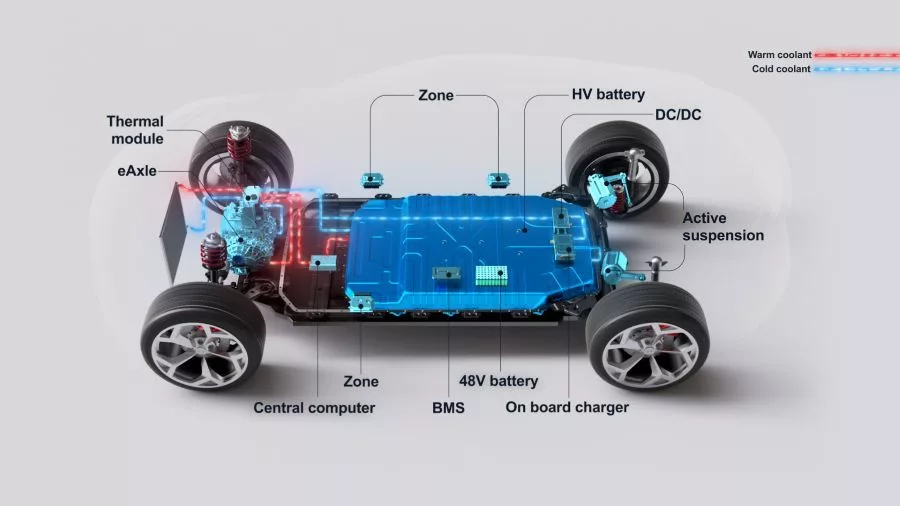
Marelli 's new intelligent energy management system is designed for electric vehicles. Illustration courtesy Marelli
BERLIN—Marelli has unveiled a modular intelligent energy management system for electric and hybrid vehicles. It is based on proprietary software that can be integrated with vehicle control units and thermal components. The system enables seamless coordination across a vehicle’s three main energy domains: thermal, propulsion and electronics.
“This holistic approach to vehicle energy optimization maximizes efficiency across all vehicle systems, delivering enhanced battery range, optimized fast charging and improved longevity, all while maintaining superior cabin comfort and operational reliability,” claims Giovanni Mastrangelo, head of R&D for Marelli's propulsion business.
“The system was developed by integrating advanced digital twin methodologies and innovative software strategies,” says Mastrangelo. “These approaches significantly reduce development time and costs, while also enabling a strong, flexible collaboration model with customers.
"Intelligent energy management is the central challenge facing today’s electric and hybrid vehicle development,” Mastrangelo points out. “Through our digital twin and decoupled software approach, we empower our customers to reduce development timelines, gain flexibility and accelerate adoption of cutting-edge technologies, driving the future of sustainable and efficient mobility."
The system manages and optimizes thermal flows, ensuring precise control of heating and cooling processes within vehicles. Decoupled software algorithms intelligently manage complex thermal systems, regulating temperatures to optimize overall performance and extend battery life
.According to Mastrangelo, the technology reduces energy losses and promotes effective reuse of excess thermal energy, resulting in lower operational costs and increased sustainability.
The intelligent energy management system also continuously monitors and adjusts power delivery to optimize energy distribution. This maximizes battery efficiency and vehicle performance. By effectively recovering energy and balancing its distribution, the system extends driving range and enhances overall resilience, supporting the needs of next-generation electric vehicles.
“Development of a digital twin application allows for precise virtual modeling of every vehicle subsystem, including electronics, electromechanics, thermodynamics and hydraulics,” says Mastrangelo. “By creating fully virtualized car models, automakers can iterate faster, test more efficiently and bring advanced vehicles to market sooner and more confidently.”
Looking for quick answers on assembly and manufacturing topics? Try Ask ASM, our new smart AI search tool. Ask ASM
Looking for a reprint of this article?
From high-res PDFs to custom plaques, order your copy today!