Prototype Highway Wirelessly Charges Heavy-Duty Electric Trucks
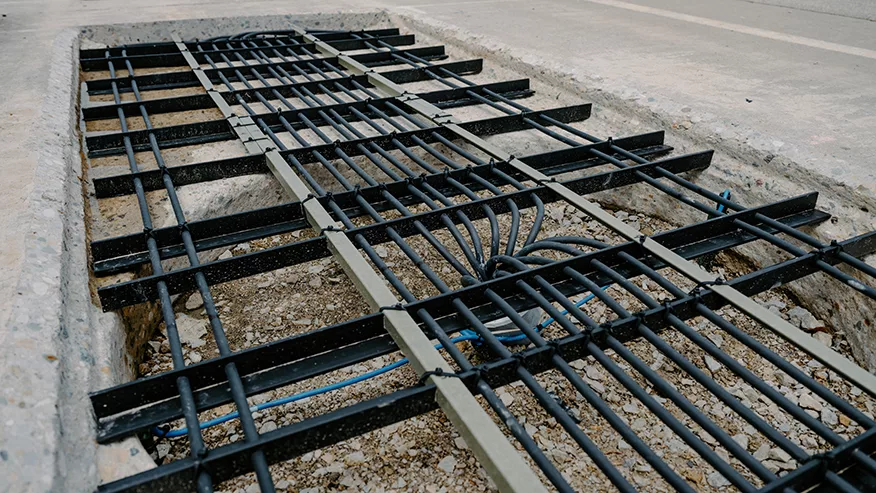
Purdue's dynamic wireless power transfer system features a series of transmitter coils that are buried under concrete pavement. Photo courtesy Purdue University
WEST LAFAYETTE, IN—Engineers at Purdue University recently designed a roadway that wirelessly charges heavy-duty electric trucks driving at highway speeds. The 0.25-mile electrified roadway, built by the Indiana Department of Transportation, is located along a stretch of U.S. Highway 52/U.S. Highway 231. The system allows highway pavement to provide power to EVs similarly to how smartphones use magnetic fields to wirelessly charge when placed on a pad.
The dynamic wireless power transfer system features a series of transmitter coils that are buried with concrete pavement in a dedicated highway lane. The coils transmit power to receiver coils attached to the underside of electric trucks.
It works at power levels much higher than what has been demonstrated in other parts of the United States. For instance, during a recent test, the system delivered 190 kilowatts to a truck traveling at 65 miles per hour.
“Transferring power through a magnetic field at these relatively large distances is challenging,” says Dionysios Aliprantis, Ph.D., a professor of electrical and computer engineering who worked on the project. “And, what makes it more challenging is doing it for a heavy-duty vehicle moving at power levels thousands of times higher than what smartphones receive.”
“This is a system designed to work for the heaviest class of trucks all the way down to passenger vehicles,” adds Aaron Brovont, Ph.D., an assistant professor of electrical and computer engineering. “Since trucking contributes the most to U.S. gross domestic product compared to other modes of freight transportation, lowering costs for heavy-duty electric trucks could help attract more investment into electrifying highways that all vehicle classes would share.”
According to Brovont, if heavy-duty trucks could charge or stay charged using highways, their batteries could be smaller in size and they could carry more cargo, significantly reducing the costs of using EVs for freight transportation.
Looking for quick answers on assembly and manufacturing topics? Try Ask ASM, our new smart AI search tool. Ask ASM
Looking for a reprint of this article?
From high-res PDFs to custom plaques, order your copy today!