Assembly Magazine logo
search
Ask ASSEMBLY AI
cart
facebook twitter linkedin youtube
  • Sign In
  • Create Account
  • Sign Out
  • My Account
Assembly Magazine logo
  • TRENDS
    • Ask ASSEMBLY AI
    • Trends
    • News
    • New Products
  • INDUSTRIES
    • Aerospace
    • Appliance
    • DFMA Assembly
    • Medical Devices
    • Green Manufacturing
    • Lean Manufacturing
    • Machinery Assembly
    • Electronics Assembly
    • Automotive
  • TECHNOLOGIES
    • Adhesives & Dispensing
    • Assembly Presses
    • Automated Assembly Systems
    • Manufacturing Management
    • Manufacturing Software
    • Motion Control
    • Screwdriving & Riveting
    • Robotics
    • Test & Inspection
    • Plastics & Metal Welding
    • Wire Processing
    • Workstations
  • AUTONOMOUS & ELECTRIC MOBILITY
    • AEM Magazine Archives
    • Autonomy
    • Electrification
    • Mobility Services
    • Assembly & Testing
    • AV/EM News
  • MEDIA
    • Ask ASSEMBLY AI
    • Podcasts
    • Assembly News Now
    • Assembly TV
    • Webinars
    • eBooks
  • EVENTS
    • Calendar
    • The ASSEMBLY Show
  • MORE
    • Exclusives >
      • Plant of the Year
      • Capital Spending
    • Buyers Guide >
      • Supplier Insights
    • Classifieds
    • Featured Products
    • Newsletters
    • Store
    • White Papers
    • Columns
    • Sponsor Insights
  • INFOCENTER
    • Assembly & Test Solutions
  • EMAGAZINE
    • eMagazine
    • Archive Issues
    • Advertise
    • Contact Us
    • Sign Up
TechnologiesASSEMBLY TrendsManufacturing Software

Physical AI Is Coming to the Factory Floor, Connectivity May Decide How Fast It Arrives

By JJ Moore
physical AI
Image: InfiniteFlow / Adobe Stock
April 16, 2026

Manufacturers have spent the last several years investing in artificial intelligence to improve operations, from predictive maintenance to quality inspection. But a new phase of AI is beginning to take shape, one that moves beyond analysis and into physical interaction.

Often referred to as physical AI, this emerging category focuses on systems that can perform real-world tasks, learn from those interactions and continuously improve over time. Instead of working with static datasets, these systems are trained through experience, using sensors and feedback from the environments in which they operate.

That shift changes not only how AI is developed, but what factories must support to make it viable.

In traditional AI models, data is collected, processed in the cloud and used to generate insights. Physical AI introduces a different loop. Machines collect data through cameras, LiDAR and other sensors, send that information to a processing system, receive updates and then repeat the process continuously.

“Now you want to train a robot to do something—carry something, put it somewhere or perform some physical activity,” said Tamer Kadous, General Manager of the XCOM RAN business unit. “That training is happening on-site, in the environment where the system is operating.”

Listen to our interview with Tamer Kadous!

Your browser does not support the audio element.

Browse our ASSEMBLY Audible podcasts

This creates a constant exchange of data between machines and computing systems. Information must move in both directions (sensor data flowing upstream, model updates flowing back downstream) without interruption.

That requirement is placing new pressure on factory connectivity.

Looking for quick answers on assembly and manufacturing topics? Try Ask ASM, our new smart AI search tool. Ask ASM →

“Everything here requires a communication link,” Kadous said. “You’re not going to pull wires between every sensor and a central controller.”

Wireless networks have long filled that role, but many of the systems currently in place were designed for less demanding use cases. As factories increase the number of connected devices, those networks are being pushed beyond their original limits.

In environments with high device density and real-time requirements, maintaining consistent performance becomes more difficult. Physical AI amplifies those challenges by requiring not just connectivity, but reliable, high-capacity communication that can support continuous learning loops.

Kadous described this as a shift toward more demanding performance expectations across multiple dimensions at once.

“You have communication in the uplink and in the downlink,” he said. “Sensors need to send information to the server, and the server needs to update the model and push it back. That’s a very high-quality link right there.”

Unlike traditional automation systems, where communication may be periodic or one-directional, physical AI depends on sustained, bidirectional data exchange. Any interruption in that loop can affect how quickly systems learn or how accurately they perform. That raises an important question for manufacturers: not just whether they can deploy AI, but whether their infrastructure can support it at scale. Connectivity, in this context, becomes more than a utility. It becomes an enabling layer for how AI systems function.

New approaches to private wireless networks are emerging in response. These systems are designed to handle dense deployments of sensors and machines, while maintaining consistent performance across large facilities. Rather than treating connectivity as a background system, they aim to support the specific requirements of automation and AI-driven processes.

One example of that approach is XCOM RAN, a private 5G system built around a coordinated network design rather than traditional cell-based coverage. Instead of operating radios independently, the system allows them to function together as a single, unified layer of connectivity across a facility.

That structure is intended to reduce interference and eliminate the need for handoffs as devices move through a plant, while also increasing overall network capacity. In environments where machines, sensors and robotics systems are constantly exchanging data, that consistency becomes critical.

“The real requirements [for deploying physical AI] are not necessarily yet known ... Systems need to be flexible enough to adapt as those requirements become clearer.”

– Tamer Kadous

As manufacturers begin to explore physical AI, those types of architectures are gaining attention not just for coverage, but for their ability to support continuous, real-time communication between systems.

At the same time, the requirements of physical AI are still evolving. Manufacturers are experimenting with robotics, analytics and sensor-driven systems, but there is no single blueprint for how these technologies will be deployed.

“The real requirements are not necessarily yet known,” Kadous said. “Systems need to be flexible enough to adapt as those requirements become clearer.”

That uncertainty is shaping how companies think about long-term investments. Infrastructure decisions made today must support not only current applications, but future ones that may place even greater demands on performance.

Physical AI represents a shift toward more adaptive, responsive manufacturing systems. Machines are no longer just executing predefined tasks; they are learning, adjusting and improving in real time.

But that evolution depends on something less visible: the ability to move data quickly, reliably and continuously across the factory floor.

As manufacturers look ahead, the pace at which physical AI develops may depend as much on connectivity as it does on the intelligence of the systems themselves.

Learn more about Physical AI

Physical AI Creates New Roles for Humans and Robots
Where Robotics Is Headed: AI, Humanoids and the Rise of Physical Intelligence
FANUC, NVIDIA Partner to Advance Physical AI in Industrial Robotics
KEYWORDS: 5G Artificial Intelligence (AI) automation control humanoid robot manufacturing connectivity manufacturing innovation

Share This Story

Looking for a reprint of this article?
From high-res PDFs to custom plaques, order your copy today!

Jj moore author

JJ joined ASSEMBLY Magazine in 2026. He has over a decade of writing and editing experience. As a lifelong learner, he particularly enjoys covering topics that are new to him and likes to keep up on emerging trends.

Recommended Content

JOIN TODAY
To unlock your recommendations.

Already have an account? Sign In

  • Made in the U.S.A.

    Consumer Products Manufacturing: Made in the USA

    Supply chain lessons learned during the coronavirus...
    Automated Assembly Systems
    By: Austin Weber
  • Best Practices for Press-Fit Assembly

    Best Practices for Press-Fit Assembly

    In manufacturing, ironclad formulas for success are hard...
    Assembly Presses
    By: Jim Camillo
  • aem0523leader-tesla1.jpg

    Tesla Rethinks the Assembly Line

    Engineers at Tesla Inc. have developed a new process that...
    Industries
    By: Austin Weber
Manage My Account
  • eMagazine Subscription
  • Assembly Newsletters
  • Online Registration
  • Subscription Customer Service
  • Manage My Preferences

More Videos

Sponsored Content

Sponsored Content is a special paid section where industry companies provide high quality, objective, non-commercial content around topics of interest to the ASSEMBLY audience. All Sponsored Content is supplied by the advertising company and any opinions expressed in this article are those of the author and not necessarily reflect the views of ASSEMBLY or its parent company, BNP Media. Interested in participating in our Sponsored Content section? Contact your local rep!

close
  • ultrasonic welding
    Sponsored bySonobond Ultrasonics

    Engineering Efficiency in High-Performance Assembly: How Ultrasonic Welding Enhances Throughput, Reliability and Quality

  • UV curing system
    Sponsored byDymax

    Why UV Intensity Alone Doesn’t Define Curing Performance

  • wooden pallets
    Sponsored byLEAN Manufacturing Products

    Eliminating Waste on the Shop Floor: Applying Lean Principles to Improve Manufacturing Efficiency

Popular Stories

Ferrari

Ferrari Unveils Four-Door EV

ASSEMBLY News Now, episode-30: Volvo Redesigns EV Manufacturing

Volvo Redesigns EV Manufacturing

Robots working at Toyota Plant in Japan

Toyota Deploys Geekplus Robots for Factory Material Handling

Watch the latest episode of ANN now!

Events

July 24, 2025

From Shop Floor to CFO: How Manufacturers Are Closing the Loop Between Operations and Finance

On Demand Learn how manufacturers are bridging the gap between the shop floor and ERP systems to gain real-time visibility, streamline operations, and kick-start digital transformation—without waiting years.

Sponsored by:

PicoStratusGreen
July 30, 2025

Buffer Analysis and Design Fundamentals for Manufacturing Excellence

On Demand In this presentation, Dr. Herman Tang shares practical insights from his industry experience and research on buffer management in manufacturing operations.

View All Submit An Event

Poll

Difficult Assembly Processes

Which assembly process gives you the most difficulty?
View Results Poll Archive

Products

Manufacturing Cost Policy Deployment (MCPD) Profitability Scenarios: Systematic and Systemic Improvement of Manufacturing Costs

Manufacturing Cost Policy Deployment (MCPD) Profitability Scenarios: Systematic and Systemic Improvement of Manufacturing Costs

See More Products
ebook

Related Articles

  • Jennifer Pierce interviewing Anthony Leo at The Assembly Show

    Developing Automation Products: From Napkin-Sketch to the Factory Floor

    See More
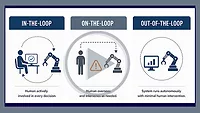
  • In-the-loop vs. On-the-loop vs. Out-of-the-loop

    VIDEO | AI Systems May Be Creating Hidden Risk on the Factory Floor

    See More

Related Products

See More Products
  • leaner

    Leaner Manufacturing: How to Make the Lean Production Process Easier, Faster, and More Cost-Effective

  • Introduction to the Design and Behavior of Bolted Joints, Fourth Edition: Non-Gasketed Joints

  • value stream.jpg

    Using Hoshin Kanri to Improve the Value Stream

See More Products

Related Directories

  • HowToRobot

  • NoMuda VisualFactory

    NoMuda VisualFactory helps the world’s largest manufacturers implement the fastest, safest, lowest cost process to ensure right-first-time quality. Our customers gain control over their shop floor operations with 20% productivity increases whilst eliminating manufacturing errors and providing real-time visibility of production status to the Shop Floor and Management.
×

Never miss the latest news and trends driving the manufacturing industry

Stay in the know on the latest assembly trends.

JOIN TODAY!
  • RESOURCES
    • Advertise
    • Contact Us
    • Directories
    • Manufacturing Division
    • Store
    • Want More?
  • SIGN UP TODAY
    • Create Account
    • eMagazine
    • Newsletters
    • Customer Service
    • Manage Preferences
  • SERVICES
    • Marketing Services
    • Reprints
    • Market Research
    • List Rental
    • Survey/Respondent Access
  • STAY CONNECTED
    • LinkedIn
    • Facebook
    • Instagram
    • YouTube
    • X (Twitter)
  • PRIVACY
    • PRIVACY POLICY
    • TERMS & CONDITIONS
    • DO NOT SELL MY PERSONAL INFORMATION
    • PRIVACY REQUEST
    • ACCESSIBILITY

Copyright ©2026. All Rights Reserved BNP Media, Inc. and BNP Media II, LLC.

Design, CMS, Hosting & Web Development :: ePublishing