Assembly Magazine logo
search
Ask ASSEMBLY AI
cart
facebook twitter linkedin youtube
  • Sign In
  • Create Account
  • Sign Out
  • My Account
Assembly Magazine logo
  • TRENDS
    • Ask ASSEMBLY AI
    • Trends
    • News
    • New Products
  • INDUSTRIES
    • Aerospace
    • Appliance
    • DFMA Assembly
    • Medical Devices
    • Green Manufacturing
    • Lean Manufacturing
    • Machinery Assembly
    • Electronics Assembly
    • Automotive
  • TECHNOLOGIES
    • Adhesives & Dispensing
    • Assembly Presses
    • Automated Assembly Systems
    • Manufacturing Management
    • Manufacturing Software
    • Motion Control
    • Screwdriving & Riveting
    • Robotics
    • Test & Inspection
    • Plastics & Metal Welding
    • Wire Processing
    • Workstations
  • AUTONOMOUS & ELECTRIC MOBILITY
    • AEM Magazine Archives
    • Autonomy
    • Electrification
    • Mobility Services
    • Assembly & Testing
    • AV/EM News
  • MEDIA
    • Ask ASSEMBLY AI
    • Podcasts
    • Assembly News Now
    • Assembly TV
    • Webinars
    • eBooks
  • EVENTS
    • Calendar
    • The ASSEMBLY Show
  • MORE
    • Exclusives >
      • Plant of the Year
      • Capital Spending
    • Buyers Guide >
      • Supplier Insights
    • Classifieds
    • Featured Products
    • Newsletters
    • Store
    • White Papers
    • Columns
    • Sponsor Insights
  • INFOCENTER
    • Assembly & Test Solutions
  • EMAGAZINE
    • eMagazine
    • Archive Issues
    • Advertise
    • Contact Us
    • Sign Up
IndustriesASSEMBLY TrendsColumnsThe Editorial

Amidst New Round of Scrutiny, Are Tariffs Working for U.S. Manufacturing?

By John Sprovieri
boat loaded with shipping containers
Photo: Kosal Hor / iStock / Getty Images Plus

On Feb. 20, the Supreme Court ruled that President Trump exceeded his authority when he imposed sweeping tariffs on imports from nearly every U.S. trading partner.

March 4, 2026

On Feb. 20, the Supreme Court ruled that President Donald Trump exceeded his authority when he imposed sweeping tariffs on imports from nearly every U.S. trading partner. 

Early last year, Trump invoked the International Emergency Economic Powers Act of 1977 to set tariffs on imported goods from more than 100 countries. Although the statute does not mention the word “tariffs,” Trump claimed that it allowed him to unilaterally impose the duties without congressional approval.

Under the act, the president has the authority to take certain steps in response to a national emergency to “deal with any unusual and extraordinary threat” to “the national security, foreign policy or economy of the United States.” That includes the power to “regulate” the “importation” of foreign property. Past presidents have relied on that language to place sanctions or embargoes on other countries, but not to impose taxes. The Trump administration argued that phrase also gives the president the power to levy tariffs.

The Supreme Court disagreed. Writing for the majority, Chief Justice John G. Roberts Jr. said that statute does not authorize the president to impose tariffs. “The president asserts the extraordinary power to unilaterally impose tariffs of unlimited amount, duration, and scope. In light of the breadth, history, and constitutional context of that asserted authority, he must identify clear congressional authorization to exercise it,” the chief justice wrote.

Not one to be deterred, Trump immediately invoked a new law—the Trade Act of 1974—to impose a flat 10 percent tariff on imports. That went into effect Feb. 24, but it expires in July unless Congress extends it. The administration is also investigating the applicability of other laws that target unfair trading practices and national security threats.

Under the new tariff regime, some countries, such as Colombia, Argentina, Australia and the U.K., will see higher tariffs. Some countries, including China, India, Thailand, Brazil, South Africa, Canada and Mexico, will see a lower rate. And other countries, including Japan, South Korea, and the Europe Union, won’t see any change in tariffs.

Although the new tariffs are lower than what Trump had initially imposed, consumers are unlikely to see any benefit. Many companies will be reluctant to lower prices once consumers have gotten used to them.

Looking for quick answers on assembly and manufacturing topics? Try Ask ASM, our new smart AI search tool. Ask ASM →

The Supreme Court decision left uncertain the extent to which those who paid tariffs might be able to obtain refunds. On Feb. 23, FedEx filed suit in the U.S. Court of International Trade to demand a refund of the tariffs. FedEx is likely to be joined by many other large corporations demanding refunds. Dozens of companies filed lawsuits against the tariffs before the Supreme Court’s ruling.

Litigation aside, there’s little evidence that Trump’s tariffs are working, regardless of their legal underpinnings. In imposing tariffs, Trump said his goal is to reduce the trade deficit and spur more manufacturing in the United States. One year into his second term, neither goal has been achieved. In fact, the opposite occurred.

From January 2025 to January 2026, the U.S. lost 83,000 manufacturing jobs, according to the latest data from the Bureau of Labor Statistics.

What’s more, U.S. imports grew last year, and the trade deficit in goods hit a record high. The total trade deficit, including trade in both goods and services, shrank slightly in 2025, as growth in exports narrowly outpaced growth in imports. But that was entirely the result of an expanding trade surplus in services. The trade deficit in physical goods grew.

Overall imports of goods and services increased 4.7 percent, to $4.3 trillion, in 2025, while exports rose 6.2 percent, to $3.4 trillion. The trade deficit—the amount by which imports exceed exports—was $901 billion, down from $903 billion in 2024.

Tariffs did lead to shifts in the countries with which the United States trades. Imports of goods from China tumbled nearly 30 percent, to their lowest level since 2009. However, U.S. exports to China fell by nearly as much. The goods trade deficit with China shrank to $202 billion in 2025, the smallest in more than two decades, and for the first time, it was smaller than our deficit with the European Union.

But as Americans bought less from China, they bought more from the rest of the world. Our trade deficits with Vietnam, Mexico, India and other countries were the largest on record.

In short, Trump’s tariffs did not reduce U.S. imports, they merely rerouted them. And, U.S. consumers are stuck with higher prices.

See more articles from our March 2026 issue!

KEYWORDS: Jobs tariffs

Share This Story

Looking for a reprint of this article?
From high-res PDFs to custom plaques, order your copy today!

John has been with ASSEMBLY magazine since February 1997. John was formerly with a national medical news magazine, and has written for Pathology Today and the Green Bay Press-Gazette. John holds a B.A. in journalism from Northwestern University, Medill School of Journalism.

Recommended Content

JOIN TODAY
To unlock your recommendations.

Already have an account? Sign In

  • Made in the U.S.A.

    Consumer Products Manufacturing: Made in the USA

    Supply chain lessons learned during the coronavirus...
    Automated Assembly Systems
    By: Austin Weber
  • Best Practices for Press-Fit Assembly

    Best Practices for Press-Fit Assembly

    In manufacturing, ironclad formulas for success are hard...
    Assembly Presses
    By: Jim Camillo
  • aem0523leader-tesla1.jpg

    Tesla Rethinks the Assembly Line

    Engineers at Tesla Inc. have developed a new process that...
    Assembly and Testing
    By: Austin Weber
Manage My Account
  • eMagazine Subscription
  • Assembly Newsletters
  • Online Registration
  • Subscription Customer Service
  • Manage My Preferences

More Videos

Sponsored Content

Sponsored Content is a special paid section where industry companies provide high quality, objective, non-commercial content around topics of interest to the ASSEMBLY audience. All Sponsored Content is supplied by the advertising company and any opinions expressed in this article are those of the author and not necessarily reflect the views of ASSEMBLY or its parent company, BNP Media. Interested in participating in our Sponsored Content section? Contact your local rep!

close
  • ultrasonic welding
    Sponsored bySonobond Ultrasonics

    Engineering Efficiency in High-Performance Assembly: How Ultrasonic Welding Enhances Throughput, Reliability and Quality

  • UV curing system
    Sponsored byDymax

    Why UV Intensity Alone Doesn’t Define Curing Performance

  • wooden pallets
    Sponsored byLEAN Manufacturing Products

    Eliminating Waste on the Shop Floor: Applying Lean Principles to Improve Manufacturing Efficiency

Popular Stories

ASSEMBLY News Now, episode-30: Volvo Redesigns EV Manufacturing

Volvo Redesigns EV Manufacturing

Boeing CEO Kelly Ortberg announces 1 billion investment

Boeing Plans $1 Billion Wichita Investment, Workforce Training Center

automated consumer goods assembly system

Best Practices for Cycle Time Optimization

Watch the latest episode of ANN now!

Events

July 24, 2025

From Shop Floor to CFO: How Manufacturers Are Closing the Loop Between Operations and Finance

On Demand Learn how manufacturers are bridging the gap between the shop floor and ERP systems to gain real-time visibility, streamline operations, and kick-start digital transformation—without waiting years.

Sponsored by:

PicoStratusGreen
July 30, 2025

Buffer Analysis and Design Fundamentals for Manufacturing Excellence

On Demand In this presentation, Dr. Herman Tang shares practical insights from his industry experience and research on buffer management in manufacturing operations.

View All Submit An Event

Poll

Difficult Assembly Processes

Which assembly process gives you the most difficulty?
View Results Poll Archive

Products

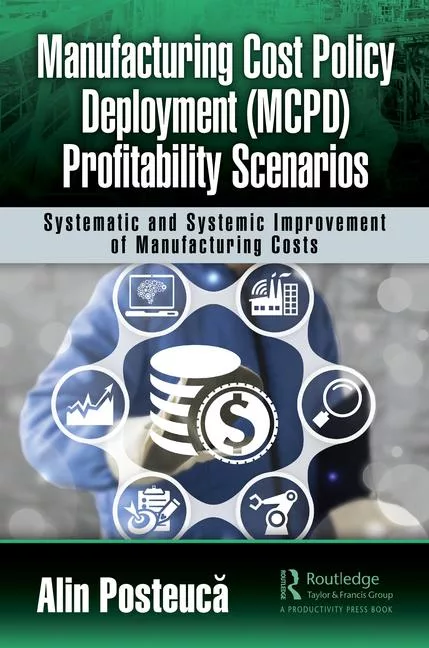
Manufacturing Cost Policy Deployment (MCPD) Profitability Scenarios: Systematic and Systemic Improvement of Manufacturing Costs

Manufacturing Cost Policy Deployment (MCPD) Profitability Scenarios: Systematic and Systemic Improvement of Manufacturing Costs

See More Products
Register for webinar - Modernizing Automotive Assembly: Why Upgrading Legacy MES is a Business Imperative

Related Articles

  • NAFTA has been a success for U.S. manufacturing

    See More
  • Investment Group Predicts Comeback for U.S. Manufacturing

    See More
  • South Korea-Based Navien Selects Virginia for U.S. Manufacturing Plant

    See More

Related Products

See More Products
  • 9781138498730.jpg

    Manufacturing Cost Policy Deployment (MCPD) Profitability Scenarios: Systematic and Systemic Improvement of Manufacturing Costs

  • history.jpg

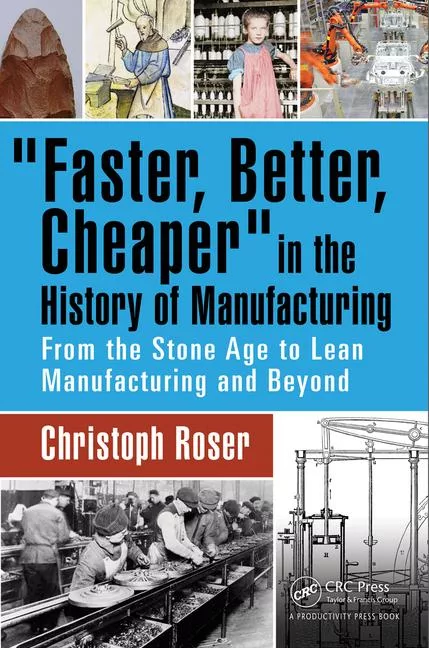
    Faster, Better, Cheaper in the History of Manufacturing: From the Stone Age to Lean Manufacturing and Beyond

  • smart.jpg

    Handbook of Smart Manufacturing Forecasting the Future of Industry 4.0

See More Products

Related Directories

  • U.S. Heatstake

×

Never miss the latest news and trends driving the manufacturing industry

Stay in the know on the latest assembly trends.

JOIN TODAY!
  • RESOURCES
    • Advertise
    • Contact Us
    • Directories
    • Manufacturing Division
    • Store
    • Want More?
  • SIGN UP TODAY
    • Create Account
    • eMagazine
    • Newsletters
    • Customer Service
    • Manage Preferences
  • SERVICES
    • Marketing Services
    • Reprints
    • Market Research
    • List Rental
    • Survey/Respondent Access
  • STAY CONNECTED
    • LinkedIn
    • Facebook
    • Instagram
    • YouTube
    • X (Twitter)
  • PRIVACY
    • PRIVACY POLICY
    • TERMS & CONDITIONS
    • DO NOT SELL MY PERSONAL INFORMATION
    • PRIVACY REQUEST
    • ACCESSIBILITY

Copyright ©2026. All Rights Reserved BNP Media, Inc. and BNP Media II, LLC.

Design, CMS, Hosting & Web Development :: ePublishing