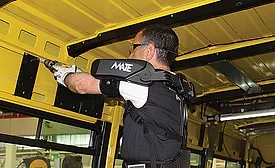
When Ken Turzinski, president of TYRI Americas in Stevens Point, WI, returned from a local trade show a few years ago, he came back with a small, innocuous plastic product. Little did he know that the product would help his company become more lean and sustainable.
The manufacturing industry faces a talent shortage, and it will take a multifaceted approach to address the issue. The industry was already struggling to find workers before the COVID-19 pandemic made it worse.
Founded in 1978, Pro-Line is the recognized leader in ergonomic workbench design. The company is credited with producing one of the first hand crank, height-adjustable tables in 1987: the model EL, still available today.
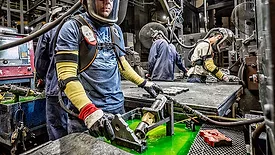
On June 6, 51-year-old welder Quoc Le died at a railcar assembly plant in Hamilton, ON, Canada, after a 1-ton bulkhead fell on him. Shockingly, it was the third fatal accident at the factory, which is owned by National Steel Car, in the past 21 months.
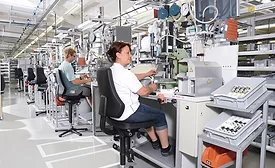
While assembly work has always been physically demanding, little is known about the overall consequences of cognitive loading on assemblers' performance, well-being, and the speed and quality of production. Cognitive under- or overloading can cause a lack of focus or distraction on one hand, or overwhelm on the other.
The Internet of Things (IoT) continues to evolve at a rapid pace. Businesses of all shapes and sizes, including manufacturers, are taking advantage of the technology's ability to network, collect, share and act on data from their operations and their customers.
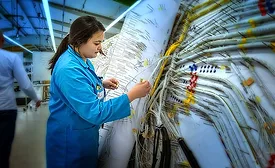
When it comes to assembling wire harnesses, humans still do it better than automation. That's why wire processing remains a largely manual process. However, it also poses a number of ergonomic issues and concerns, including the risk of back, finger, neck, shoulder and wrist injuries.
New manufacturing technology should do more than just increase output, efficiency and quality. It should also improve the working conditions and health of the employees.