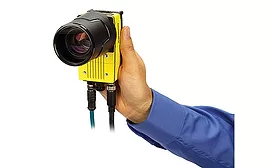
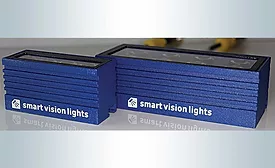
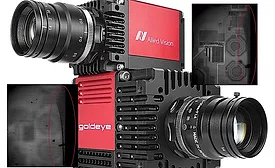
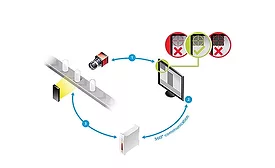
Once upon a time, color vision technology was limited to large manufacturers with big budgets and lots of in-house technical expertise. But, recent advancements in cameras, lighting and software have made color vision more affordable, less complex and easier to use on assembly lines.
In many automotive parts, a small defect can cause big problems. This explains why Tier 1 suppliers increasingly use machine vision to inspect parts used for steering, air bags, seat belts, brakes, electronic controls and exhaust.
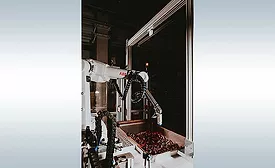
Ordinarily, parts are presented to a robot for pick up at fixed locations, the escapement of a feeder bowl, for example, or the pockets of a thermoformed tray. To save space and eliminate the cost of trays and feeders, manufacturers would like a robot to pick randomly oriented parts out of a bin, box or tote.
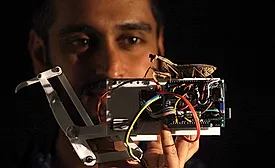
NEWCASTLE UPON TYNE, U.K.—Engineers at Newcastle University here are studying how the 3D vision used by praying mantises could lead to simpler visual processing systems in robots. They recently equipped insects with miniature glasses that were temporarily glued on with beeswax.
Vision systems are used to make critical measurements of parts and assemblies as part of a quality control system. Such measurements might be taken to determine the fitness of a component to progress to the next step in the manufacturing process, or they might be done at the end of the line prior to shipping the final product.
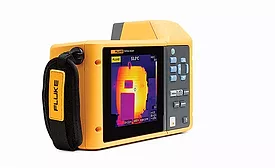
Every parent or healthcare worker knows that a fever is a sure sign of an infection. Similarly, an elevated temperature in a roller bearing is a sure sign that it’s about to fail. Just as thermometers are vital instruments in homes, clinics and hospitals, infrared thermal imaging systems have become a critical tool for maintenance and quality assurance personnel at assembly plants and other industrial facilities.
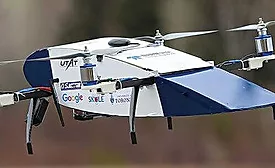
Regardless of whether they are called drones or unmanned aerial vehicles (UAVs), their popularity is increasing among consumers, military leaders and institutions around the world. In fact, analysts at market researcher Teal Group predict that global spending on UAVs will reach $14 billion by 2024.
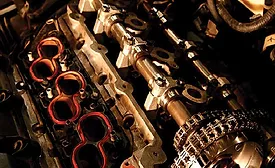
Designing a modern diesel engine presents many challenges for engineers. One of the biggest is making sure that each engine component is properly sealed during operation.
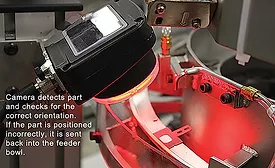
The manufacturer needed to present thin steel blades down an assembly line in a specific orientation. However, the parts were essentially symmetrical, with the exception of a small notch that had to be presented on the right side. With no real differences in the part other than this notch, feeding them to an assembly mechanism with 100 percent accuracy was a challenge.