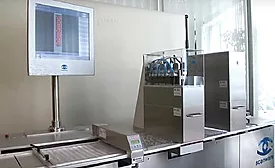
Pharmaceutical OEMs and their suppliers know all about the concept of ‘Japan quality’ products. This phrase refers to packaged pharmaceuticals that are flawless in appearance.
For more than 30 years, manufacturers have used infrared welding (IW) to assemble plastic components that are large, made of challenging materials or have high strength and hermetic requirements.
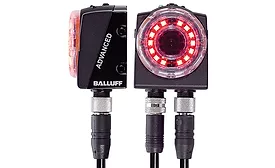
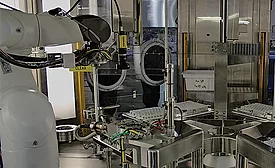
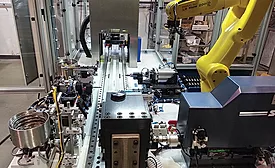
Vision systems play a vital role in automated assembly systems. They can check for the presence or absence of parts or materials. They can measure key dimensions of assemblies. They can tell robots the precise location of parts. They can even read 1D and 2D codes.
Just a few decades ago, the typical American or European driver would never have believed that China, a communist country, would one day be the world’s largest car producer (by volume).
In every manufacturing industry, tradition is becoming less important. Companies no longer assume that what worked in the past will be enough to keep and gain customers. Instead, they look to the latest technology to improve manufacturing processes, optimize product quality and expand their customer base.
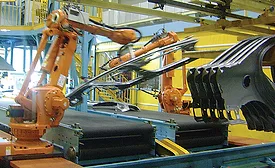
At Hitachi Metals Automotive Components USA LLC (HMAC), suspensions, exhaust manifolds and other components are assembled every day for all of the world’s leading automakers.
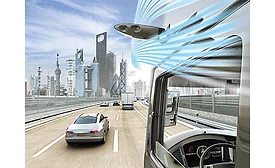
For decades, motorists have depended on side view and rearview mirrors when changing lanes or backing up. But, the good old glass mirror is slowly being replaced by cameras, sensors and display screens.