The COVID-19 pandemic has propelled a national movement to strengthen domestic supply chains and reshore. Recruitment of the next generation of skilled manufacturing talent is paramount to this effort, but there is a widening gap between the skills needed by industry and the skills of job candidates.
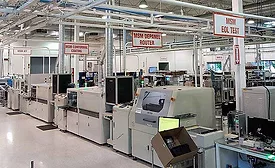
Gentherm Inc. has been assembling a wide range of thermal management products for the automotive industry since 1991, when it was known as Amerigon. In 1996, the company created the industry's first thermoelectrically heated and cooled seat system (called Climate Control Seat).
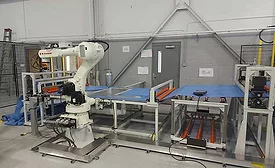
Robots make a big difference as an industrial manufacturing tool, but understanding how to prepare your factory for automation can be tricky. There is a lot to know ahead of time, and good preparation is key.
At the start of the COVID-19 pandemic, the healthcare industry faced a large-scale shortage of personal protective equipment (PPE), which put frontline workers at risk of infection.
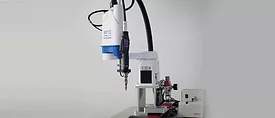
An automatic screw feeder can greatly increase the efficiency of a manual screwdriving operation. However, to reach the next level of productivity, assemblers should consider a robot. Screwdriving is a great application for Cartesian, SCARA, six-axis robots and collaborative robots. Now, several suppliers have introduced robots for installing large screws and bolts. Here’s a look at some of the latest developments.
People often ask me what makes a good user requirement specification (URS). Maybe it's my age or experience, or maybe they're just trying to make me feel good, but I always consider it a compliment when someone asks me. After working on automation projects for more years than I would like to believe, I think I can nudge people in the right direction.
Management theory and practice don't always match, and few people know this better than the individuals who oversee assembly lines. Their real-world experience has taught them that the best method to achieve success always depends on several application-specific factors. Among them are part size and shape, available automation, required cycle time and the materials being joined.
Bosch Rexroth's introduction of adaptive control in 2012 advanced the quality and efficiency of robotic resistance welding. Using cutting-edge hardware and software, adaptive control monitors various process parameters to perfect each weld.
Saving a penny per part or a millisecond of cycle time might not matter to some manufacturers. But machine builder Eclipse Automation knows that even small gains can offer huge competitive advantages for its customers. Greater flexibility and uptime through predictive maintenance are also crucial.