Fabricating and testing optical components is a very detailed process. It begins by grinding a spherical glass blank using ring tools to create a semifinished lens. Next, the lens’ rough surface is rotated and rubbed against a tool having the desired surface shape.
TOKYO—Researchers at Japan’s National Institute of Advanced Industrial Science and Technology have developed an organic material that can be liquefied or hardened by shining different types of light on it. The result is an adhesive that can be used over and over again.
Adhesives offer several benefits for joining materials. They distribute loads across the entire joint area. They show excellent fatigue properties. They attenuate vibrations and sound. They often fulfill a dual role, bonding a joint as well as sealing it against ingress of water or other fluids.
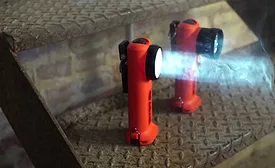
As it was developing its high-intensity discharge LiteBox and Survivor series flashlights, the company decided to strengthen the lights' lenses and reflector housings by applying a sealant to bond the parts together.
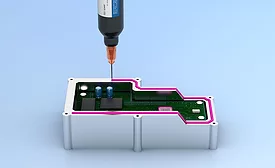
Compared with die-cut or molded gaskets, liquid gaskets have many design advantages. This article reviews the applications for these materials and tells how best to dispense them.