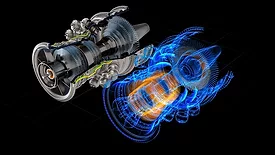
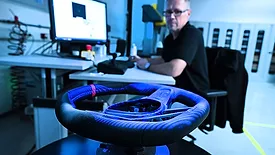
Digital twins, once a concept of speculative fiction, are now essential in manufacturing and quality control. These virtual replicas of physical assets enable organizations to simulate and optimize processes, allowing for precise predictions and error detection far beyond traditional trial-and-error methods.
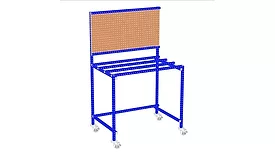
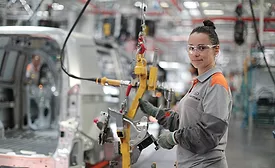
Flexibility on assembly lines is more important than ever. A product that was run one week may not get produced at all the next. Assembly cells must be rearranged; part supplies must be repositioned; and it all must be done quickly and efficiently.
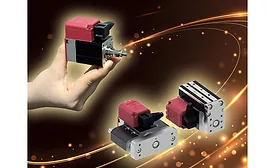
The choice of pneumatic or electric actuators involves an evaluation of performance, component costs, system costs and productivity gains. Each has inherent advantages and disadvantages. Perhaps one of these new motion control products can play a role in your next machine design.
When manufacturers begin exploring automation, they often jump straight to the most complex challenge on their production line. But starting with a more straightforward application is much better way to go.
ASSEMBLY has implemented a new AI tool, “Ask ASSEMBLY AI,” to help you find information quickly and easily. No need to do a complex Boolean search by combining key words and phrases with operators like AND, OR, and NOT. Just type in a search term such as “SCARA robot” or “automatic screwdriving.” Or, even better, ask a question, such as “What’s the difference between a SCARA robot and a six-axis robot?” or “What’s the best adhesive for bonding plastic?”
 RSS
RSS