Assembly Magazine logo
search
Ask ASSEMBLY AI
cart
facebook twitter linkedin youtube
  • Sign In
  • Create Account
  • Sign Out
  • My Account
Assembly Magazine logo
  • TRENDS
    • Ask ASSEMBLY AI
    • Trends
    • News
    • New Products
  • INDUSTRIES
    • Aerospace
    • Appliance
    • DFMA Assembly
    • Medical Devices
    • Green Manufacturing
    • Lean Manufacturing
    • Machinery Assembly
    • Electronics Assembly
    • Automotive
  • TECHNOLOGIES
    • Adhesives & Dispensing
    • Assembly Presses
    • Automated Assembly Systems
    • Manufacturing Management
    • Manufacturing Software
    • Motion Control
    • Screwdriving & Riveting
    • Robotics
    • Test & Inspection
    • Plastics & Metal Welding
    • Wire Processing
    • Workstations
  • AUTONOMOUS & ELECTRIC MOBILITY
    • AEM Magazine Archives
    • Autonomy
    • Electrification
    • Mobility Services
    • Assembly & Testing
    • AV/EM News
  • MEDIA
    • Ask ASSEMBLY AI
    • Podcasts
    • Assembly News Now
    • Assembly TV
    • Webinars
    • eBooks
  • EVENTS
    • Calendar
    • The ASSEMBLY Show
  • MORE
    • Exclusives >
      • Plant of the Year
      • Capital Spending
    • Buyers Guide >
      • Supplier Insights
    • Classifieds
    • Featured Products
    • Newsletters
    • Store
    • White Papers
    • Columns
    • Sponsor Insights
  • INFOCENTER
    • Assembly & Test Solutions
  • EMAGAZINE
    • eMagazine
    • Archive Issues
    • Advertise
    • Contact Us
    • Sign Up
TechnologiesAutomotive AssemblyAssembly PressesScrewdriving and Riveting AssemblyAssembly and TestingAV/EM NewsElectrification

Contact Bushing Assembles Aluminum Bus Bars for EVs
By John Sprovieri
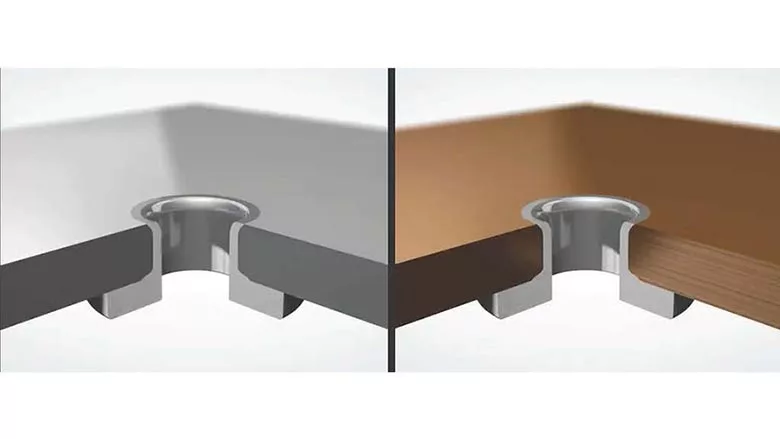
installation of the bushing

A combined broach and flare process during installation of the bushing ensures consistent mechanical and electrical connections.

Photo courtesy PennEngineering

May 19, 2025

Copper has been the industry standard for bus bars in electric vehicles (EVs) due to its superior conductivity and reliability. However, the rising costs and heavier weight of copper make it less attractive as automakers focus on reducing vehicle weight and improving cost efficiency. 

Aluminum is emerging as a compelling alternative. Although it has only about half the conductivity of copper, doubling the thickness of aluminum bus bars allows them to perform comparably to copper ones, while still achieving significant weight savings. For instance, even at twice the thickness, aluminum weighs only about half as much as copper and comes at a fraction of the cost.

Moreover, aluminum is widely available and highly recyclable, making it a more sustainable choice as the EV market grows. Besides bus bars, the metal can be used for power distribution units and inverters.

However, using aluminum for bus bars isn’t without its challenges. One of the main issues with aluminum bus bars is the formation of an oxide layer on the surface. This oxide layer is highly resistant to electricity, making it difficult to achieve the same level of conductivity as copper.

To address this challenge, PennEngineering has introduced the ECCB eConnect contact bushing.
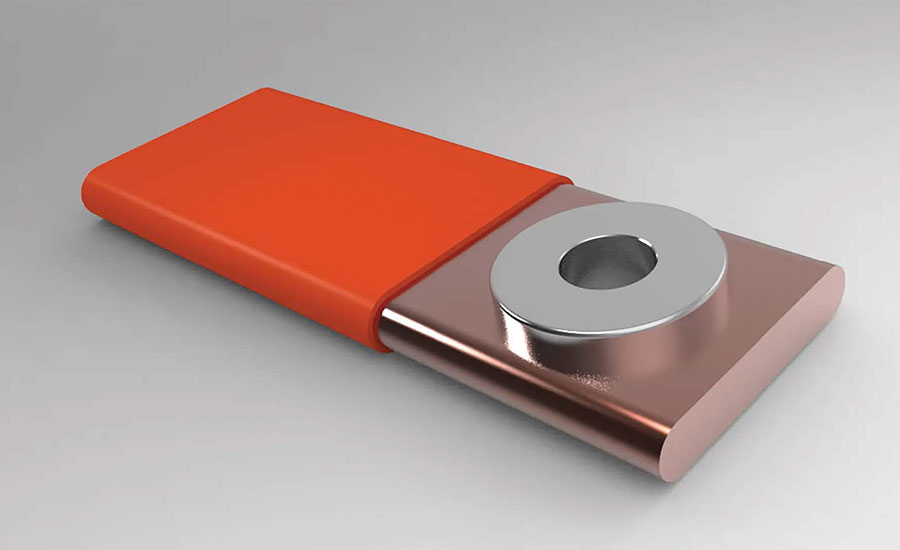
 

ECCB eConnect contact bushing

To connect a bus bar to other components, the bushing is intended to work with other fasteners in the eConnect family of products—either a self-clinching nut or a self-clinching stud. Photo courtesy PennEngineering

Defeating the Aluminum Oxide Layer

The aluminum oxide layer that naturally forms on aluminum surfaces acts as an insulator, reducing the efficiency of electrical connections. Over time, this layer can even thicken, further impeding conductivity and compromising the reliability of electrical connections in bus bars. For a component as crucial as a bus bar, maintaining high conductivity is essential for efficient power transfer, especially as EVs rely heavily on optimized energy distribution to extend range and performance

PennEngineering developed the ECCB eConnect contact bushing specifically to address the conductivity issues associated with aluminum oxide. The bushing is designed to deliver ultra-low electrical resistance connections in aluminum bus bars, effectively overcoming the challenges of the oxide layer. Serrations under the head of the bushing break through the oxide layer with any need for surface preparation.

Looking for quick answers on assembly and manufacturing topics? Try Ask ASM, our new smart AI search tool. Ask ASM →

Designed for easy installation, the bushing creates a secure, durable joint that resists loosening or performance degradation over time. This reliability is essential for EVs, where high vibrations and temperature fluctuations can otherwise compromise weaker connections.

The bushing’s unique design disrupts the aluminum oxide layer, allowing for a direct, high-quality metal-to-metal connection. This ensures low electrical resistance.
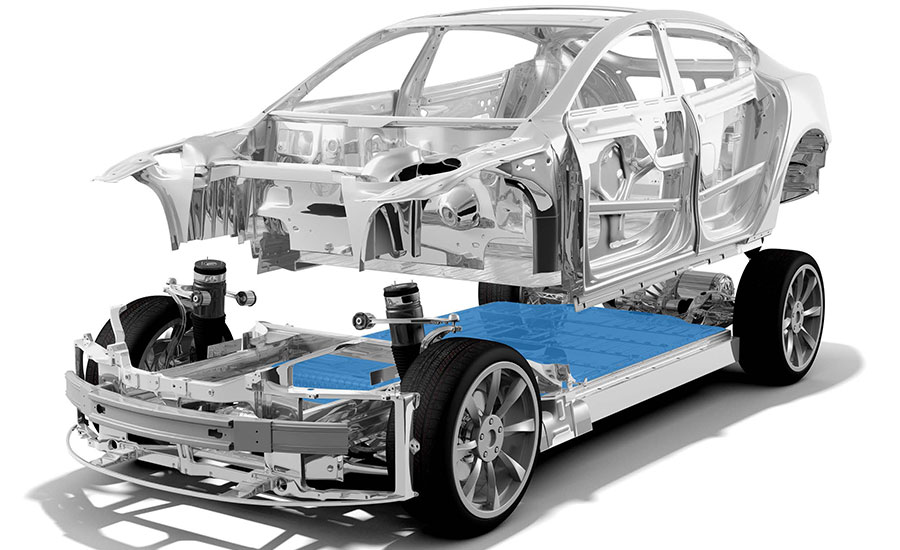
electric vehicle (EV)

Aluminum is emerging as a compelling alternative for conducting electricity in EVs. Photo courtesy PennEngineering

The bushing is made from high-conductivity copper alloy, which helps reduce resistance and improve overall conductivity. This allows EV manufacturers to leverage the cost and weight benefits of aluminum while achieving copper-like performance.

By incorporating conductive coatings, such as silver, the bushing minimizes resistance at the connection point. Silver is an excellent conductor, enhancing the efficiency of electrical transfer through the bushing, even in challenging environments where the oxide layer might otherwise inhibit current flow.

To connect the bus bar to other components, the bushing is intended to work with other fasteners in the eConnect family of products—either a self-clinching nut or a self-clinching stud.

Self-clinching fasteners are installed not with a power tool, but a press. The fasteners are pressed into thin, soft or otherwise fragile materials to provide strong threads for mating hardware.

Self-clinching fasteners are installed with a press during fabrication or final assembly. Installation is a two-step process. First, the fastener shank is placed in a mounting hole in one or more thin metal sheets. Then, as the fastener is pressed into place, displaced sheet material cold-flows into the shank recess and locks the fastener in place. When installation is complete, the fastener is flush with the sheet or touching the top of it.

In the case of the bushing, a combined broach and flare process during installation ensures consistent mechanical and electrical connections. The bushing can be installed in metal sheets with a hardness of HRB 50 or less.

See more articles from our June 2025 issue!


For more information on self-clinching fasteners, read these articles:
Assembly With Press-In Fasteners
Tips for Specifying Stainless Clinch Fasteners for Stainless Steel Assemblies
Fasteners Tighten Online Lottery Terminals

KEYWORDS: self-clinching fasteners

Share This Story

Looking for a reprint of this article?
From high-res PDFs to custom plaques, order your copy today!

John has been with ASSEMBLY magazine since February 1997. John was formerly with a national medical news magazine, and has written for Pathology Today and the Green Bay Press-Gazette. John holds a B.A. in journalism from Northwestern University, Medill School of Journalism.

Recommended Content

JOIN TODAY
To unlock your recommendations.

Already have an account? Sign In

  • Made in the U.S.A.

    Consumer Products Manufacturing: Made in the USA

    Supply chain lessons learned during the coronavirus...
    Automated Assembly Systems
    By: Austin Weber
  • Best Practices for Press-Fit Assembly

    Best Practices for Press-Fit Assembly

    In manufacturing, ironclad formulas for success are hard...
    Assembly Presses
    By: Jim Camillo
  • aem0523leader-tesla1.jpg

    Tesla Rethinks the Assembly Line

    Engineers at Tesla Inc. have developed a new process that...
    Industries
    By: Austin Weber
Manage My Account
  • eMagazine Subscription
  • Assembly Newsletters
  • Online Registration
  • Subscription Customer Service
  • Manage My Preferences

More Videos

Sponsored Content

Sponsored Content is a special paid section where industry companies provide high quality, objective, non-commercial content around topics of interest to the ASSEMBLY audience. All Sponsored Content is supplied by the advertising company and any opinions expressed in this article are those of the author and not necessarily reflect the views of ASSEMBLY or its parent company, BNP Media. Interested in participating in our Sponsored Content section? Contact your local rep!

close
  • ultrasonic welding
    Sponsored bySonobond Ultrasonics

    Engineering Efficiency in High-Performance Assembly: How Ultrasonic Welding Enhances Throughput, Reliability and Quality

  • UV curing system
    Sponsored byDymax

    Why UV Intensity Alone Doesn’t Define Curing Performance

  • wooden pallets
    Sponsored byLEAN Manufacturing Products

    Eliminating Waste on the Shop Floor: Applying Lean Principles to Improve Manufacturing Efficiency

Popular Stories

Ferrari

Ferrari Unveils Four-Door EV

ASSEMBLY News Now, episode-30: Volvo Redesigns EV Manufacturing

Volvo Redesigns EV Manufacturing

Robots working at Toyota Plant in Japan

Toyota Deploys Geekplus Robots for Factory Material Handling

Watch the latest episode of ANN now!

Events

July 24, 2025

From Shop Floor to CFO: How Manufacturers Are Closing the Loop Between Operations and Finance

On Demand Learn how manufacturers are bridging the gap between the shop floor and ERP systems to gain real-time visibility, streamline operations, and kick-start digital transformation—without waiting years.

Sponsored by:

PicoStratusGreen
July 30, 2025

Buffer Analysis and Design Fundamentals for Manufacturing Excellence

On Demand In this presentation, Dr. Herman Tang shares practical insights from his industry experience and research on buffer management in manufacturing operations.

View All Submit An Event

Poll

Difficult Assembly Processes

Which assembly process gives you the most difficulty?
View Results Poll Archive

Products

Manufacturing Cost Policy Deployment (MCPD) Profitability Scenarios: Systematic and Systemic Improvement of Manufacturing Costs

Manufacturing Cost Policy Deployment (MCPD) Profitability Scenarios: Systematic and Systemic Improvement of Manufacturing Costs

See More Products
ebook

Related Articles

  • copper sleeve to aluminum bus bar

    Ultrasonic Welding Joins Copper Sleeves to Aluminum Bus Bars

    See More
  • AluminumCopperBusbars.jpg

    New Aluminum-to-Copper Bonding Process Joins EV Bus Bars

    See More
  • flexible bus bars

    Technology Welds Flexible Bus Bars

    See More

Related Products

See More Products
  • Product Design for Manufacture and Assembly, Third Edition

  • Joining of Plastics 3e Handbook for Designers and Engineers

  • finite.jpg

    Finite Element Analysis for Engineers

See More Products

Related Directories

  • Phoenix Contact

    Phoenix Contact produces future-oriented components, systems, and solutions for electrical controls, networking, and automation. With a worldwide network reaching 100+ countries and with over 22,000 employees, Phoenix Contact maintains close relationships with its customers. The company's wide variety of products makes it easy for engineers to implement the latest technology.
  • Phoenix Contact

×

Never miss the latest news and trends driving the manufacturing industry

Stay in the know on the latest assembly trends.

JOIN TODAY!
  • RESOURCES
    • Advertise
    • Contact Us
    • Directories
    • Manufacturing Division
    • Store
    • Want More?
  • SIGN UP TODAY
    • Create Account
    • eMagazine
    • Newsletters
    • Customer Service
    • Manage Preferences
  • SERVICES
    • Marketing Services
    • Reprints
    • Market Research
    • List Rental
    • Survey/Respondent Access
  • STAY CONNECTED
    • LinkedIn
    • Facebook
    • Instagram
    • YouTube
    • X (Twitter)
  • PRIVACY
    • PRIVACY POLICY
    • TERMS & CONDITIONS
    • DO NOT SELL MY PERSONAL INFORMATION
    • PRIVACY REQUEST
    • ACCESSIBILITY

Copyright ©2026. All Rights Reserved BNP Media, Inc. and BNP Media II, LLC.

Design, CMS, Hosting & Web Development :: ePublishing