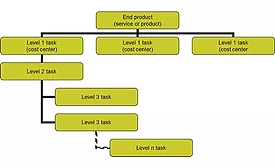
The fundamental start of any project is a scope of work document, which specifies what we want the project to achieve. The project scope may start out broadly described based upon business objectives, but it will become increasingly detailed over time.
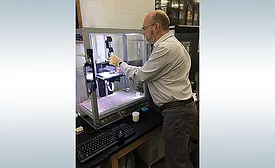
Additive manufacturing is transforming the way many types of products are designed and assembled. One industry that's benefitting the most is aerospace, which traditionally requires complex, low-volume components that must withstand rigorous operating conditions.
On July 15, the United Auto Workers formally began talks with Ford, General Motors and Fiat Chrysler on a new four-year contract. It was all smiles and handshakes to start, but negotiations will surely get testy before the current contract expires Sept. 14.
French company Prodeo develops and implements software that helps companies improve their production processes to increase efficiency and productivity.
In my last column, we discussed how a shift in consumer behavior and the adoption of new technology are transforming the traditional supply chain. We learned that some manufacturers are making the complex move to cut out the middleman and ship their products direct to consumers (D2C) for increased profits and greater control over brand, price and customer data.
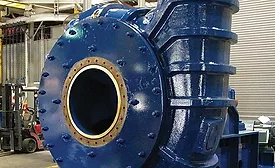
Manufacturers in agriculture, mining, petroleum and other industries rely on centrifugal slurry pumps to move thick, particle-filled liquids. These heavy-duty pumps feature a rotating impeller that uses centrifugal force to move water and solids through pipelines over short and medium distances.
Since 2016, China has been the world's largest industrial robot market. Reports from the International Federation of Robots show that foreign robot makers sold nearly 90,000 units to Chinese manufacturers that year and more than 103,000 robots in 2017
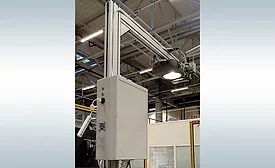
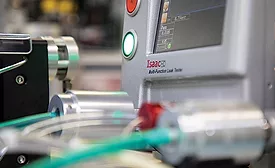
Flow and leak testing are required for any medical device that brings a substance to or from the body. Flow testing ensures that there are no blockages and the substance being delivered can make it through.
Even in a good economy, most governors would welcome plans by a Fortune 100 corporation to build a new factory in their state, and create more than 500 manufacturing jobs. Arizona Gov. Doug Ducey, however, was not so sure.
 RSS
RSS