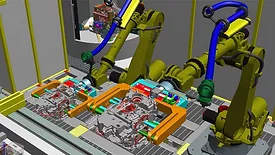
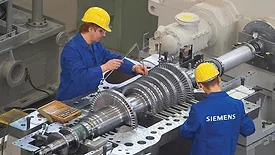
When introducing new vehicle models, each launch can demand extensive reconfiguration of existing production lines. Timing is critical and every delay carries a significant cost. Digital twin technology can help engineers tackle that issue.
In imposing tariffs, Trump said his goal is to reduce the trade deficit and spur more manufacturing in the United States. One year into his second term, neither goal has been achieved. In fact, the opposite occurred.
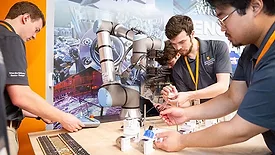
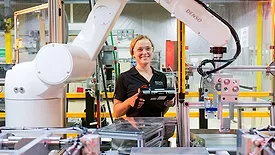
A team of young engineers at the University of Tennessee is using a six-axis collaborative robot to automate assembly steps such as terminal insertion and wire routing.
In January, Samsung Electronics forecast a worsening chip shortage this year, thanks to burgeoning demand for AI data centers. The race to build AI infrastructure has prompted chipmakers to divert manufacturing capacity toward high-bandwidth memory for AI servers, squeezing the supply of conventional memory chips.
To increase collaboration up and down the supply chain, a coalition of European automotive manufacturers created Catena-X, the first end-to-end, collaborative and open data ecosystem for the automotive industry.
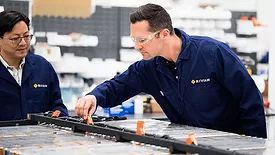
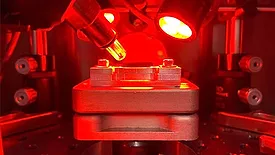
Researchers at Pennsylvania State University used large language models to evaluate parameters that can contribute to laser welding defects and quality issues.
They focused on gyroid infill, an intricate, repeating internal structure commonly employed in additive manufacturing to minimize weight while preserving structural integrity.
On Sept. 19, President Donald Trump signed a proclamation that adds a $100,000 fee for new applicants for H-1B visas. The administration hopes the new fee will encourage employers to prioritize hiring domestic workers, but opponents warn that the policy could backfire.
 RSS
RSS