WASHINGTON--The U.S. manufacturing sector has weathered a bumpy road over the course of the past two decades, but successfully righting the country's industrial ship would mean an economic windfall of $530 billion, according to a new report from The McKinsey Global Institute.
TOKYO—Alabama and North Carolina are the final states in the running to win a prized Toyota Motor Corp. and Mazda Motor Corp. joint car factory worth $1.6 billion. A dozen states, including Tennessee, Texas and South Carolina, had been in contention.
Manufacturers have known the importance of being discreet since the start of the Industrial Revolution. History has definitely shown this approach to be the best way to safeguard all of a company’s technological, production and assembly secrets.
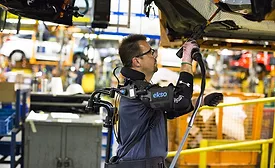
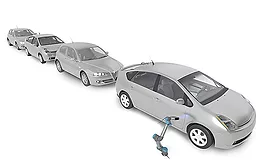
Robots are being used for a variety of assembly and inspection applications, which is enabling the operation of lean, efficient and automated systems where more than one product type or model can be produced on a single assembly line.
WASHINGTON--Automakers are scrambling to defend the electric vehicle tax credit after House Republicans last week proposed eliminating it to help pay for their broader package of tax cuts.Lobbyists here quickly huddled to figure out how to save the tax credit, which the industry views as critical to promoting commercial adoption of electric vehicle technology.
As automakers and suppliers search for new ways to reduce vehicle weight, some engineers are experimenting with natural fibers. Bamboo, cotton, hemp, jute, kenaf, rice and other crops can be used to produce high-strength composite structures for automotive applications.