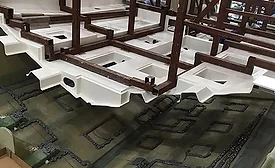
Several years ago, researchers from QSS Group Inc. and the Ohio Aerospace Institute were interested in finding a commercially available adhesive that bonds titanium pipes to carbon-carbon composite (CCC) sheets. The reason: Doing so would lower the cost of assembling spacecraft heat-rejection systems made of these joined materials.
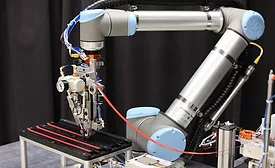
Manufacturers today are trapped in a perennial race to get products assembled and out the door in less time and at lower cost while maintaining high quality. They must also adjust to constant change in the materials they use.
Engineers at NASA recently earmarked a couple of emerging technologies that may alter the way aircraft are designed and built in the coming decades. If successful, each could lead to planes that are quieter, more energy efficient and produce fewer emissions.
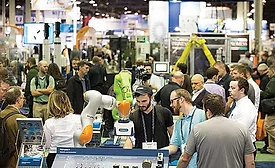
More than 5,500 manufacturing professionals saw the latest robots, fastening tools and automation at the sixth annual ASSEMBLY Show, which was held Oct. 23-25 at the Donald E. Stephens Convention Center in Rosemont, IL.
Manufacturers in many industries like to build with composites because they are lightweight and have high strength-to-weight ratios that often exceed steel and aluminum. At the same time, though, these materials can be hard to properly bond to thermoplastic, metal and other composites.
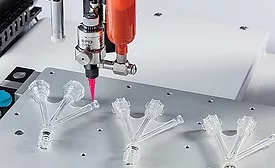
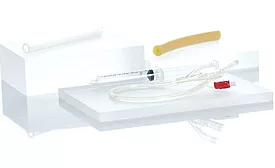
Medical device manufacturers value silicone adhesives for their ability to bond various substrates when assembling devices such as catheters, pacemakers, cochlear implants, aesthetic implants and gastric balloons.