Alabama is home to a variety of manufacturers that employ thousands of people, including Airbus, Austal, Boeing, Daimler, GE Appliances, Honda, Hyundai, Lear, Polaris and Toyota.
The capabilities of manufacturing execution systems software have greatly expanded in recent years, making it a must-have tool for manufacturers in the age of Industry 4.0.
When people say that two foods are better together than separately, like peanut butter and jelly, or macaroni and cheese, they're giving simple examples of the benefit of synergy.
Product life cycles are getting shorter. For example, 20 percent of consumers replace their televisions every four to five years; another 5 percent replace their sets every one to three years. Smartphones are even worse. On average, consumers replace their phones about every 2.5 years.
At the start of the COVID-19 pandemic, the healthcare industry faced a large-scale shortage of personal protective equipment (PPE), which put frontline workers at risk of infection.
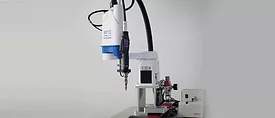
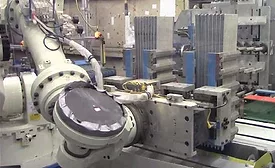
An automatic screw feeder can greatly increase the efficiency of a manual screwdriving operation. However, to reach the next level of productivity, assemblers should consider a robot. Screwdriving is a great application for Cartesian, SCARA, six-axis robots and collaborative robots. Now, several suppliers have introduced robots for installing large screws and bolts. Here’s a look at some of the latest developments.
People often ask me what makes a good user requirement specification (URS). Maybe it's my age or experience, or maybe they're just trying to make me feel good, but I always consider it a compliment when someone asks me. After working on automation projects for more years than I would like to believe, I think I can nudge people in the right direction.
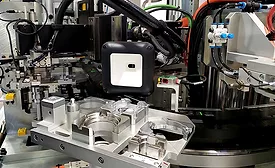
Saving a penny per part or a millisecond of cycle time might not matter to some manufacturers. But machine builder Eclipse Automation knows that even small gains can offer huge competitive advantages for its customers. Greater flexibility and uptime through predictive maintenance are also crucial.
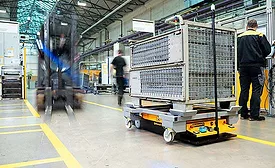
Automotive supplier Continental AG has developed its own line of autonomous automated guided vehicles (AGVs) for transporting parts in its assembly plants and warehouses. The autonomous AGVs can transport loads weighing more than a ton.
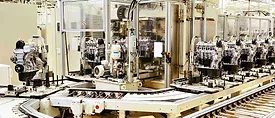
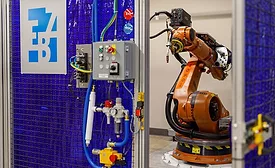
Manufacturers looking to take their operations to the next level often look to automation and robotics to make it happen. This is understandable, for such technology can cost-effectively increase throughput, optimize assembly and testing processes, improve product quality and decrease labor costs.