Rotor blades, guide vanes and other components for jet engines are made from costly materials and machined to precise tolerances. Such components are typically made in batches, due to the time involved in setting up machine centers. The process also requires a fair number of people to tend the machines and assist in changeover.
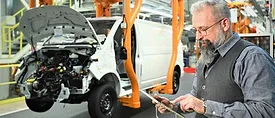
In the factory of the future, software will be every bit as important to product assembly as robots, riveters and nutrunners. This eBook will provide a comprehensive look at data flow in today’s assembly plant.
As assembly plants become more digitally connected to both suppliers and customers, the potential threat posed by cyberattacks will only get worse. Cyberthreats to manufacturers are real, and the consequences can be devastating.
How can a manufacturer ensure its IIoT assembly lines are properly connected? Use control- and field-level automation equipment with interfaces that meet the latest communication standards.
If the factory of the future will run on data, new types of hardware will be needed to collect, route, process and display it. That means more than just new PLCs, but gateways, edge computers, tablets and other hardware.
To get an idea of the importance of sensors to the factory of the future, head to upstate New York to General Electric’s sprawling assembly plant in Schenectady, NY, where the company makes sodium-nickel batteries for cell-phone towers and other applications.
You can’t accuse Volkswagen’s Dirk Voigt of having his head in the clouds—he’ll take it as a compliment. The head of digital production at VW, Voigt and a team of manufacturing and IT pros are developing an industrial cloud computing system to amalgamate production data from more than 120 factories. The objective: greater efficiency and lower costs.
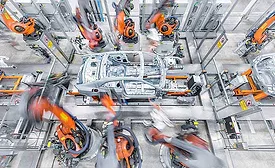
Automotive OEMs love to show off their automated body-in-white assembly lines. Commercials invariably feature dozens of six-axis robots producing showers of sparks in choreographed routines.
 RSS
RSS