Adhesive bonding enables engineers to create strong joints. But industrial adhesives have several drawbacks, such as outgassing, which can cause problems in some applications.
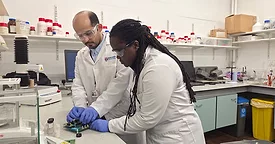
NEWCASTLE, England—Electrical and chemical engineers at Newcastle University have developed a reversible adhesive that makes disassembling and recycling electronics much easier.
WEINHEIM, GERMANY—Freudenberg Sealing Technologies has introduced a new surface treatment process designed to eliminate the need for wet-chemical bonding in manufacturing, while improving efficiency and environmental performance.
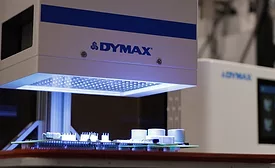
Published intensity values don’t always reflect real curing performance. Working distance, emitter design and uniformity can significantly influence results in production environments.
Up until a few decades ago, instrument panels in most vehicles consisted of a smattering of simple analog buttons, dials, gauges, knobs and needles. Today, mechanical speedometers and tachometers have gone the way of bench seats, hood ornaments, hub caps and running boards.
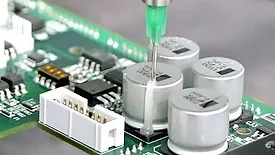
Every electrically-powered machine is filled with wires, connectors and delicate electronics, such as circuit boards and sensors. These parts are subjected to stress from constant vibration, physical strain, abrasion and impacts. These stresses can damage parts and leave them useless without some level of protection.
Any fastener can perform well in the right application; the tricky part is selecting the right one for your intended use. For example, what materials do you need to bond? What is the size of the gap you need to fill? What temperatures and other environmental conditions will the bond face?
Structural adhesives are typically associated with automotive and aerospace applications. But, many appliance manufacturers are examining the pros and cons of bonding, because it offers numerous benefits. Despite those advantages, screws, bolts and rivets still remain popular with appliance engineers.
Structural adhesives are designed to bond metal to metal or to plastic, fiberglass or other substrates. Typical adhesives include two-component epoxies or modified acrylics.