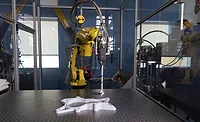
Laser Welder Joins Two Light-Absorbing Plastics
Other new products include an ultrasonic soldering tool, an ultrasonic spot welding system, and an acoustic sensor that detects weld defects in real-time.

New joining and inspection technologies continue to improve manufacturing quality, process control and production efficiency. Recent introductions include advances in laser plastic welding, real-time weld defect detection, flux-free ultrasonic soldering and ultrasonic metal welding. Together, these technologies expand design flexibility, improve first-pass quality and support more reliable production across automotive, electronics, battery, medical device and other manufacturing applications.
Laser Plastic Welding Expands Design Flexibility
LPKF's Absorbing-to-Absorbing (ATA) laser plastic welding technology enables manufacturers to weld two absorbing plastic components, overcoming the traditional transparent-to-absorber requirement. The process expands design freedom for applications in e-mobility, medical devices and consumer electronics. Integrated thermography provides process monitoring for both prototype development and series production. Schaeffler is using the technology to develop electric vehicle cooling systems, citing greater design flexibility and improved process optimization compared with conventional welding methods.
LPKF
www.lpkf.com
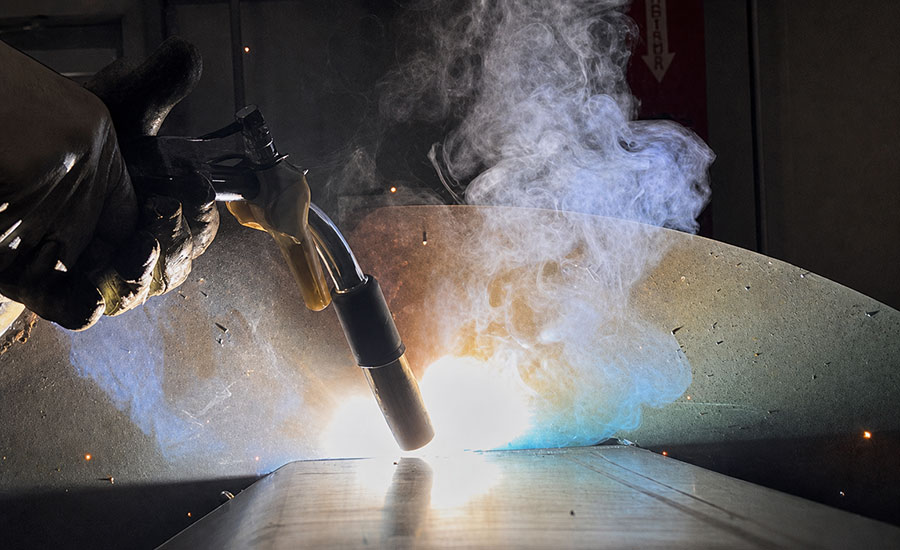
Image credit: Sonibel Instruments
Real-Time System Detects Weld Defects During Production
Sonibel Instruments has introduced a weld defect detection system that mounts directly on a welding torch and uses high-fidelity sound analysis to identify porosity and lack of fusion as welds are being made. Machine learning algorithms distinguish defects in noisy industrial environments, allowing operators to correct problems immediately instead of waiting for post-weld inspection. The system currently supports semiautomatic MIG welding and can be adapted for TIG, flux-core, stick, sub arc and laser welding applications.
Sonibel Instruments
https://sonibelinstruments.com
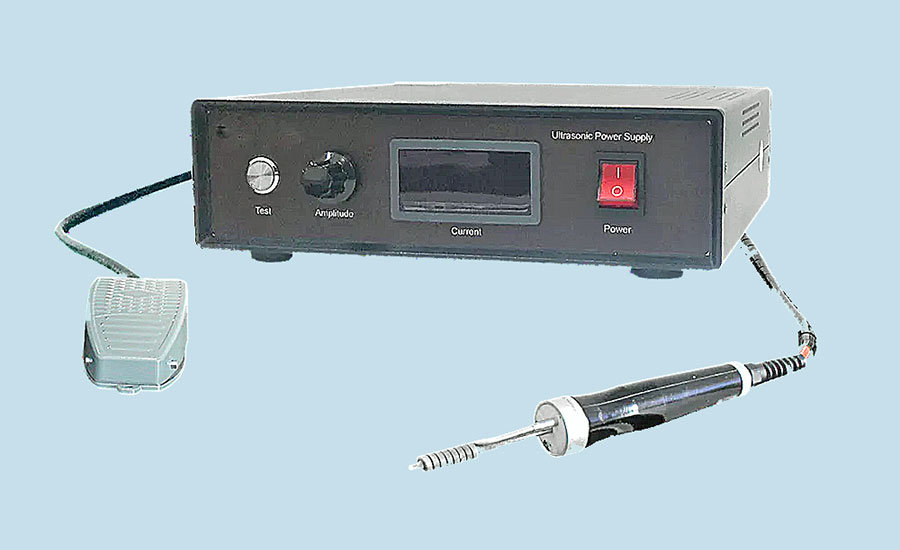
Image credit: Sonic4Lab
Ultrasonic Soldering Eliminates the Need for Flux
Ultrasonic soldering is a specialized soldering process that eliminates the need for flux. Instead, the technology uses acoustic energy to disrupt oxides that form on molten solder and base metal surfaces during the joining process. Ultrasonic soldering can be used to join difficult-to-wet materials, such as aluminum, titanium, glass, ceramics and dissimilar materials. The process forms metallurgical or mechanical bonds without requiring post-solder cleaning, making it suitable for electronics and medical device manufacturing.
Sonic4Lab
https://sonic4lab.com
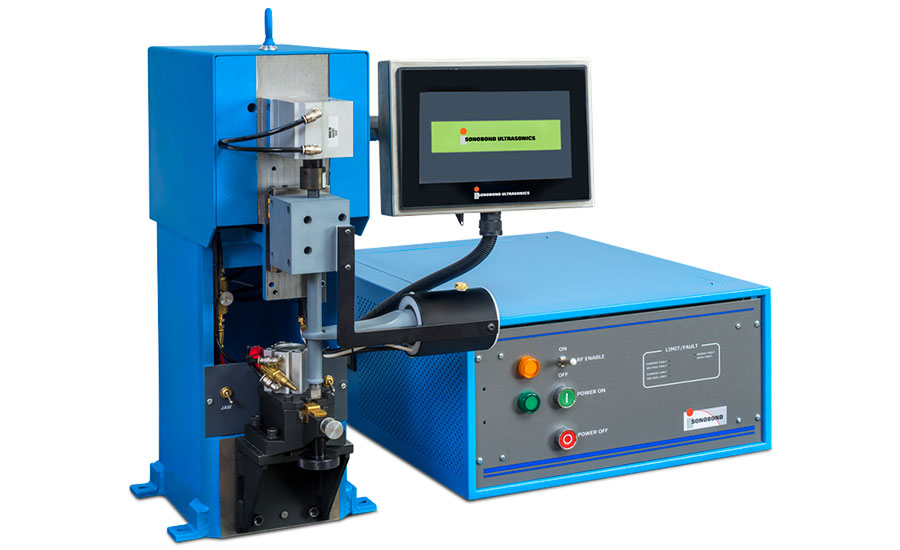
Image credit: Sonobond Ultrasonics
Ultrasonic Spot Welder Supports Battery Assembly
The SonoWeld ultrasonic spot welding system is a microprocessor-controlled machine that creates strong, consistent spot and wire-to-terminal welds without heat, current, fluxes, fillers or solder. It forms solid-state metallurgical bonds in a single pulse, even when metals are oxidized or tinned, without pre-cleaning. It can also weld multiple layers of delicate anode and cathode foils as thin as 7 microns to lithium-ion and NiMH battery tabs and terminals. These batteries are used in electric vehicles, charging stations and high-capacity energy storage systems. Features include automatic process monitoring, overload protection and multiple welding control modes for repeatable production.
Sonobond Ultrasonics
https://sonobondultrasonics.com
Looking for quick answers on assembly and manufacturing topics? Try Ask ASM, our new smart AI search tool. Ask ASM
Looking for a reprint of this article?
From high-res PDFs to custom plaques, order your copy today!