Riveting: The Blind Side
New technologies are giving engineers more options for fastening components when only one side of the assembly is accessible.
When both sides of an assembly are accessible, engineers have a wide array of threaded and unthreaded fasteners from which to choose. However, when only one side of the assembly is accessible, the options become narrower.
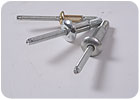
Blind rivets are one option. Also known as break-stem rivets, these fasteners assemble products ranging from memory modules to jet engines. They fasten metals, plastics, composites, wood and fiber-board.
A blind rivet consists of a smooth, cylindrical body topped by a flared head. A mandrel with a bulbed head extends from the bottom of the rivet, through the body and out the center of the head.
To install a blind rivet, the fastener is inserted into the nosepiece of the setting tool. The fastener is then placed into a hole that has been drilled or punched in the parts. Both processes-feeding the fastener and inserting it into the hole-can be done manually or automatically.
When the tool is activated, jaws in the nosepiece grip the mandrel and pull it into the rivet body. The mandrel head expands the walls of the rivet radially to fill the hole. At the same time, the mandrel forms a load-bearing head or bulb at the end of the rivet, clamping the sheets together. When the tensile load on the mandrel exceeds the load necessary to deform the rivet body, the mandrel breaks off at a prede-termined spot.
“That mechanical lock provides high fatigue strength, vibration resistance and water tightness,” says Troy Pierce, senior design engineer with Alcoa Fastening Systems.
Nonstructural, semistructural and structural blind rivets are available in carbon steel, stainless steel and aluminum.
Stainless steel, in particular, has become more popular lately, as engineers look to improve the corrosion resistance of their assemblies. “Premium corrosion-resistant coatings don’t function all that well with blind fasteners,” explains Pierce. “The fasteners deform in such a large way, the coatings tend to flake off.”
Diameters range from 3/32 to 3/4 inch. “We’re getting more requests for nontraditional rivet sizes,” says Pierce. “Traditionally, 3/16- and 1/4-inch rivets are standard sizes. ...Now we’re getting into new mar-kets, like alternative energy, and customers are asking for larger diameter fasteners-1/2 inch and 5/8 inch rivets-with wide grip ranges.”
Suppliers are also being asked to develop rivets for thin, soft or brittle materials. The new Avibulb XT and Avinox XT from Avdel USA LLC are one example. These 1/4-inch blind rivets have a wide grip range for applications in the automotive, appliance, truck trailer, heating and ventilation, industrial equipment and renewable energy industries. A grip range of 1.5 to 9 millimeters is covered with just two fastener sizes.
The bulb on the blind side of the assembly is aesthetically pleasing and has a large footprint, which helps create a weather-resistant seal. It also spreads the load well, which makes the rivet good for fasten-ing plastics, including acetal, polytetrafluoroethylene, nylon 6.6 and glass-reinforced nylon.
A recess under the head of the rivets accommodates burrs around holes and spreads the load evenly on the top sheet. The rivets can be installed in holes ranging from 0.26 to 0.276 inch in diameter.
The Avibulb XT, a low carbon steel rivet, has a shear strength of 2,248 pounds and a tensile strength of 1,484 pounds. The Avinox XT, made from stainless steel, has a shear strength of 3,215 pounds and a tensile strength of 1,799 pounds.
“When the stem is all the way through the shear plain, these rivets provide 70 percent to 80 percent of the performance of our Hemlok [high-strength structural rivet] at less cost,” says Daniel Pilsworth, product and business development manager for Avdel.
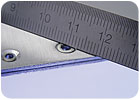
The new Double Flush Chobert rivet from Avdel solves this problem. This one-piece blind rivet is placed into sheets that have countersunk bores on both sides. After installation, the rivet is flush with both the front and rear sides of the assembly.
“This is a speed rivet based on our original Chobert design, which was invented in the 1930s for the Spitfire aircraft,” says Pilsworth. “What we did is miniaturize it specifically for computer chassis appli-cations.”
The rivets are threaded onto a reusable mandrel in pods of up to 120 fasteners. They can also be fed from a vibratory bowl for high-volume automated assembly applications.
During installation, a rivet is presented to the nose of the tool, and the operator inserts the fastener into the hole. When the tool is activated, the mandrel is pulled through the fastener, expanding the rivet body radially to fill the hole. The mandrel is pulled out of the fastener, leaving a hole in the center of the rivet. The next fastener is then automatically presented for installation. The process takes 1.5 sec-onds.
Made of steel with a clear passivated zinc finish, the rivet is available in two sizes. The smaller has a grip range of 0.078 to 0.105 inch. The larger has a grip range of 0.095 to 0.115 inch. With a body diame-ter of 1/8 inch, it can be installed in holes ranging in size from 0.129 to 0.131 inch. The countersink an-gle of the hole is 120 degrees.
The rivet produces a joint with a shear strength of some 229 pounds and a tensile strength of 341 pounds.
Besides computer chassis, the rivet is being used to assemble heating, ventilation and air-conditioning equipment, appliances, mobile phones and other consumer electronic products.
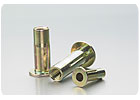
Blind threaded inserts are one way around this problem. Also known as rivet nuts, blind threaded inserts provide strong threads in thin panels. Like blind rivets, they can be installed from one side of the panel, which makes them ideal for installation in tubes or extrusions.
Blind threaded inserts are installed using a rotating tool. Instead of a socket or screwdriving bit, the tool has a threaded rod that matches the internal threads and diameter of the insert. The insert is threaded onto the end of the rod and inserted into the hole. When the tool is activated, the rod spins, drawing the fastener in and compressing the unthreaded portion of the fastener wall. The bulge that is created presses against the rear of the panel, creating a clamping force that tightly grips the sheet. Once the insert is in place, the rod reverses direction to withdraw from the insert.
For example, Avdel has introduced a blind threaded insert, the Versa-Nut, for soft ma-terials, thin-walled plastics and composites. The fastener has four longitudinal slots evenly spaced along the length of its casing. During assembly, the slots split open to form folded legs that spread across the underside of the workpiece to form a large bearing area. The wide bearing area spreads the load in soft materials and ensures a strong, vibration-resistant joint that accommodates wide variations in material thickness. It also reduces cracking in brittle materials.
Made from steel with a clear passivated finish, the fastener is available in four thread sizes, ranging from M4 to M8. The M4 fastener has a grip range of 0.5 to 6.85 millimeters. The M8 has a grip range of 0.5 to 12.7 millimeters.
Applications for the Versa-Nut insert include blow-molded automotive parts and trim components, sandwiched sections, and composite panels in trucks, buses, recreational vehicles and boats. They are also suitable for assembling composite, plastic, fiberboard and plywood sections of toys, appliances, containers, display panels and furniture.
Other examples include Atlas line of fasteners from PennEngineering, the Jack Nut and Pop Nut from Emhart Fastening Teknolo-gies, and the Rivnut from Bollhoff Rivnut Inc.
* Putting the Squeeze on Rivets.
* Fastening: It’s a Lock.
* The Spectrum of Riveting.
When both sides of an assembly are accessible, engineers have a wide array of threaded and unthreaded fasteners from which to choose. However, when only one side of the assembly is accessible, the options become narrower.
Blind rivets are one option. Also known as break-stem rivets, these fasteners assemble products ranging from memory modules to jet engines. They fasten metals, plastics, composites, wood and fiber-board.
A blind rivet consists of a smooth, cylindrical body topped by a flared head. A mandrel with a bulbed head extends from the bottom of the rivet, through the body and out the center of the head.
To install a blind rivet, the fastener is inserted into the nosepiece of the setting tool. The fastener is then placed into a hole that has been drilled or punched in the parts. Both processes-feeding the fastener and inserting it into the hole-can be done manually or automatically.
When the tool is activated, jaws in the nosepiece grip the mandrel and pull it into the rivet body. The mandrel head expands the walls of the rivet radially to fill the hole. At the same time, the mandrel forms a load-bearing head or bulb at the end of the rivet, clamping the sheets together. When the tensile load on the mandrel exceeds the load necessary to deform the rivet body, the mandrel breaks off at a prede-termined spot.
“That mechanical lock provides high fatigue strength, vibration resistance and water tightness,” says Troy Pierce, senior design engineer with Alcoa Fastening Systems.
Nonstructural, semistructural and structural blind rivets are available in carbon steel, stainless steel and aluminum.
Stainless steel, in particular, has become more popular lately, as engineers look to improve the corrosion resistance of their assemblies. “Premium corrosion-resistant coatings don’t function all that well with blind fasteners,” explains Pierce. “The fasteners deform in such a large way, the coatings tend to flake off.”
Diameters range from 3/32 to 3/4 inch. “We’re getting more requests for nontraditional rivet sizes,” says Pierce. “Traditionally, 3/16- and 1/4-inch rivets are standard sizes. ...Now we’re getting into new mar-kets, like alternative energy, and customers are asking for larger diameter fasteners-1/2 inch and 5/8 inch rivets-with wide grip ranges.”
Suppliers are also being asked to develop rivets for thin, soft or brittle materials. The new Avibulb XT and Avinox XT from Avdel USA LLC are one example. These 1/4-inch blind rivets have a wide grip range for applications in the automotive, appliance, truck trailer, heating and ventilation, industrial equipment and renewable energy industries. A grip range of 1.5 to 9 millimeters is covered with just two fastener sizes.
The bulb on the blind side of the assembly is aesthetically pleasing and has a large footprint, which helps create a weather-resistant seal. It also spreads the load well, which makes the rivet good for fasten-ing plastics, including acetal, polytetrafluoroethylene, nylon 6.6 and glass-reinforced nylon.
A recess under the head of the rivets accommodates burrs around holes and spreads the load evenly on the top sheet. The rivets can be installed in holes ranging from 0.26 to 0.276 inch in diameter.
The Avibulb XT, a low carbon steel rivet, has a shear strength of 2,248 pounds and a tensile strength of 1,484 pounds. The Avinox XT, made from stainless steel, has a shear strength of 3,215 pounds and a tensile strength of 1,799 pounds.
“When the stem is all the way through the shear plain, these rivets provide 70 percent to 80 percent of the performance of our Hemlok [high-strength structural rivet] at less cost,” says Daniel Pilsworth, product and business development manager for Avdel.
The Double Flush Chobert rivet is placed into sheets with countersunk bores on both sides. After installation, the rivet is flush with both the front and rear sides of the assembly. Photo courtesy Avdel USA LLC
Double-Flush Chobert Rivets
The head of a blind rivet typically has a very low profile. It can even be countersunk. However, the up-set end of the rivet does protrude slightly from the rear of the assembly. Ordinarily, this isn’t a problem. Space is hardly an issue when assembling, say, ladders or semitrailers. However, if you’re assembling a chassis for desktop or laptop computer, space is at a premium. There may not be room for the bulbed end of the fastener. Moreover, if part of the stem is retained within the rivet body, it could become loose over time and fall out, which could cause a short circuit.The new Double Flush Chobert rivet from Avdel solves this problem. This one-piece blind rivet is placed into sheets that have countersunk bores on both sides. After installation, the rivet is flush with both the front and rear sides of the assembly.
“This is a speed rivet based on our original Chobert design, which was invented in the 1930s for the Spitfire aircraft,” says Pilsworth. “What we did is miniaturize it specifically for computer chassis appli-cations.”
The rivets are threaded onto a reusable mandrel in pods of up to 120 fasteners. They can also be fed from a vibratory bowl for high-volume automated assembly applications.
During installation, a rivet is presented to the nose of the tool, and the operator inserts the fastener into the hole. When the tool is activated, the mandrel is pulled through the fastener, expanding the rivet body radially to fill the hole. The mandrel is pulled out of the fastener, leaving a hole in the center of the rivet. The next fastener is then automatically presented for installation. The process takes 1.5 sec-onds.
Made of steel with a clear passivated zinc finish, the rivet is available in two sizes. The smaller has a grip range of 0.078 to 0.105 inch. The larger has a grip range of 0.095 to 0.115 inch. With a body diame-ter of 1/8 inch, it can be installed in holes ranging in size from 0.129 to 0.131 inch. The countersink an-gle of the hole is 120 degrees.
The rivet produces a joint with a shear strength of some 229 pounds and a tensile strength of 341 pounds.
Besides computer chassis, the rivet is being used to assemble heating, ventilation and air-conditioning equipment, appliances, mobile phones and other consumer electronic products.
The Versa-Nut has four longitudinal slots evenly spaced along the length of its casing. During assembly, the slots split open to form folded legs that spread across the underside of the workpiece. Photo courtesy Avdel USA LLC
Blind Threaded Inserts
Needing to reduce the weight and cost of assemblies, engineers are increasingly specifying thinner, lighter materials, such as plastics, composites, aluminum and magnesium, in their designs. Fastening these materials can be challenging. They may be too thin for sheet metal screws or too soft or brittle for self-clinching fasteners or standard blind rivets.Blind threaded inserts are one way around this problem. Also known as rivet nuts, blind threaded inserts provide strong threads in thin panels. Like blind rivets, they can be installed from one side of the panel, which makes them ideal for installation in tubes or extrusions.
Blind threaded inserts are installed using a rotating tool. Instead of a socket or screwdriving bit, the tool has a threaded rod that matches the internal threads and diameter of the insert. The insert is threaded onto the end of the rod and inserted into the hole. When the tool is activated, the rod spins, drawing the fastener in and compressing the unthreaded portion of the fastener wall. The bulge that is created presses against the rear of the panel, creating a clamping force that tightly grips the sheet. Once the insert is in place, the rod reverses direction to withdraw from the insert.
For example, Avdel has introduced a blind threaded insert, the Versa-Nut, for soft ma-terials, thin-walled plastics and composites. The fastener has four longitudinal slots evenly spaced along the length of its casing. During assembly, the slots split open to form folded legs that spread across the underside of the workpiece to form a large bearing area. The wide bearing area spreads the load in soft materials and ensures a strong, vibration-resistant joint that accommodates wide variations in material thickness. It also reduces cracking in brittle materials.
Made from steel with a clear passivated finish, the fastener is available in four thread sizes, ranging from M4 to M8. The M4 fastener has a grip range of 0.5 to 6.85 millimeters. The M8 has a grip range of 0.5 to 12.7 millimeters.
Applications for the Versa-Nut insert include blow-molded automotive parts and trim components, sandwiched sections, and composite panels in trucks, buses, recreational vehicles and boats. They are also suitable for assembling composite, plastic, fiberboard and plywood sections of toys, appliances, containers, display panels and furniture.
Other examples include Atlas line of fasteners from PennEngineering, the Jack Nut and Pop Nut from Emhart Fastening Teknolo-gies, and the Rivnut from Bollhoff Rivnut Inc.
ASSEMBLY ONLINE
For more information on riveting, visit www.assemblymag.com to read these articles:* Putting the Squeeze on Rivets.
* Fastening: It’s a Lock.
* The Spectrum of Riveting.
Looking for a reprint of this article?
From high-res PDFs to custom plaques, order your copy today!