Assembly Magazine logo
search
Ask ASSEMBLY AI
cart
facebook twitter linkedin youtube
  • Sign In
  • Create Account
  • Sign Out
  • My Account
Assembly Magazine logo
  • TRENDS
    • Ask ASSEMBLY AI
    • Trends
    • News
    • New Products
  • INDUSTRIES
    • Aerospace
    • Appliance
    • DFMA Assembly
    • Medical Devices
    • Green Manufacturing
    • Lean Manufacturing
    • Machinery Assembly
    • Electronics Assembly
    • Automotive
  • TECHNOLOGIES
    • Adhesives & Dispensing
    • Assembly Presses
    • Automated Assembly Systems
    • Manufacturing Management
    • Manufacturing Software
    • Motion Control
    • Screwdriving & Riveting
    • Robotics
    • Test & Inspection
    • Plastics & Metal Welding
    • Wire Processing
    • Workstations
  • AUTONOMOUS & ELECTRIC MOBILITY
    • AEM Magazine Archives
    • Autonomy
    • Electrification
    • Mobility Services
    • Assembly & Testing
    • AV/EM News
  • MEDIA
    • Ask ASSEMBLY AI
    • Podcasts
    • Assembly News Now
    • Assembly TV
    • Webinars
    • eBooks
  • EVENTS
    • Calendar
    • The ASSEMBLY Show
  • MORE
    • Exclusives >
      • Plant of the Year
      • Capital Spending
    • Buyers Guide >
      • Supplier Insights
    • Classifieds
    • Featured Products
    • Newsletters
    • Store
    • White Papers
    • Columns
    • Sponsor Insights
  • INFOCENTER
    • Assembly & Test Solutions
  • EMAGAZINE
    • eMagazine
    • Archive Issues
    • Advertise
    • Contact Us
    • Sign Up
ColumnsAerospace AssemblyAppliance AssemblyAutomotive AssemblyMedical Devices AssemblyDFMA AssemblyElectronics AssemblyThe Editorial

More Reasons to Reshore

By John Sprovieri
June 3, 2013

Recent headlines have provided stark reminders that cheap manufactured goods from overseas often come at the expense of human lives.

On April 24, an eight-story building in Savar, Bangladesh, collapsed, killing 1,127 people and injuring hundreds more. The building housed five factories producing garments for Western retailers. Five months before the Savar tragedy, a fire at another Bangladeshi garment factory killed 112 people, and just two weeks after the Savar incident, a fire at yet another Bangladeshi garment factory killed eight more.

Hopefully, these tragedies will lead to safer working conditions and better governance in the country, which has become the second-largest garment exporter in the world after China. Twenty-four large apparel companies, including H&M and Benetton, recently signed a legally binding agreement to help pay for fire safety and building improvements in Bangladesh’s notoriously decrepit factories. We shall see if any progress is made.

Meanwhile, here in the United States, the decision about where to source parts and assemblies just got a little easier. In a sign that the nation’s manufacturers are becoming more globally competitive, the United States is now equal to Mexico in “attractiveness” as a source for nearshoring operations and is on track to achieve cost parity with manufactured imports from China by 2015.

In a recent study conducted by AlixPartners, a global business advisory firm, 37 percent of manufacturing executives said they would choose the United States as their preferred location for nearshoring. Two years earlier, that percentage was 19 percent. Similarly, another 37 percent of executives said they would pick Mexico as their preferred nearshoring location. Two years earlier, that percentage was 63 percent. In short, when OEMs want to keep manufacturing close to home, they’re just as likely to choose a domestic factory as they are a Mexican one.

“The U.S. is definitely a more cost-competitive source for manufacturing today than it has been in many, many years,” says Steve Maurer, managing director at AlixPartners and leader of the firm’s manufacturing practice in the Americas.

That’s good news, indeed, and it gets better. AlixPartners also found that the cost gap with China has, on average, been closed by approximately 70 percent for numerous manufactured products. Rising production costs, more even exchange rates, and increasing freight costs are making China a more expensive product source than it was a decade ago. If current trends remain in place, by 2015, the cost of importing manufactured goods from China will be about the same as making them in the United States.

 If the landed cost of offshoring is close to that of nearshoring or insourcing, we see little value in continuing to source parts from dangerous and deplorable overseas sweatshops. Bring the work back home. A rising tide floats all boats. 

Looking for quick answers on assembly and manufacturing topics? Try Ask ASM, our new smart AI search tool. Ask ASM →

KEYWORDS: industrial health and safety made in the USA reshoring

Share This Story

Looking for a reprint of this article?
From high-res PDFs to custom plaques, order your copy today!

John has been with ASSEMBLY magazine since February 1997. John was formerly with a national medical news magazine, and has written for Pathology Today and the Green Bay Press-Gazette. John holds a B.A. in journalism from Northwestern University, Medill School of Journalism.

Recommended Content

JOIN TODAY
To unlock your recommendations.

Already have an account? Sign In

  • Made in the U.S.A.

    Consumer Products Manufacturing: Made in the USA

    Supply chain lessons learned during the coronavirus...
    Automated Assembly Systems
    By: Austin Weber
  • Best Practices for Press-Fit Assembly

    Best Practices for Press-Fit Assembly

    In manufacturing, ironclad formulas for success are hard...
    Assembly Presses
    By: Jim Camillo
  • aem0523leader-tesla1.jpg

    Tesla Rethinks the Assembly Line

    Engineers at Tesla Inc. have developed a new process that...
    Industries
    By: Austin Weber
Manage My Account
  • eMagazine Subscription
  • Assembly Newsletters
  • Online Registration
  • Subscription Customer Service
  • Manage My Preferences

More Videos

Sponsored Content

Sponsored Content is a special paid section where industry companies provide high quality, objective, non-commercial content around topics of interest to the ASSEMBLY audience. All Sponsored Content is supplied by the advertising company and any opinions expressed in this article are those of the author and not necessarily reflect the views of ASSEMBLY or its parent company, BNP Media. Interested in participating in our Sponsored Content section? Contact your local rep!

close
  • ultrasonic welding
    Sponsored bySonobond Ultrasonics

    Engineering Efficiency in High-Performance Assembly: How Ultrasonic Welding Enhances Throughput, Reliability and Quality

  • UV curing system
    Sponsored byDymax

    Why UV Intensity Alone Doesn’t Define Curing Performance

  • wooden pallets
    Sponsored byLEAN Manufacturing Products

    Eliminating Waste on the Shop Floor: Applying Lean Principles to Improve Manufacturing Efficiency

Popular Stories

ASSEMBLY News Now, episode-30: Volvo Redesigns EV Manufacturing

Volvo Redesigns EV Manufacturing

Boeing CEO Kelly Ortberg announces 1 billion investment

Boeing Plans $1 Billion Wichita Investment, Workforce Training Center

automated consumer goods assembly system

Best Practices for Cycle Time Optimization

Watch the latest episode of ANN now!

Events

July 24, 2025

From Shop Floor to CFO: How Manufacturers Are Closing the Loop Between Operations and Finance

On Demand Learn how manufacturers are bridging the gap between the shop floor and ERP systems to gain real-time visibility, streamline operations, and kick-start digital transformation—without waiting years.

Sponsored by:

PicoStratusGreen
July 30, 2025

Buffer Analysis and Design Fundamentals for Manufacturing Excellence

On Demand In this presentation, Dr. Herman Tang shares practical insights from his industry experience and research on buffer management in manufacturing operations.

View All Submit An Event

Poll

Difficult Assembly Processes

Which assembly process gives you the most difficulty?
View Results Poll Archive

Products

Manufacturing Cost Policy Deployment (MCPD) Profitability Scenarios: Systematic and Systemic Improvement of Manufacturing Costs

Manufacturing Cost Policy Deployment (MCPD) Profitability Scenarios: Systematic and Systemic Improvement of Manufacturing Costs

See More Products
Register for webinar - Modernizing Automotive Assembly: Why Upgrading Legacy MES is a Business Imperative

Related Articles

  • The Editorial: Bills Would Encourage Companies to Reshore Jobs

    See More
  • Orbic Electronics plans to reshore production to this Long Island facility.

    Orbic Electronics to Reshore Production to Long Island

    See More
  • Schneider’s “smart factory” in Lexington, KY

    How to Reshore Profitably: Closing the Cost Gap

    See More

Related Products

See More Products
  • leaner

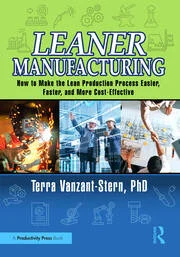
    Leaner Manufacturing: How to Make the Lean Production Process Easier, Faster, and More Cost-Effective

  • Introduction to the Design and Behavior of Bolted Joints, Fourth Edition: Non-Gasketed Joints

  • history.jpg

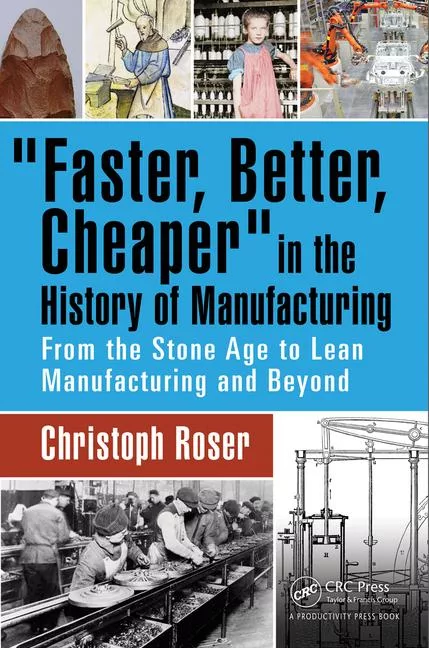
    Faster, Better, Cheaper in the History of Manufacturing: From the Stone Age to Lean Manufacturing and Beyond

See More Products

Events

View AllSubmit An Event
  • March 10, 2026

    Design for Flexibility: How to Assemble More With Less

    On Demand Whether you are specifying new equipment or improving existing processes, this session will provide practical insight into building adaptable assembly strategies that support growth, reliability, and continuous improvement. Sponsored by:
View AllSubmit An Event

Related Directories

  • HowToRobot

  • Made to Measure Metrology

×

Never miss the latest news and trends driving the manufacturing industry

Stay in the know on the latest assembly trends.

JOIN TODAY!
  • RESOURCES
    • Advertise
    • Contact Us
    • Directories
    • Manufacturing Division
    • Store
    • Want More?
  • SIGN UP TODAY
    • Create Account
    • eMagazine
    • Newsletters
    • Customer Service
    • Manage Preferences
  • SERVICES
    • Marketing Services
    • Reprints
    • Market Research
    • List Rental
    • Survey/Respondent Access
  • STAY CONNECTED
    • LinkedIn
    • Facebook
    • Instagram
    • YouTube
    • X (Twitter)
  • PRIVACY
    • PRIVACY POLICY
    • TERMS & CONDITIONS
    • DO NOT SELL MY PERSONAL INFORMATION
    • PRIVACY REQUEST
    • ACCESSIBILITY

Copyright ©2026. All Rights Reserved BNP Media, Inc. and BNP Media II, LLC.

Design, CMS, Hosting & Web Development :: ePublishing