Assembly Magazine logo
search
Ask ASSEMBLY AI
cart
facebook twitter linkedin youtube
  • Sign In
  • Create Account
  • Sign Out
  • My Account
Assembly Magazine logo
  • TRENDS
    • Ask ASSEMBLY AI
    • Trends
    • News
    • New Products
  • INDUSTRIES
    • Aerospace
    • Appliance
    • DFMA Assembly
    • Medical Devices
    • Green Manufacturing
    • Lean Manufacturing
    • Machinery Assembly
    • Electronics Assembly
    • Automotive
  • TECHNOLOGIES
    • Adhesives & Dispensing
    • Assembly Presses
    • Automated Assembly Systems
    • Manufacturing Management
    • Manufacturing Software
    • Motion Control
    • Screwdriving & Riveting
    • Robotics
    • Test & Inspection
    • Plastics & Metal Welding
    • Wire Processing
    • Workstations
  • AUTONOMOUS & ELECTRIC MOBILITY
    • AEM Magazine Archives
    • Autonomy
    • Electrification
    • Mobility Services
    • Assembly & Testing
    • AV/EM News
  • MEDIA
    • Ask ASSEMBLY AI
    • Podcasts
    • Assembly News Now
    • Assembly TV
    • Webinars
    • eBooks
  • EVENTS
    • Calendar
    • The ASSEMBLY Show
  • MORE
    • Exclusives >
      • Plant of the Year
      • Capital Spending
    • Buyers Guide >
      • Supplier Insights
    • Classifieds
    • Featured Products
    • Newsletters
    • Store
    • White Papers
    • Columns
    • Sponsor Insights
  • INFOCENTER
    • Assembly & Test Solutions
  • EMAGAZINE
    • eMagazine
    • Archive Issues
    • Advertise
    • Contact Us
    • Sign Up
IndustriesAppliance Assembly

Vibration Welding with IR Preheat

The process overview and benifits of Clean Vibration Technology
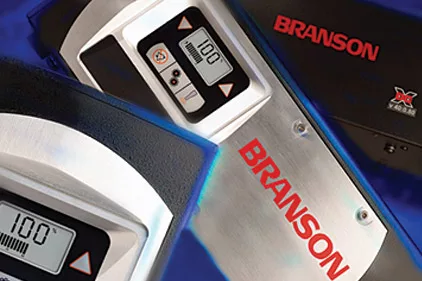
branson ultrasonics dcx digital power supply
July 9, 2013
Important trends in the plastics industry have raised the standards for plastic weld joints. The increasing use of low-viscous polymers, high-temperature formulations, functional fillers and the need for superior bonding of unlike materials have added complexity to the plastic assembly process.
 
Appliance designers and engineers are demanding processes that create parts with particulate-free, visible weld lines, giving them design flexibility, part integrity and manufacturing efficiency in their products.
 
So it is not surprising that recent advancements in technology have led to a hybrid design that incorporates the standard vibration welding technique in combination with infrared technology. This technique is called Clean Vibration Technology (CVT). In this method, the weld interfaces are precisely preheated with an infrared heat source and then vibration welded together. This technique provides all of the advantages of vibration welding, but minimizes the flash and particulate that are typically formed in standard vibration welding.
 
Among the benefits:
 
  • Clean, clear weld-bead aesthetics – Welds are virtually free of the particulates and “angel hair” that can undermine aesthetics, require downstream manufacturing to remove flake-off or compromise end-product performance.
  • Engineering design flexibility – With such clean optical joint welds, designers and engineers can incorporate the weld lines into their product designs, including complex 2D and 3D moldings.
  • Range of tool configurations and options – A wide range of tool weights and other options include additional infrared zones, part present sensing, centering slides and bar code scanning.
  • Maximum energy efficiency – The CVT process uses “wavelength matched” metal-foil IR emitters that provide optimum energy with the same absorption characteristics of typical technical polymers; this produces a faster, more efficient melt, thus saving time and energy used in the joining process.
  • A range of applications: CVT is ideal for clean, precision joining of any part or product that requires a clean weld that maximizes aesthetics, integrity, or functionality.
 

CVT Process Overview

 
A ceramic fixture houses a metal-foil infrared emitter that conforms precisely to the joint lines of the two parts to be assembled. Parts to be joined are positioned above and below the emitter and brought close to it without touching.
 
The metal-foil emitter heats the joint planes along the weld lines, and once plasticization occurs, the emitter is removed, the two parts brought together under pressure, and vibration begins.
 
The vibration weld process with noncontact plasticization allows joining of molten layers of plastic with no solid-solid friction, ensuring uniform material flow while preventing particulate generation.
 
Once optimal weld depth is reached, vibration stops and joined parts cool into a single, clean-vibration joint, with no “angel hair” by-product and with excellent mechanical properties.
 
A good source of additional information on Clean Vibration Technology is a white paper from Branson Ultrasonics Corp. You can find "Selecting the Proper Assembly Process" on,  www.appliancedesign.com/whitepapers.


Source: appliance DESIGN
KEYWORDS: fastening/joining vibration welding

Share This Story

Looking for a reprint of this article?
From high-res PDFs to custom plaques, order your copy today!

Recommended Content

JOIN TODAY
To unlock your recommendations.

Already have an account? Sign In

  • Made in the U.S.A.

    Consumer Products Manufacturing: Made in the USA

    Supply chain lessons learned during the coronavirus...
    Automated Assembly Systems
    By: Austin Weber
  • Best Practices for Press-Fit Assembly

    Best Practices for Press-Fit Assembly

    In manufacturing, ironclad formulas for success are hard...
    Assembly Presses
    By: Jim Camillo
  • aem0523leader-tesla1.jpg

    Tesla Rethinks the Assembly Line

    Engineers at Tesla Inc. have developed a new process that...
    Electrification
    By: Austin Weber
Manage My Account
  • eMagazine Subscription
  • Assembly Newsletters
  • Online Registration
  • Subscription Customer Service
  • Manage My Preferences

More Videos

Sponsored Content

Sponsored Content is a special paid section where industry companies provide high quality, objective, non-commercial content around topics of interest to the ASSEMBLY audience. All Sponsored Content is supplied by the advertising company and any opinions expressed in this article are those of the author and not necessarily reflect the views of ASSEMBLY or its parent company, BNP Media. Interested in participating in our Sponsored Content section? Contact your local rep!

close
  • ultrasonic welding
    Sponsored bySonobond Ultrasonics

    Engineering Efficiency in High-Performance Assembly: How Ultrasonic Welding Enhances Throughput, Reliability and Quality

  • UV curing system
    Sponsored byDymax

    Why UV Intensity Alone Doesn’t Define Curing Performance

  • wooden pallets
    Sponsored byLEAN Manufacturing Products

    Eliminating Waste on the Shop Floor: Applying Lean Principles to Improve Manufacturing Efficiency

Popular Stories

Ferrari

Ferrari Unveils Four-Door EV

ASSEMBLY News Now, episode-30: Volvo Redesigns EV Manufacturing

Volvo Redesigns EV Manufacturing

automated consumer goods assembly system

Best Practices for Cycle Time Optimization

Watch the latest episode of ANN now!

Events

July 24, 2025

From Shop Floor to CFO: How Manufacturers Are Closing the Loop Between Operations and Finance

On Demand Learn how manufacturers are bridging the gap between the shop floor and ERP systems to gain real-time visibility, streamline operations, and kick-start digital transformation—without waiting years.

Sponsored by:

PicoStratusGreen
July 30, 2025

Buffer Analysis and Design Fundamentals for Manufacturing Excellence

On Demand In this presentation, Dr. Herman Tang shares practical insights from his industry experience and research on buffer management in manufacturing operations.

View All Submit An Event

Poll

Difficult Assembly Processes

Which assembly process gives you the most difficulty?
View Results Poll Archive

Products

Manufacturing Cost Policy Deployment (MCPD) Profitability Scenarios: Systematic and Systemic Improvement of Manufacturing Costs

Manufacturing Cost Policy Deployment (MCPD) Profitability Scenarios: Systematic and Systemic Improvement of Manufacturing Costs

See More Products
Register for webinar - Modernizing Automotive Assembly: Why Upgrading Legacy MES is a Business Imperative

Related Articles

  • Whats New With Vibration Welding

    What’s New With Vibration Welding

    See More
  • Vibration Welding Adapts to Shifting Demands

    Vibration Welding Adapts to Shifting Demands

    See More
  • Assembly in Action: Linear Vibration Welding Adds New Dimension

    See More

Related Products

See More Products
  • Laser Welding of Plastics

  • Welding and Joining of Aerospace Materials, 1st Edition

See More Products

Related Directories

  • GlasWeld

×

Never miss the latest news and trends driving the manufacturing industry

Stay in the know on the latest assembly trends.

JOIN TODAY!
  • RESOURCES
    • Advertise
    • Contact Us
    • Directories
    • Manufacturing Division
    • Store
    • Want More?
  • SIGN UP TODAY
    • Create Account
    • eMagazine
    • Newsletters
    • Customer Service
    • Manage Preferences
  • SERVICES
    • Marketing Services
    • Reprints
    • Market Research
    • List Rental
    • Survey/Respondent Access
  • STAY CONNECTED
    • LinkedIn
    • Facebook
    • Instagram
    • YouTube
    • X (Twitter)
  • PRIVACY
    • PRIVACY POLICY
    • TERMS & CONDITIONS
    • DO NOT SELL MY PERSONAL INFORMATION
    • PRIVACY REQUEST
    • ACCESSIBILITY

Copyright ©2026. All Rights Reserved BNP Media, Inc. and BNP Media II, LLC.

Design, CMS, Hosting & Web Development :: ePublishing