Assembly Magazine logo
search
Ask ASSEMBLY AI
cart
facebook twitter linkedin youtube
  • Sign In
  • Create Account
  • Sign Out
  • My Account
Assembly Magazine logo
  • TRENDS
    • Ask ASSEMBLY AI
    • Trends
    • News
    • New Products
  • INDUSTRIES
    • Aerospace
    • Appliance
    • DFMA Assembly
    • Medical Devices
    • Green Manufacturing
    • Lean Manufacturing
    • Machinery Assembly
    • Electronics Assembly
    • Automotive
  • TECHNOLOGIES
    • Adhesives & Dispensing
    • Assembly Presses
    • Automated Assembly Systems
    • Manufacturing Management
    • Manufacturing Software
    • Motion Control
    • Screwdriving & Riveting
    • Robotics
    • Test & Inspection
    • Plastics & Metal Welding
    • Wire Processing
    • Workstations
  • AUTONOMOUS & ELECTRIC MOBILITY
    • AEM Magazine Archives
    • Autonomy
    • Electrification
    • Mobility Services
    • Assembly & Testing
    • AV/EM News
  • MEDIA
    • Ask ASSEMBLY AI
    • Podcasts
    • Assembly News Now
    • Assembly TV
    • Webinars
    • eBooks
  • EVENTS
    • Calendar
    • The ASSEMBLY Show
  • MORE
    • Exclusives >
      • Plant of the Year
      • Capital Spending
    • Buyers Guide >
      • Supplier Insights
    • Classifieds
    • Featured Products
    • Newsletters
    • Store
    • White Papers
    • Columns
    • Sponsor Insights
  • INFOCENTER
    • Assembly & Test Solutions
  • EMAGAZINE
    • eMagazine
    • Archive Issues
    • Advertise
    • Contact Us
    • Sign Up
ColumnsAutomated Assembly SystemsRobotics AssemblyThe Editorial

Does Automation Affect Manufacturing Skills?
By John Sprovieri
asb0223edit1.jpg

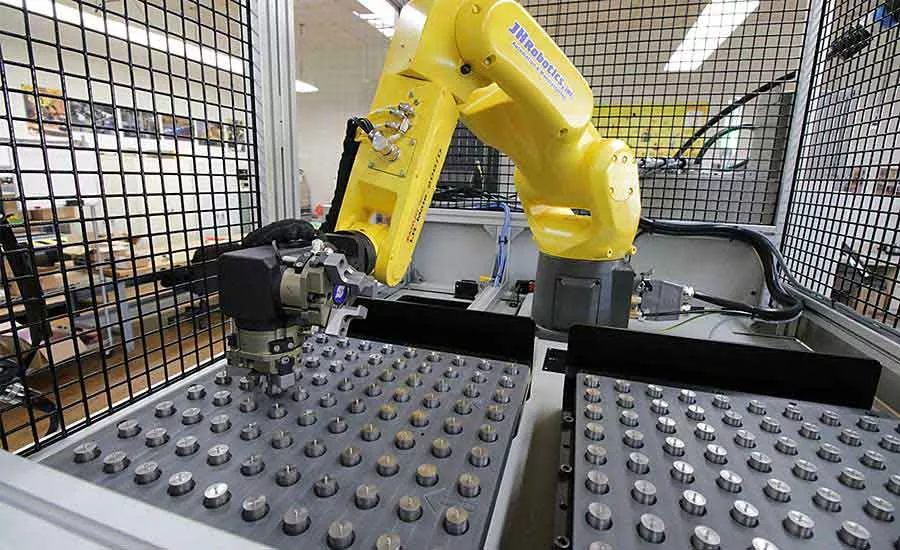
New research suggests that automating a manual manufacturing process can impair the ability of workers to perform that task. Photo courtesy JH Robotics Inc.

February 3, 2023

Numerous studies have mostly debunked the notion that robotics and automation adversely affect manufacturing jobs. For example, a 2016 study found that robots have not hindered manufacturing job growth, but added to it. Between the end of 2009 and the end of 2014, 62 corporations with collectively the largest installed base of robots added 1.25 million new jobs to their payroll, an overall increase of more than 20 percent.

More recently, a study by LG Electronics found that automation boosted productivity, decreased defects and increased safety at the company’s appliance assembly plant in Changwon, South Korea. From 2017 to 2022, the facility increased output by 25 percent without increasing head count.

Automation is spread across the entire factory, from logistics to production. Six-axis robots are used for welding and screwdriving. Automated guided vehicles transport parts and finished appliances throughout the plant. And, all of the plant’s manufacturing processes are overseen by LG’s own digital-twin monitoring system. The system uses artificial intelligence and “big data” to assess inventory status, production performance and machinery failures.

Because automation has freed employees from dirty, dull and dangerous jobs, the plant has not struggled to fill job openings.

Less well-studied is how automation might affect the skills of factory workers. Now, a new study is shining some light on that issue.

Matthias Rötting, Ph.D., a professor of industrial engineering at the Technical University Institute of Psychology and Ergonomics in Berlin, and Zahid Rashid, Ph.D., a professor of industrial engineering at the University of Engineering and Technology in Taxila, Pakistan, examined the effect of automation on the sewing skills of workers at a garment factory. The researchers hypothesized that workers who spent extended periods tending automated sewing machines would gradually lose their ability to operate manual machines over time.

Sixty-seven garment workers were trained on manual sewing machines to perform a complex production operation. Then, the workers were divided randomly into three groups exposed to varying amounts of automation. The manual group continued working on the manual sewing machines. In contrast, the automation group shifted to automated sewing machines. Workers in this group simply had to load and unload automated machines, which did the sewing work for them. The third group, the refresher training group, rotated between manual and automated machines.

Looking for quick answers on assembly and manufacturing topics? Try Ask ASM, our new smart AI search tool. Ask ASM →

The researchers assessed the manual sewing skills of all the workers once after their initial training and again after six weeks at their production assignments.

The researchers found no significant differences in performance between the three groups after their initial training.

After six weeks, however, performance differences emerged between the groups. In the automation group, average single cycle time increased, while the right-first-time percentage decreased. In the manual group, the results were just the opposite: Average single cycle time decreased, and the right-first-time percentage increased. That makes sense, of course. After six straight weeks of practice, one would expect workers in the manual group to be better at manual sewing than those in the automation group, who hadn’t touched a manual machine in that time.

The refresher training group showed no differences in performance between initial training and six weeks of work.

The results should provide food for thought for plant managers and line supervisors. Anyone who has ever tried to learn a foreign language is familiar with the phrase, “use it or lose it.” If you don’t speak or read the language on a daily basis, you’ll likely forget what you’ve learned. The same could apply to manufacturing skills—what in another day and age might have been called craftsmanship.

There’s no doubt that robots, automation and error-proofing technology are great tools for boosting productivity. We must continue to invest in such technology to remain competitive. But, we should also be mindful of creating workplaces that are sterile and oversimplified. Employers are well-advised to institute regular job rotations and to continually invest in workforce training. Skilled workers who are engaged in their jobs and proud of their work will produce quality products, and that, too, will boost the bottom line.

KEYWORDS: factory automation flexible assembly manual assembly skilled labor shortage workforce development

Share This Story

Looking for a reprint of this article?
From high-res PDFs to custom plaques, order your copy today!

John has been with ASSEMBLY magazine since February 1997. John was formerly with a national medical news magazine, and has written for Pathology Today and the Green Bay Press-Gazette. John holds a B.A. in journalism from Northwestern University, Medill School of Journalism.

Recommended Content

JOIN TODAY
To unlock your recommendations.

Already have an account? Sign In

  • Made in the U.S.A.

    Consumer Products Manufacturing: Made in the USA

    Supply chain lessons learned during the coronavirus...
    Automated Assembly Systems
    By: Austin Weber
  • Best Practices for Press-Fit Assembly

    Best Practices for Press-Fit Assembly

    In manufacturing, ironclad formulas for success are hard...
    Assembly Presses
    By: Jim Camillo
  • aem0523leader-tesla1.jpg

    Tesla Rethinks the Assembly Line

    Engineers at Tesla Inc. have developed a new process that...
    Industries
    By: Austin Weber
Manage My Account
  • eMagazine Subscription
  • Assembly Newsletters
  • Online Registration
  • Subscription Customer Service
  • Manage My Preferences

More Videos

Sponsored Content

Sponsored Content is a special paid section where industry companies provide high quality, objective, non-commercial content around topics of interest to the ASSEMBLY audience. All Sponsored Content is supplied by the advertising company and any opinions expressed in this article are those of the author and not necessarily reflect the views of ASSEMBLY or its parent company, BNP Media. Interested in participating in our Sponsored Content section? Contact your local rep!

close
  • ultrasonic welding
    Sponsored bySonobond Ultrasonics

    Engineering Efficiency in High-Performance Assembly: How Ultrasonic Welding Enhances Throughput, Reliability and Quality

  • UV curing system
    Sponsored byDymax

    Why UV Intensity Alone Doesn’t Define Curing Performance

  • wooden pallets
    Sponsored byLEAN Manufacturing Products

    Eliminating Waste on the Shop Floor: Applying Lean Principles to Improve Manufacturing Efficiency

Popular Stories

ASSEMBLY News Now, episode-30: Volvo Redesigns EV Manufacturing

Volvo Redesigns EV Manufacturing

Boeing CEO Kelly Ortberg announces 1 billion investment

Boeing Plans $1 Billion Wichita Investment, Workforce Training Center

GE Appliances Worker on Line

GE Appliances Expands Factory AI With 800 Gemini Enterprise Agents

Watch the latest episode of ANN now!

Events

July 24, 2025

From Shop Floor to CFO: How Manufacturers Are Closing the Loop Between Operations and Finance

On Demand Learn how manufacturers are bridging the gap between the shop floor and ERP systems to gain real-time visibility, streamline operations, and kick-start digital transformation—without waiting years.

Sponsored by:

PicoStratusGreen
July 30, 2025

Buffer Analysis and Design Fundamentals for Manufacturing Excellence

On Demand In this presentation, Dr. Herman Tang shares practical insights from his industry experience and research on buffer management in manufacturing operations.

View All Submit An Event

Poll

Difficult Assembly Processes

Which assembly process gives you the most difficulty?
View Results Poll Archive

Products

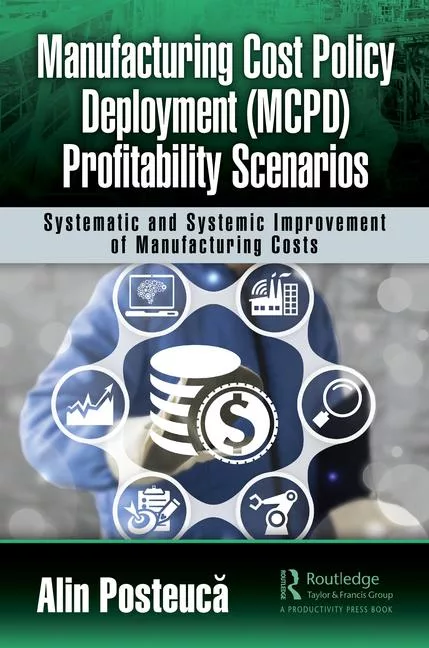
Manufacturing Cost Policy Deployment (MCPD) Profitability Scenarios: Systematic and Systemic Improvement of Manufacturing Costs

Manufacturing Cost Policy Deployment (MCPD) Profitability Scenarios: Systematic and Systemic Improvement of Manufacturing Costs

See More Products
Register for webinar - Modernizing Automotive Assembly: Why Upgrading Legacy MES is a Business Imperative

Related Articles

  • manufacturing training programs

    PODCAST | Short-Duration Training Programs Help Close Manufacturing Skills Gap

    See More
  • ACE worker in a factory

    Workforce Training Program Targets Manufacturing Skills Gap

    See More
  • Major Manufacturers Aim to Teach Vets Manufacturing Skills

    See More

Related Products

See More Products
  • Assembly Processes: Finishing, Packaging, and Automation

  • history.jpg

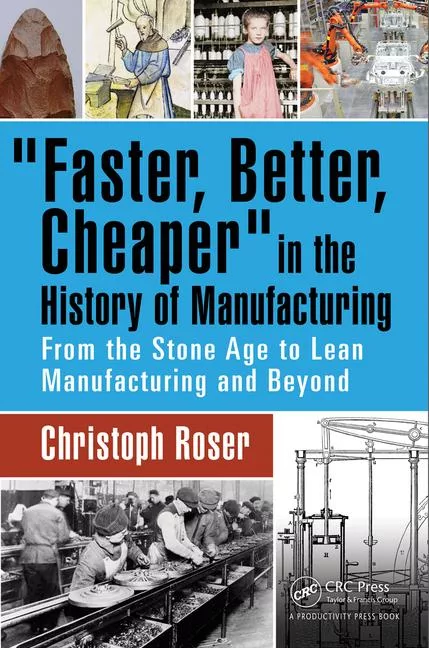
    Faster, Better, Cheaper in the History of Manufacturing: From the Stone Age to Lean Manufacturing and Beyond

  • 9781138498730.jpg

    Manufacturing Cost Policy Deployment (MCPD) Profitability Scenarios: Systematic and Systemic Improvement of Manufacturing Costs

See More Products

Related Directories

  • Automated Learning

    ALC is a trusted provider of corporate learning solutions and e-learning products designed to improve performance in the workplace. We use criterion referenced objectives, and provide high levels of interactivity, built-in testing, and skilled use of multi-media. Topics include ESD, Lean, RF, ITAR, CGP, safety. Ask about custom development.
×

Never miss the latest news and trends driving the manufacturing industry

Stay in the know on the latest assembly trends.

JOIN TODAY!
  • RESOURCES
    • Advertise
    • Contact Us
    • Directories
    • Manufacturing Division
    • Store
    • Want More?
  • SIGN UP TODAY
    • Create Account
    • eMagazine
    • Newsletters
    • Customer Service
    • Manage Preferences
  • SERVICES
    • Marketing Services
    • Reprints
    • Market Research
    • List Rental
    • Survey/Respondent Access
  • STAY CONNECTED
    • LinkedIn
    • Facebook
    • Instagram
    • YouTube
    • X (Twitter)
  • PRIVACY
    • PRIVACY POLICY
    • TERMS & CONDITIONS
    • DO NOT SELL MY PERSONAL INFORMATION
    • PRIVACY REQUEST
    • ACCESSIBILITY

Copyright ©2026. All Rights Reserved BNP Media, Inc. and BNP Media II, LLC.

Design, CMS, Hosting & Web Development :: ePublishing