Assembly Magazine logo
search
Ask ASSEMBLY AI
cart
facebook twitter linkedin youtube
  • Sign In
  • Create Account
  • Sign Out
  • My Account
Assembly Magazine logo
  • TRENDS
    • Ask ASSEMBLY AI
    • Trends
    • News
    • New Products
  • INDUSTRIES
    • Aerospace
    • Appliance
    • DFMA Assembly
    • Medical Devices
    • Green Manufacturing
    • Lean Manufacturing
    • Machinery Assembly
    • Electronics Assembly
    • Automotive
  • TECHNOLOGIES
    • Adhesives & Dispensing
    • Assembly Presses
    • Automated Assembly Systems
    • Manufacturing Management
    • Manufacturing Software
    • Motion Control
    • Screwdriving & Riveting
    • Robotics
    • Test & Inspection
    • Plastics & Metal Welding
    • Wire Processing
    • Workstations
  • AUTONOMOUS & ELECTRIC MOBILITY
    • AEM Magazine Archives
    • Autonomy
    • Electrification
    • Mobility Services
    • Assembly & Testing
    • AV/EM News
  • MEDIA
    • Ask ASSEMBLY AI
    • Podcasts
    • Assembly News Now
    • Assembly TV
    • Webinars
    • eBooks
  • EVENTS
    • Calendar
    • The ASSEMBLY Show
  • MORE
    • Exclusives >
      • Plant of the Year
      • Capital Spending
    • Buyers Guide >
      • Supplier Insights
    • Classifieds
    • Featured Products
    • Newsletters
    • Store
    • White Papers
    • Columns
    • Sponsor Insights
  • INFOCENTER
    • Assembly & Test Solutions
  • EMAGAZINE
    • eMagazine
    • Archive Issues
    • Advertise
    • Contact Us
    • Sign Up
TechnologiesAssembly Presses

How to Evaluate a Press-Fit Curve
By John Lytle
press-fit assembly

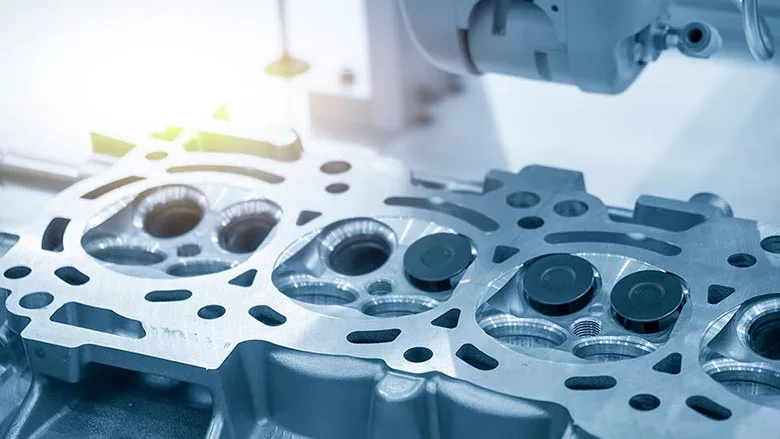
Photo: Phuchit / iStock / Getty Images Plus

October 29, 2024

Any application involving a press can benefit greatly from in-process monitoring and gauging.

Central to this kind of feedback-dependent pressing is something called a force vs. position “signature”—a curve that is created by plotting ram position on the X axis and ram force on the Y axis of a line graph.

This signature enables engineers to study the precise manner in which the various parts interact during assembly. It can also be used to accurately determine whether an assembly has been correctly processed. 

For example, the signature indicates the position at which the assembly was first contacted. It also shows the amount of force applied as the piece was inserted, headed or otherwise changed; the maximum applied force; the rate of change for the force; and the final position of the ram.

By studying the force-distance curve for a particular assembly, engineers can quickly identify whether the process was correctly executed, and if not, what went wrong. If a press fit is too tight, for example, the curve will be higher than it should be. If it’s too loose, the curve will be too low. If a part is missing or a part is misaligned, this fact will also be readily evident.

Before any of that can happen, however, the characteristics of the data curve for a good assembly must be determined. This can be calculated theoretically by engineers, and adjusted as more data becomes available, or it may be determined with the use of a master, or known-good, component, which is used to generate an ideal data curve against which future components are gauged. In the absence of a master component, an ideal curve can be generated by running several acceptable components and using their data to calculate averages, as well as acceptable highs and lows.

Software is used to set up limits and evaluate all curves generated during production against the ideal. It can also be used to respond to the data it is generating and then adjust its behavior accordingly. The result is a system that can accommodate normal variation in the parts, creating assemblies that function correctly in the field even if the parts aren’t “perfect” to begin with.

Looking for quick answers on assembly and manufacturing topics? Try Ask ASM, our new smart AI search tool. Ask ASM →


Pressing to a Hard Stop vs. Pressing to a Position

In many automotive assembly applications, simply pressing to a hard stop is sufficient. These applications include press-fitting bushings and bearings, and inserting clips and other fasteners.

The graph in Figure 1 shows the key characteristics captured in the press-fit curve for such an application.

force-distance curve for press-to-a-hard-stop application

This graph shows the force-distance curve for press-to-a-hard-stop application. Source: Promess Inc.

In other applications, such as medical device assembly, the stakes can be higher. If there are added levels of regulation, or if there are requirements for verification data and traceability, simply pressing to a hard stop is not an option. In many instances, pressing to a position, whether absolute or relative, is required.

The graph in Figure 2 shows the key characteristics captured in the data curve for that type of application.

force-distance curve for press-to-a-position application

This graph shows the force-distance curve for press-to-a-position application. Source: Promess Inc.

Besides press-fit assembly, there are many applications that could benefit greatly from having the ability to generate in-process data and evaluate the curves produced. Examples include crimping, staking, riveting, forming, spring testing, bending and straightening.


Bearings Application

To get an idea of how this works, it’s useful to look at a real-world application. An automotive manufacturer needed to press a bearing into a hole machined in a part. However, the company was experiencing quality issues with the incoming parts. The holes had a lot of variation, which led to faulty assemblies. Some of the poorly assembled components were not caught before being shipped to the customer, resulting in recalls, damage to the company’s reputation, and tremendous expense.

Figure 3 illustrates the different curves displayed depending on the part.

force-distance curves reveal quality problems with press-fit assemblies

These graphs show how force-distance curves can reveal quality problems with press-fit assemblies. Source: Promess Inc.

To solve the problem, the company upgraded its system to one capable of evaluating the press-fit curve during assembly. This solved the problem by verifying quality in-station. Suspect assemblies could be removed and fixed before they caused headaches down the line and long before they caused problems for the customer or end-user.


For more information on press-fit assembly, read these articles:
Best Practices for Press-Fit Assembly
Nondestructive Disassembly of Press Fits
Optimizing Work Cells for Press-fit Assembly

See more articles from our November 2024 issue!

KEYWORDS: factory automation press-fit assembly servo press

Share This Story

Looking for a reprint of this article?
From high-res PDFs to custom plaques, order your copy today!

John Lytle, Engineering Manager, Promess

Recommended Content

JOIN TODAY
To unlock your recommendations.

Already have an account? Sign In

  • Made in the U.S.A.

    Consumer Products Manufacturing: Made in the USA

    Supply chain lessons learned during the coronavirus...
    Automated Assembly Systems
    By: Austin Weber
  • Best Practices for Press-Fit Assembly

    Best Practices for Press-Fit Assembly

    In manufacturing, ironclad formulas for success are hard...
    Assembly Presses
    By: Jim Camillo
  • aem0523leader-tesla1.jpg

    Tesla Rethinks the Assembly Line

    Engineers at Tesla Inc. have developed a new process that...
    Industries
    By: Austin Weber
Manage My Account
  • eMagazine Subscription
  • Assembly Newsletters
  • Online Registration
  • Subscription Customer Service
  • Manage My Preferences

More Videos

Sponsored Content

Sponsored Content is a special paid section where industry companies provide high quality, objective, non-commercial content around topics of interest to the ASSEMBLY audience. All Sponsored Content is supplied by the advertising company and any opinions expressed in this article are those of the author and not necessarily reflect the views of ASSEMBLY or its parent company, BNP Media. Interested in participating in our Sponsored Content section? Contact your local rep!

close
  • ultrasonic welding
    Sponsored bySonobond Ultrasonics

    Engineering Efficiency in High-Performance Assembly: How Ultrasonic Welding Enhances Throughput, Reliability and Quality

  • UV curing system
    Sponsored byDymax

    Why UV Intensity Alone Doesn’t Define Curing Performance

  • wooden pallets
    Sponsored byLEAN Manufacturing Products

    Eliminating Waste on the Shop Floor: Applying Lean Principles to Improve Manufacturing Efficiency

Popular Stories

ASSEMBLY News Now, episode-30: Volvo Redesigns EV Manufacturing

Volvo Redesigns EV Manufacturing

Boeing CEO Kelly Ortberg announces 1 billion investment

Boeing Plans $1 Billion Wichita Investment, Workforce Training Center

automated consumer goods assembly system

Best Practices for Cycle Time Optimization

Watch the latest episode of ANN now!

Events

July 24, 2025

From Shop Floor to CFO: How Manufacturers Are Closing the Loop Between Operations and Finance

On Demand Learn how manufacturers are bridging the gap between the shop floor and ERP systems to gain real-time visibility, streamline operations, and kick-start digital transformation—without waiting years.

Sponsored by:

PicoStratusGreen
July 30, 2025

Buffer Analysis and Design Fundamentals for Manufacturing Excellence

On Demand In this presentation, Dr. Herman Tang shares practical insights from his industry experience and research on buffer management in manufacturing operations.

View All Submit An Event

Poll

Difficult Assembly Processes

Which assembly process gives you the most difficulty?
View Results Poll Archive

Products

Manufacturing Cost Policy Deployment (MCPD) Profitability Scenarios: Systematic and Systemic Improvement of Manufacturing Costs

Manufacturing Cost Policy Deployment (MCPD) Profitability Scenarios: Systematic and Systemic Improvement of Manufacturing Costs

See More Products
Register for webinar - Modernizing Automotive Assembly: Why Upgrading Legacy MES is a Business Imperative

Related Articles

  • fec

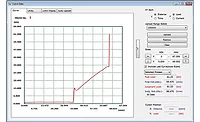
    How To Set Up a Press Fit on a Servo Press in 30 Minutes or Less

    See More

Related Products

See More Products
  • leaner

    Leaner Manufacturing: How to Make the Lean Production Process Easier, Faster, and More Cost-Effective

  • pocket.jpg

    How To Implement Lean Manufacturing, Second Edition

  • The First Snap-Fit Handbook 2e: Creating and Managing Attachments for Plastics Parts

See More Products

Related Directories

  • HowToRobot

  • Thermal Press Intl.

    Founded in 1976, Thermal Press International is a leading provider of plastic assembly equipment, specializing in heat staking, heat sealing, and film welding solutions. With a customer-centric approach, we deliver superior quality machines and manufacturing solutions resulting in enhanced productivity, minimized downtime, and increased peace of mind for our customers.
×

Never miss the latest news and trends driving the manufacturing industry

Stay in the know on the latest assembly trends.

JOIN TODAY!
  • RESOURCES
    • Advertise
    • Contact Us
    • Directories
    • Manufacturing Division
    • Store
    • Want More?
  • SIGN UP TODAY
    • Create Account
    • eMagazine
    • Newsletters
    • Customer Service
    • Manage Preferences
  • SERVICES
    • Marketing Services
    • Reprints
    • Market Research
    • List Rental
    • Survey/Respondent Access
  • STAY CONNECTED
    • LinkedIn
    • Facebook
    • Instagram
    • YouTube
    • X (Twitter)
  • PRIVACY
    • PRIVACY POLICY
    • TERMS & CONDITIONS
    • DO NOT SELL MY PERSONAL INFORMATION
    • PRIVACY REQUEST
    • ACCESSIBILITY

Copyright ©2026. All Rights Reserved BNP Media, Inc. and BNP Media II, LLC.

Design, CMS, Hosting & Web Development :: ePublishing