Competing Political Agendas Threaten Manufacturing Growth
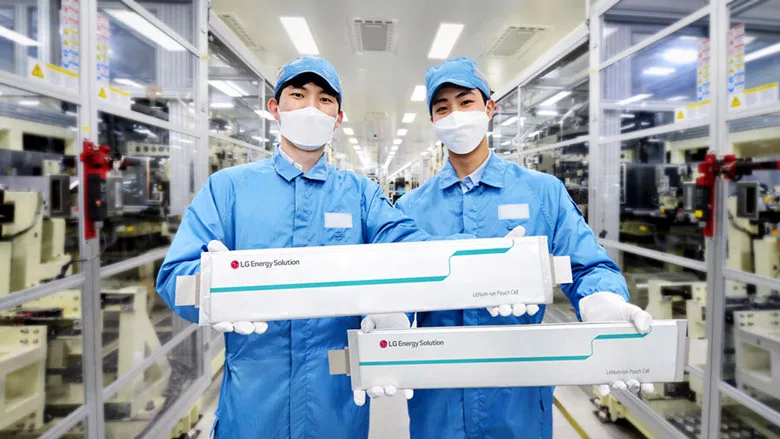
LG Energy Solution is building a new battery assembly plant in Georgia. It will be the company’s eighth factory in the U.S.
On Sept. 4, immigration authorities arrested hundreds of workers at an EV battery factory under construction in Ellabell, GA. The factory is co-owned by two of South Korea’s largest manufacturers: LG Energy Solution and Hyundai Motor Group.
Most of the 475 people arrested were South Korean citizens. Steven Schrank, a special agent in charge of Homeland Security Investigations for Georgia, said the workers had either overstayed their visas or were working illegally.
For their part, the South Korean companies say they need their own technicians on-site, at least temporarily, to get their factories up and running. They also claim that there aren’t enough visas to sponsor trained workers to help run these factories.
Ultimately, 316 South Korean workers, as well as 14 other foreign nationals, were deported.
The operation caused diplomatic alarm in South Korea. In a trade deal announced in July, South Korea agreed to put together a $350 billion investment package in return for the United States lowering tariffs on its exports from 25 percent to 15 percent. And, a week before the raid, President Trump hosted President Lee Jae Myung of South Korea at the White House, where Lee pledged to invest an additional $150 billion in the United States.
Now, those investments may be in jeopardy. Lee said his country’s businesses were “flummoxed” by the raid, because the South Koreans were not in the U.S. as long-term or permanent workers, but as technicians helping to install facilities and equipment.
If the United States does not help such people work legally in the country, Lee warned, South Korean businesses would “hesitate to make direct investments.”
Looking for quick answers on assembly and manufacturing topics? Try Ask ASM, our new smart AI search tool. Ask ASM
South Korea’s foreign minister, Cho Hyun, added that he was “gravely concerned” about the raid and demanded allocations for more visas for South Korean workers as part of his country’s ongoing trade negotiations with the U.S. An editorial published in Dong-A Ilbo, a major South Korean newspaper, went further. It predicted the raid “will put a chilling effect on the activities of our businesses in the United States.”
I’m no expert in international relations or economics, but it seems to me that if you want to encourage foreign direct investment in the U.S., you might want to play nice with the folks who are writing the checks. The LG battery factory, which predated the tariff talks, is exactly the kind of large-scale, job-creating investment that the United States has been seeking from South Korea and other nations. South Korean companies have invested billions of dollars in American manufacturing in recent years.
Besides the factory underway in Georgia, LG Energy Solution has battery manufacturing plants in Holland, MI, Queen Creek, AZ, and Lansing, MI. It also operates joint-venture factories (with General Motors) in Warren, OH, and Spring Hill, TN; and another joint venture (with Honda) in Fayette County, OH. It also has a joint-venture with Stellantis in Windsor, Ontario, Canada. One more joint-venture factory—this one with Toyota Tsusho Corp.—is under construction in Winston-Salem, NC. That facility will be dedicated to recycling batteries.
Collectively, these factories represent thousands of jobs and billions of dollars in investment.
To borrow a line from Vice President J.D. Vance: “Have you ever said ‘thank you’ once?”
If South Korean manufacturers want to recoup part of their investment in the U.S. by employing some of their own people here for a few months, where is the harm? Shouldn’t such a massive investment be a win-win proposition?
The Trump Administration must decide which of its political priorities is most important: limiting immigration; curtailing investment in EVs and renewable energy; or expanding domestic manufacturing. Two of the three are at odds with the other. Already, through the first eight months of this year, U.S. manufacturing employment has decreased by 33,000 jobs. That is not what we were promised.
Looking for a reprint of this article?
From high-res PDFs to custom plaques, order your copy today!