Assembly Magazine logo
search
Ask ASSEMBLY AI
cart
facebook twitter linkedin youtube
  • Sign In
  • Create Account
  • Sign Out
  • My Account
Assembly Magazine logo
  • TRENDS
    • Ask ASSEMBLY AI
    • Trends
    • News
    • New Products
  • INDUSTRIES
    • Aerospace
    • Appliance
    • DFMA Assembly
    • Medical Devices
    • Green Manufacturing
    • Lean Manufacturing
    • Machinery Assembly
    • Electronics Assembly
    • Automotive
  • TECHNOLOGIES
    • Adhesives & Dispensing
    • Assembly Presses
    • Automated Assembly Systems
    • Manufacturing Management
    • Manufacturing Software
    • Motion Control
    • Screwdriving & Riveting
    • Robotics
    • Test & Inspection
    • Plastics & Metal Welding
    • Wire Processing
    • Workstations
  • AUTONOMOUS & ELECTRIC MOBILITY
    • AEM Magazine Archives
    • Autonomy
    • Electrification
    • Mobility Services
    • Assembly & Testing
    • AV/EM News
  • MEDIA
    • Ask ASSEMBLY AI
    • Podcasts
    • Assembly News Now
    • Assembly TV
    • Webinars
    • eBooks
  • EVENTS
    • Calendar
    • The ASSEMBLY Show
  • MORE
    • Exclusives >
      • Plant of the Year
      • Capital Spending
    • Buyers Guide >
      • Supplier Insights
    • Classifieds
    • Featured Products
    • Newsletters
    • Store
    • White Papers
    • Columns
    • Sponsor Insights
  • INFOCENTER
    • Assembly & Test Solutions
  • EMAGAZINE
    • eMagazine
    • Archive Issues
    • Advertise
    • Contact Us
    • Sign Up
ColumnsManufacturing ManagementThe Editorial

Higher Fee on H1-B Visas Could Adversely Affect Manufacturers
By John Sprovieri
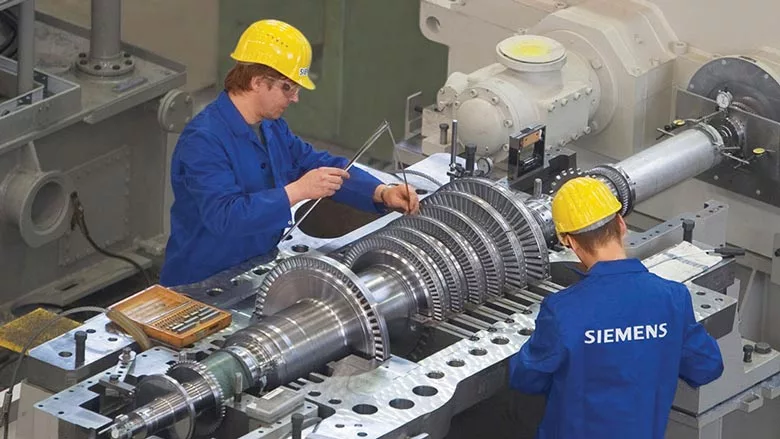
skilled workers
Photo courtesy Siemens

A newly imposed $100,000 fee on H1-B visas could adversely affect the ability of manufacturers to hire skilled workers.

October 21, 2025

On Sept. 19, President Donald Trump signed a proclamation that adds a $100,000 fee for new applicants for H-1B visas, which allow foreign professional workers, such as software engineers, a chance to be employed in the United States.

The H-1B visa is intended to help companies fill openings for which American workers with similar abilities cannot be found. The visa is for professional-level jobs that require a minimum of a bachelor’s degree. The prospective employee must have the required degree or its equivalent through education and experience. In addition, the prospective job must pay wages that are at least equal to those paid by the employer to similarly qualified workers or the prevailing wage for such a position in the geographic region where the job is located.

That’s the rationale, at least. The Trump administration, however, argues that the H-1B visa program lets employers sideline American workers and suppress their wages. In fairness, employers have been using the program to hire people with routine skills that are not actually in short supply.

This is particularly true in computer-related fields. Though college-educated foreign nationals are a small portion of the overall labor force, they make up a substantial proportion of computer-related fields, about one in five of the roughly 2.3 million software developers in the country, according to census data. Almost two-thirds of H-1B applications approved in 2024 were in computer fields, according to federal data.

The Trump administration hopes the new fee will help counter that practice by encouraging employers to prioritize hiring domestic workers.

Let’s look at the numbers. The U.S. Citizenship and Immigration Services (USCIS) bureau approved 399,395 H-1B petitions last year, a 3 percent increase from 2023. Of those, 35 percent were for initial employment and 65 percent were for continuing employment. 

Some 71 percent of H-1B recipients were from India; another 12 percent were from China. Sixty-four percent of H-1B visas last year were for computer-related occupations. The next largest major occupational group was “architecture, engineering and surveying” with 10 percent. 

Looking for quick answers on assembly and manufacturing topics? Try Ask ASM, our new smart AI search tool. Ask ASM →

Almost half (48 percent) of H-1B visas were granted for jobs in the “professional, scientific and technical services” industry, a catch-all that mostly encompasses computer programming. Of importance to readers of ASSEMBLY, the next largest industry was manufacturing, with 11 percent of H1-B visas.

Although the median annual salary for H1-B visa recipients is $120,000, according to USCIS, critics of the program say employers are exploiting foreign workers at the expense of Americans. One software developer I spoke with compared the H1-B program to indentured servitude. He pointed out that visa-holders are not free to change jobs, and employers can use threats of returning foreign workers to their home countries to keep their noses to the grindstone.

Not everyone is pleased with the policy change. Tech start-ups, colleges and school districts have criticized the new fee, which they say will hurt their ability to fill critical roles, create innovation and stay competitive. Health care organizations say the fee would exacerbate physician shortages, too.

Opponents of the new, higher fee also warn that the policy could backfire. They point out that H-1B visa holders are bringing their skills and expertise into the United States, and many hope to stay here for a while, if not for life. While they’re here, they buy homes, go shopping, pay taxes and generally contribute to our economy and society. In many cases, these workers are leaving behind poor or authoritarian countries, and they embrace the freedom and opportunity this country represents.

If U.S. employers can’t bring the right workers here, critics argue, then they are more apt to go offshore to pursue talent. As a result, our country doesn’t benefit from their labor; only the corporations do.

Whether you support the fee or not, the fact remains that U.S. manufacturers need skilled workers, with and without college degrees. Most manufacturers don’t care where skilled workers come from, as long as they show up every day. Congress should get together to enact sensible immigration reform, something it hasn’t done in 40 years. Unfortunately, immigration has become yet another “third rail” that we can’t discuss or cooperate about. As a result, everyone loses.

See more articles from our November 2025 issue!

KEYWORDS: immigration Jobs

Share This Story

Looking for a reprint of this article?
From high-res PDFs to custom plaques, order your copy today!

John has been with ASSEMBLY magazine since February 1997. John was formerly with a national medical news magazine, and has written for Pathology Today and the Green Bay Press-Gazette. John holds a B.A. in journalism from Northwestern University, Medill School of Journalism.

Recommended Content

JOIN TODAY
To unlock your recommendations.

Already have an account? Sign In

  • Made in the U.S.A.

    Consumer Products Manufacturing: Made in the USA

    Supply chain lessons learned during the coronavirus...
    Automated Assembly Systems
    By: Austin Weber
  • Best Practices for Press-Fit Assembly

    Best Practices for Press-Fit Assembly

    In manufacturing, ironclad formulas for success are hard...
    Assembly Presses
    By: Jim Camillo
  • aem0523leader-tesla1.jpg

    Tesla Rethinks the Assembly Line

    Engineers at Tesla Inc. have developed a new process that...
    Assembly and Testing
    By: Austin Weber
Manage My Account
  • eMagazine Subscription
  • Assembly Newsletters
  • Online Registration
  • Subscription Customer Service
  • Manage My Preferences

More Videos

Sponsored Content

Sponsored Content is a special paid section where industry companies provide high quality, objective, non-commercial content around topics of interest to the ASSEMBLY audience. All Sponsored Content is supplied by the advertising company and any opinions expressed in this article are those of the author and not necessarily reflect the views of ASSEMBLY or its parent company, BNP Media. Interested in participating in our Sponsored Content section? Contact your local rep!

close
  • ultrasonic welding
    Sponsored bySonobond Ultrasonics

    Engineering Efficiency in High-Performance Assembly: How Ultrasonic Welding Enhances Throughput, Reliability and Quality

  • UV curing system
    Sponsored byDymax

    Why UV Intensity Alone Doesn’t Define Curing Performance

  • wooden pallets
    Sponsored byLEAN Manufacturing Products

    Eliminating Waste on the Shop Floor: Applying Lean Principles to Improve Manufacturing Efficiency

Popular Stories

ASSEMBLY News Now, episode-30: Volvo Redesigns EV Manufacturing

Volvo Redesigns EV Manufacturing

Boeing CEO Kelly Ortberg announces 1 billion investment

Boeing Plans $1 Billion Wichita Investment, Workforce Training Center

GE Appliances Worker on Line

GE Appliances Expands Factory AI With 800 Gemini Enterprise Agents

Watch the latest episode of ANN now!

Events

July 24, 2025

From Shop Floor to CFO: How Manufacturers Are Closing the Loop Between Operations and Finance

On Demand Learn how manufacturers are bridging the gap between the shop floor and ERP systems to gain real-time visibility, streamline operations, and kick-start digital transformation—without waiting years.

Sponsored by:

PicoStratusGreen
July 30, 2025

Buffer Analysis and Design Fundamentals for Manufacturing Excellence

On Demand In this presentation, Dr. Herman Tang shares practical insights from his industry experience and research on buffer management in manufacturing operations.

View All Submit An Event

Poll

Difficult Assembly Processes

Which assembly process gives you the most difficulty?
View Results Poll Archive

Products

Manufacturing Cost Policy Deployment (MCPD) Profitability Scenarios: Systematic and Systemic Improvement of Manufacturing Costs

Manufacturing Cost Policy Deployment (MCPD) Profitability Scenarios: Systematic and Systemic Improvement of Manufacturing Costs

See More Products
Register for webinar - Modernizing Automotive Assembly: Why Upgrading Legacy MES is a Business Imperative

Related Articles

  • Right-to-repair law could affect product design

    See More
  • asb0223edit1.jpg

    Does Automation Affect Manufacturing Skills?

    See More
  • employee working in manufacturing facility

    Will Ban on Noncompete Agreements Affect Manufacturing?

    See More

Related Products

See More Products
  • foreman.jpg

    The Foreman on the Assembly Line

  • cost engineering.jpg

    Cost Engineering

See More Products

Events

View AllSubmit An Event
  • July 24, 2025

    From Shop Floor to CFO: How Manufacturers Are Closing the Loop Between Operations and Finance

    On Demand Learn how manufacturers are bridging the gap between the shop floor and ERP systems to gain real-time visibility, streamline operations, and kick-start digital transformation—without waiting years.Sponsored by:
View AllSubmit An Event

Related Directories

  • b-plus GmbH

    b-plus is a medium-sized, internationally leading technology company in the automotive industry and in the field of automation of mobile machines. It supports its global customers with software and hardware solutions, among others for applications such as automated and autonomous driving, and in the field of vehicle sensor technology. Pioneering New Mobility
×

Never miss the latest news and trends driving the manufacturing industry

Stay in the know on the latest assembly trends.

JOIN TODAY!
  • RESOURCES
    • Advertise
    • Contact Us
    • Directories
    • Manufacturing Division
    • Store
    • Want More?
  • SIGN UP TODAY
    • Create Account
    • eMagazine
    • Newsletters
    • Customer Service
    • Manage Preferences
  • SERVICES
    • Marketing Services
    • Reprints
    • Market Research
    • List Rental
    • Survey/Respondent Access
  • STAY CONNECTED
    • LinkedIn
    • Facebook
    • Instagram
    • YouTube
    • X (Twitter)
  • PRIVACY
    • PRIVACY POLICY
    • TERMS & CONDITIONS
    • DO NOT SELL MY PERSONAL INFORMATION
    • PRIVACY REQUEST
    • ACCESSIBILITY

Copyright ©2026. All Rights Reserved BNP Media, Inc. and BNP Media II, LLC.

Design, CMS, Hosting & Web Development :: ePublishing