Can Ergonomic Improvements Increase Productivity?
A South African automotive manufacturer discovered that workers—and productivity—can benefit from ergonomic improvements.

Many people believe that the cost of ergonomics is a burden rather than an investment. However, efficient production requires optimal ergonomics. Moreover, given the cost of work-related musculoskeletal disorders (MSDs), disabilities, workers’ compensation claims and health insurance, ergonomics isn’t a burden. It’s critical to the bottom line.
To prove the point, we conducted an ergonomic analysis at an auto parts assembly plant in South Africa. The company was experiencing low productivity on an assembly line for a tailgate component.
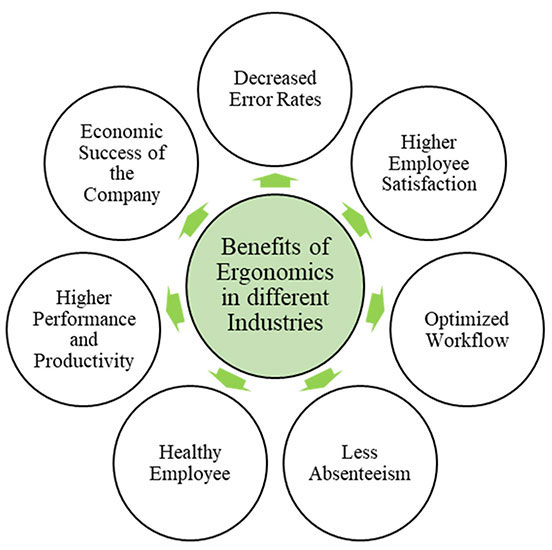
Good ergonomics provides myriad benefits, regardless of industry. Source: University of Johannesburg
The line was losing money. The company had to hire more workers to make up for low productivity. Workers were underperforming, and the quality of the products was compromised.
We were brought in to modernize the assembly line and implement a variety of ergonomic improvements.
To do that, we would first need to conduct a thorough analysis of the workplace, encompassing both office spaces and the shop floor. The purpose was to identify ergonomic risk factors linked to low productivity and MSDs.
Second, we would have to assess the workers’ performance and well-being, including employee health data, injury reports and absenteeism records.
Then, armed with data, we would attempt to increase productivity and efficiency through better workplace ergonomics. By limiting downtime caused by injuries or pain, lowering physical strain on personnel, and streamlining work procedures, we believed that we could improve organizational performance and competitiveness.
Looking for quick answers on assembly and manufacturing topics? Try Ask ASM, our new smart AI search tool. Ask ASM
Methodology
The first step was to assess the condition of the workers. We conducted a Body Parts Symptoms Survey (BPSS) to observe workers’ postures on the assembly line. We also used the Rapid Upper Limb Assessment (RULA) to analyze the postures of workers assembling the tailgate component.
We then conducted a Pareto analysis to rank the body parts receiving maximum discomfort. The operators reported high levels of discomfort in various body parts, such as the upper back, neck, lower back, arms and wrists.
Most of the company’s products were being assembled on worktables. The process required a long time. Clearly, the work area would need to be redesigned to improve worker comfort and safety.

The researchers observed workers performing various assembly tasks. (a) An employee is aligning a clip into the hand tool bracket, inserting into the lower bracket, pushing down into position, and repeating four times to complete the right and left brackets. They place the lower bracket into the table, making sure the edges align with the tailgate. They align bolts with four holes and loosely fasten them. In the next image (b), the worker uses a T25 spline to drill and ensure the bolts are not loosely fastened to the tailgate. Source: University of Johannesburg
Body Parts Symptoms Survey
While observing workers assembling tailgates, we looked for dangerous postures and setups. We measured the time spent in awkward postures and how often workers repeated those postures.
Specifically, we looked for the following:
- Extreme neck flexion or rotation.
- Raised or forward-leaning shoulders.
- Hunched or rounded back.
- Elbow flexion or extension beyond comfortable limits.
- Excessive lumbar flexion or twisting.
- Awkward arm positioning and movements.
- Awkward wrist angles or repetitive strain.
BPSS data revealed 32 workers who felt “discomfort” in upper back, shoulders, lower back, arms, wrists and neck. An additional 22 workers felt “extreme discomfort” in those areas.
Weighting these scores enabled us to prioritize areas for ergonomic improvements, such as improved workstation design, training on better lifting techniques, and additional support equipment.
A Pareto analysis indicated that the upper back, neck and lower back accounted for nearly 77 percent employee discomfort issues, so our interventions would prioritize those areas.

The researchers conducted a Pareto analysis to rank the body parts receiving maximum discomfort. Source: University of Johannesburg
Rapid Upper Limb Assessment
The RULA scoring method involves assigning levels, ranging from 1 to 7, to each body part. To determine the urgency of intervention, the scores are classified into “action levels.” Lower levels indicate normal conditions, while higher levels indicate greater urgency. Using RULA, the postures were evaluated for their ergonomic risks. The assessment identified multiple issues with the work area setup, especially in terms of the operators’ body postures.
Specifically, we identified the following issues:
- When assembling parts on tables that were too low, many operators were seen bending their necks forward. Because of the length and angle of flexion, this posture received a high grade.
- To access components or materials, workers frequently had to extend their arms above shoulder height, which led to high shoulder muscle strain and fatigue.
- The lower back received a high RULA score due to the frequent strain from having to bend forward at the waist while working on the tailgate assembly.
- During assembly, bad arm postures and repetitive wrist movements raised the risk of upper limb problems.
The RULA discomfort scores were as follows: neck discomfort, 26.3 percent; shoulder and upper back discomfort, 30 percent; and lower back discomfort, 19.3 percent. These scores fall within the medium- to high-risk range on the RULA scale, indicating the need for immediate ergonomics interventions to improve postures, reduce muscle strain, and prevent long-term injuries.

This chart lists the major ergonomic improvement steps we suggested. Source: University of Johannesburg
Design Improvement and Implementation
We made several suggestions for ergonomic improvements to address the high degrees of discomfort in the neck, lower back, and shoulder.
Our new workstation design incorporates several improvements aimed at reducing discomfort and preventing injuries. Adjustable work heights allow operators to position the work surface to suit their individual needs, minimizing bending and reaching. Some work surfaces are slanted to lessen bending and make it easier to reach components. In addition, the work surfaces that contact the body have ergonomic cushioning.
Seated workstations allow operators to keep their elbows at a 90-degree angle, while standing workstations are positioned at elbow height to reduce back and shoulder strain. Proper seating with adjustable lumbar support promotes a neutral spine position, preventing lower back discomfort. For standing tasks, anti-fatigue mats and footrests reduce pressure on the back and legs.
We also ensured that materials and screens were positioned at eye level, reducing neck strain. Tools were placed within easy reach to avoid unnecessary bending or stretching. Ergonomic tools with cushioned grips were introduced to reduce wrist strain, and adjustable tool holders bring tools into a neutral position. Tool racks and component trays are positioned 14 to 18 inches away from the user to minimize reaching.

The original worktable was 550 millimeters in height and was not adjustable. That required operators to bend at a mild flexion angle of 45 degrees when assembling tailgates. Source: University of Johannesburg
Task rotation and regular breaks were implemented to reduce repetitive strain injuries. Workers alternate between tasks and take micro-breaks every 30 to 60 minutes. Adequate lighting ensures work areas are well-lit, reducing the need for awkward head positions. Finally, footrests and adjustable work surfaces accommodate varying worker heights, ensuring that all operators can work in a neutral, comfortable posture. These improvements promote better health, comfort, and productivity.
The original worktable was 550 millimeters in height and was not adjustable. That required operators to bend at a mild flexion angle of 45 degrees when assembling tailgates.

The researchers redesigned the worktables used to assemble tailgates. Now, workers can adjust the height of the work surface for their comfort. Slanted tables minimize bending. Source: University of Johannesburg
Our new workstations are adjustable to accommodate all employees assembling tailgates, eliminating excessive bending, as well as neck and shoulder strain. Our redesign also positions materials needed for tailgate assembly closer to the worker, minimizing movement and reducing manual material handling.
After implementation, 95 percent of the workers revealed high improvement in comfort level, particularly in the upper back, neck, and lower back, working with the developed ergonomically sound workstation. It is expected that the changes will also enhance productivity, reduce absenteeism, and improve job satisfaction.
By optimizing workflow and minimizing strain, ergonomic adjustments can increase efficiency and help employees perform tasks more effectively. Sustaining employees’ well-being will build a comfortable work environment and promote long-term employee satisfaction and safety.
We recommend that regular ergonomic assessments and adjustments should be part of the company’s continuous improvement plan to maintain a safe and efficient workplace.
Editor’s note: This article is a summary of a research paper co-authored by Innocent Fana Ndlovu of the University of Johannesburg. To read the entire paper, click here.
For more information on ergonomics, read these articles:
Custom Workstations Improve Ergonomics
Workstations Help Speaker Manufacturer Hit All the Right Notes
Do Ergonomics Investments Pay Off?
Looking for a reprint of this article?
From high-res PDFs to custom plaques, order your copy today!