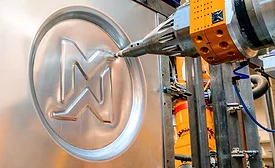
LOS ANGELES—The U.S. Air Force has awarded a $1.6 million contract to Machina Labs to advance and accelerate the development of the company’s robotic technology for manufacturing metal tooling for high-rate production of composites.
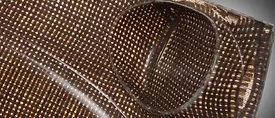
FRIBOURG, Switzerland—Volvo Cars is using ampliTex flax fiber composites from Swiss company Bcomp to make optional trim for the dashboard and doors of the new EX30 compact electric SUV. It is the first production vehicle to use the new, lightweight material.
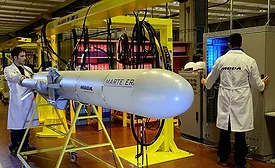
Missiles are the premier weapon of modern warfare. According to consulting firm Polaris Market Research, global sales of rockets and missiles are expected to increase from $58.3 billion in 2021 to $73.8 billion in 2026, growing at a cumulative annual rate of 4.8 percent.
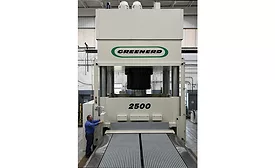
NASHUA, NH—Greenerd Press & Machine Co. has developed a 2,500-ton compression molding press with 10-foot-square heated platens that can maintain a temperature of 500 F with a tolerance of ±5 degrees.
Thanks to their strength, corrosion resistance and formability, carbon fiber-reinforced polymers (CFRP) are increasingly being used for automotive and aerospace structures. Adhesives are ideal for assembling CFRP.
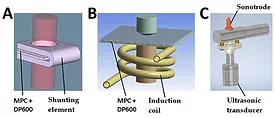
Metal-plastic composites (MPCs) have many advantages for producing lightweight structures. They are lighter than steel, yet very strong. They can be shaped using standard cold-forming processes. And, they are less expensive than aluminum alloys.
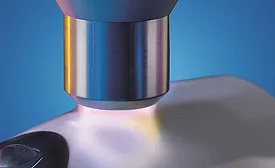
ZURICH—Researchers from the Complex Materials Group at ETH Zurich university have developed a lightweight composite material that changes color as soon as it is deformed. The result of this color change, in effect, is the material inspects itself.
Manufacturing large, monolithic composite parts, such as a car body or an aircraft fuselage, requires a large and complex mold. As a result, the process can be quite costly. Alternatively, such complex parts can be manufactured less expensively by assembling a series of smaller parts using various joining techniques.
Traditionally, aircraft manufacturers have been reluctant to adopt robots and other types of automation. One of the main challenges is that large plane parts come with relatively high geometry deviations, so robots need sensor guidance.