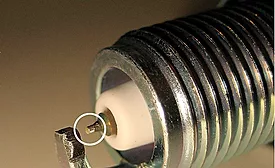
The spark plug is an essential component of an internal combustion engine. A well-designed plug can maximize fuel economy, reduce emissions, increase engine performance and minimize maintenance.
As of May 26, more than 5.6 million cases of COVID-19 have been reported in 235 countries. Worldwide, nearly 349,000 people have died from the disease, but 2.4 million have recovered.
Consumers spend some $1 billion to buy 2 billion lightbulbs each year in the U.S. That’s more than 6 million every day. High-speed automated assembly is the only way to meet that kind of volume.
Thermoelectric coolers are great for day trips, tailgating, boating or even overnight camping trips. Instead of ice, these coolers rely on a thin, flat electronic assembly called a Peltier device.
Flexible feeders are great at helping manufacturers accommodate product variants on the assembly line. After the feeder presents parts to a vision-guided robot, one or more cameras take images of the parts, and vision software tells the robot which parts are pickable and which are not. The robot then retrieves the parts for kitting or assembly.
Daimler Buses is using additive manufacturing to make spare parts for vehicles on demand. The company's Centre of Competence for 3D Printing is examining more than 300,000 bus parts to determine their suitability for additive manufacturing.
A&H Meyer, a manufacturer of cable management systems for furniture, approached RNA Automation Ltd. to design a flexible automation system to sort, separate and feed busbars. The company wanted a system that could handle 12 different lengths of flat and crimped busbars with minimal changeover time.
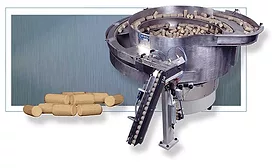
An assembler wanted to automatically feed and orient synthetic corks at a feed rate of 200 parts per minute. These corks are difficult to feed due to the sticky film that remains on their surface after the manufacturing process.