The automotive industry experienced a record number of vehicle recalls in 2018, and this year's tally isn't far behind. Many of those issues have been caused by electronics or software glitches.
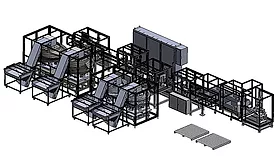
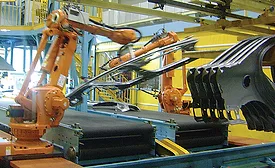
There's nothing quite like a multistation automated assembly system. Watching robots, actuators and indexers go about their carefully choreographed routines with little or no human intervention can seem nothing short of miraculous.
Most major cities in the world are located on or near a major body of water, either a coast, a large lake or a river. That's because they originated as water-borne trading posts centuries ago.
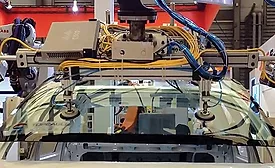
Inserting glass windows into car bodies has been, and remains, a challenge for automotive OEMs. Manual insertion is labor intensive and imprecise, and carries with it the risk of bodily injury to assemblers due to broken glass.
Robots are being used for a variety of assembly and inspection applications, which is enabling the operation of lean, efficient and automated systems where more than one product type or model can be produced on a single assembly line.
If Ohio ever needs a catch phrase to promote its manufacturing success, “five out of eight is great” would be appropriate. The reason is because Ohio is home to five of Whirlpool Corp.’s eight U.S. assembly plants. Those five factories are located in the Ohio cities of Clyde, Findlay, Greenville, Marion and Ottawa.
Just a few decades ago, the typical American or European driver would never have believed that China, a communist country, would one day be the world’s largest car producer (by volume).
In every manufacturing industry, tradition is becoming less important. Companies no longer assume that what worked in the past will be enough to keep and gain customers. Instead, they look to the latest technology to improve manufacturing processes, optimize product quality and expand their customer base.