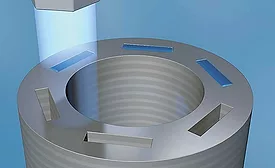
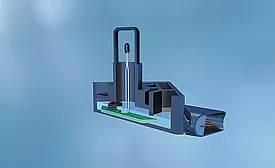
Every action in life involves a trade-off: The gaining of one benefit at the expense of another, to best meet the needs of the situation at hand. When the situation involves high-volume bonding, sealing or gasketing, manufacturers rely on UV-cure adhesives because they allow on-demand and quick curing (1 to 5 seconds after light exposure).
Whether it’s an automotive application or an electronics application, engineers are increasingly looking for adhesives that offer high performance at high temperatures.
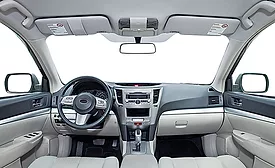
Once a lagging market segment, automotive electronics has gained significant importance in recent years, as the industry, the culture and consumer expectations have changed. Safety and regulatory requirements for vehicles have increased, manufacturers have new warranty requirements, and what used to be “luxury” features are now expected to come standard with a new car.
CAMBRIDGE, MA—Researchers at MIT have developed a 3D-printed robotic hand made out of silicone rubber that can lift and handle objects as delicate as an egg and as thin as a compact disc.
Engineers have many options for joining identical or similar materials. To join, say, a steel part to another steel part, engineers can use screws, rivets, welds, adhesives, clinches or press-fits.
It may not be as “sexy” as a robot or a high-speed automated assembly system, but one of the most interesting new products introduced at the show last fall was actually an adhesive.
GERMANTOWN, WI—Adhesives manufacturer ResinLab LLC has launched a joint program with Dow Corning Corp. to formulate custom silicone adhesives and sealants.
Adhesives offer several benefits for joining materials. They distribute loads across the entire joint area. They show excellent fatigue properties. They attenuate vibrations and sound. They often fulfill a dual role, bonding a joint as well as sealing it against ingress of water or other fluids.