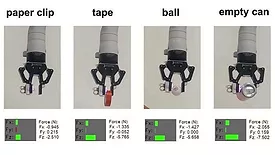
Engineers at Queen Mary University here have developed a sensor that enhances tactile capabilities in robots, allowing them to “feel” objects and adjust grip accordingly.
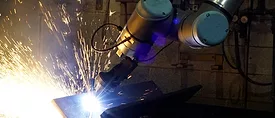
TORONTO—Canadian tech startup Xaba and manufacturing technology company Rolleri Holding SpA are partnering to develop an autonomous collaborative robot work cell for welding.
FORT LAUDERDALE, FL—
A manufacturer of exhaust components had nearly given up trying to automate complex, manual welding processes—until it found cobots.
Welding plays a critical role in producing appliances, automobiles, construction equipment, ships, tractors, trailers, trucks and many other products. Unfortunately, there’s a severe shortage of welders, and the demand for skilled welding professionals is growing.
TORONTO—Lockheed Martin recently completed a project to evaluate the automation of airframe manufacturing operations using six-axis robots equipped with artificial intelligence technology from Canadian tech startup Xaba.
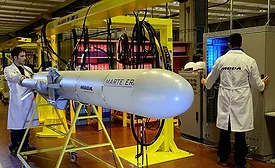
Missiles are the premier weapon of modern warfare. According to consulting firm Polaris Market Research, global sales of rockets and missiles are expected to increase from $58.3 billion in 2021 to $73.8 billion in 2026, growing at a cumulative annual rate of 4.8 percent.
Machine tending is, by far, the most popular application for collaborative robots. It’s a perfect fit for a cobot’s unique ability to work alongside or together with people without safety fencing.
By some estimates, 90 percent of wire harness assembly tasks are done manually. As a result, harness assemblers are at risk of occupational health problems due to repetitiveness and awkward postures.