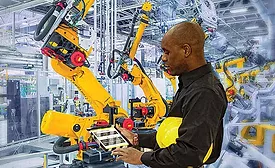
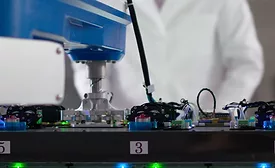
More than 20,000 manufacturing professionals saw the newest robots, vision systems and motion control technologies during the 2019 Automate show and conference, which was held April 8-11 at McCormick Place in Chicago.
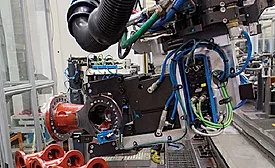
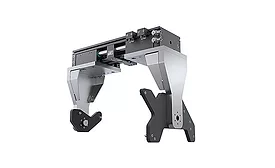
Today, robots are capable of handling much larger and heavier payloads than in the past. Those applications require robust grippers that are up to the task.
Although robots have successfully tackled a variety of manufacturing tasks, many assembly applications still suffer from complex, time-consuming programming.
Static electricity can do much more than levitate a person's hair with the help of a charged balloon. This scientific phenomenon, technically known as electroadhesion, can also enable a robotic gripper to easily handle material as fragile as an egg and as flimsy as soft fabric.
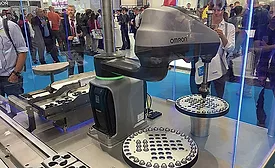
More than 46,000 manufacturing engineers and managers from 47 countries attended Automatica 2018, which took place June 19-22 at the New Munich Trade Fair Centre in Germany.
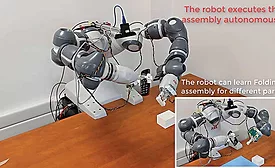
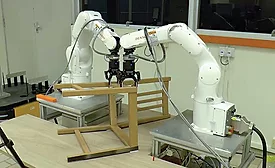
SINGAPORE--Engineers at Nanyang Technological University (NTU) here have developed a robotic system that can autonomously assemble an IKEA chair. The machines feature off-the-shelf components, such as 3D cameras and robotic arms equipped with parallel grippers.
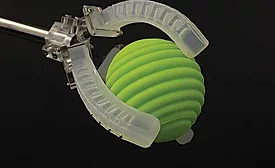
Engineers at Harvard University have developed soft robots that can sense touch, pressure, movement and temperature. The devices feature embedded sensors that were inspired by nature and the human body's sensory capabilities.
For manufacturers, the product-miniaturization trend is kind of a Catch-22. They know that serving a large and ever-expanding marketplace ensures company growth—so long as their robots can precisely place ever-smaller parts into subassemblies, final assemblies or packaging. Specially designed small grippers and vacuum cups have enabled many manufacturers to achieve both goals.