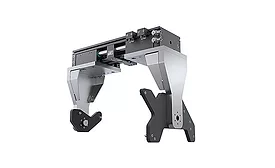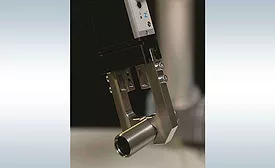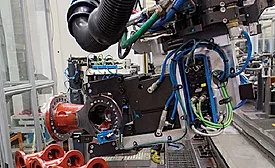
Today, robots are capable of handling much larger and heavier payloads than in the past. Those applications require robust grippers that are up to the task.
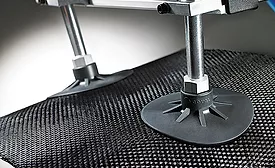
For manufacturers, the product-miniaturization trend is kind of a Catch-22. They know that serving a large and ever-expanding marketplace ensures company growth—so long as their robots can precisely place ever-smaller parts into subassemblies, final assemblies or packaging. Specially designed small grippers and vacuum cups have enabled many manufacturers to achieve both goals.
Among Forrest Gump’s greatest life lessons was the insight that you could never be certain what you would find inside a box of chocolates. Although Gump never actually clarified what that uncertainty is, it’s generally assumed he was referring to the various types of fillings hidden in chocolate candies.
BIRMINGHAM, UK—A way of teaching robots to pick up unfamiliar objects without dropping or breaking them has been developed by researchers at the University of Birmingham. The research paves the way for robots to be used in more flexible ways and in more complex environments.
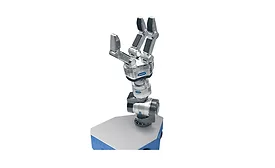
Robotic grippers and 3D printing are two passions of Hod Lipson, an associate professor of mechanical and aerospace engineering and computer science at Cornell University.
The facility was created by Lipson in 2001 to develop robots that “create and are creative. We explore novel autonomous systems that can design and make other machines automatically,” he points out.