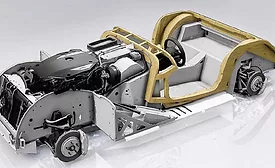
Ask the typical American about automobile history and you're likely to hear the name "Henry Ford." Pose the same question to a Brit, however, and get ready for an answer of "Morgan Motor Co. (MMC)."
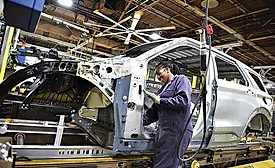
Steel has been, is now, and will continue to be the predominant material for vehicle structures and body parts, such as doors, hoods, liftgates and fenders. But, other materials, such as aluminum, magnesium, plastics and composites, are becoming increasingly important.
GOTHENBURG, Sweden—Engineers at Chalmers University of Technology have developed a structural battery that serves simultaneously as an electrode, conductor and load-bearing material.
ZARAGOZA, Spain—Engineers at the Technological Institute of Aragon here are coordinating a new European Union initiative to develop lightweight components for electric vehicles.
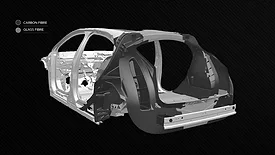
WHITLEY, England—Jaguar Land Rover is preparing for future electric vehicles by investing in advanced lightweight composite research to increase range and boost performance.
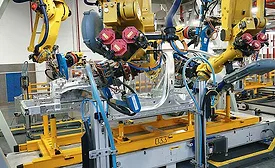
Self-pierce riveting (SPR) is a cold joining process for fastening two or more sheets of material by driving a rivet through the top sheets and upsetting it, under the influence of a die, into the bottom sheet without breaking through it.
When the latest-generation C-Class series of automobiles was being developed in 2014, Mercedes-Benz designers placed a great emphasis on weight reduction to reduce fuel consumption.
Aluminum is a popular material for numerous automotive lightweighting applications. But, switching from aluminum to zinc alloys could greatly enhance the longevity and sustainability of many types of auto parts.
DARMSTADT, Germany—Engineers at the Fraunhofer Institute for Structural Durability and System Reliability have developed a lightweight battery pack made out of carbon-fiber composites that weighs 40 percent less than traditional aluminum enclosures.