A common theme of science fiction is the interconnectedness of things—be they planets, species or technological processes. Real-world space exploration often verifies this view, especially in the area of technology.
BLDC motors use electronic instead of mechanical commutation to control the power distribution to the motor. Latching Hall-effect sensors, mounted in the motor, are used to measure the motor’s position, which is communicated to the electronic controller to spin the motor at the right time and right orientation.
The market will expand as ECMs are replaced by more cost-competitive, efficient technologies.
May 1, 2016
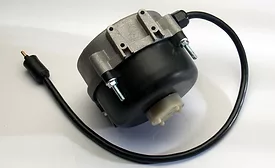
Since the introduction of Electrically Commutated Motors (ECMs) over fifty years ago, there has not been a substantial energy efficiency improvement in motor technology for commercial refrigeration applications that exceeds the current generation of available ECM products.
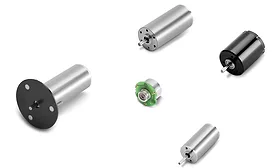
Like any other electric motor, a permanent magnet electric motor works on electromagnetic principles and has some mechanical function to perform at every instance of its operation.
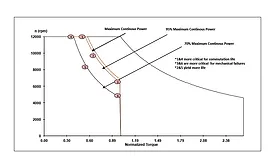
Due to their mechanical commutation, brushed dc motors have a limited operational lifetime and are confined to low operating speeds typically less than 12K rpm.
The distinction between AC induction motors and permanent-magnet DC servomotors was once fairly clear. AC motors were for high-horsepower applications, such as compressors, pumps, blowers and bulk-handling conveyors. DC servomotors were for applications requiring low horsepower, high torque, high cycling and precise positioning, such as machine tools and pick-and-place machines.
Last December, U.S. Defense Advanced Research Projects Agency (DARPA) hosted the trials of its first ever Robotics Challenge at the Homestead Speedway in Miami, FL.
Double engine output while reducing air consumption.
January 3, 2014
What happens when the power from your drive unit simply isn’t enough? When the motor for your robot-controlled plant has to supply maximum power yet has to be physically very small?
It’s no secret that government regulations and energy incentives are forcing manufacturers to create or redesign products to meet more demanding energy restrictions.
ERLANGER, KY—Jacobs Automation, which makes modular assembly conveyors based on linear motors, is slated to create 26 jobs and invest more than $1.7 million to build a new facility here.