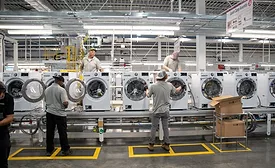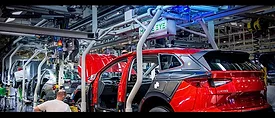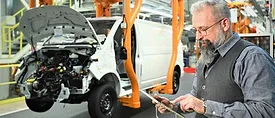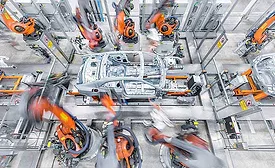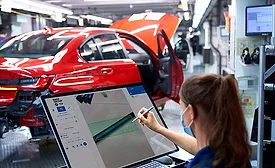
Increasingly, manufacturers are learning that artificial intelligence (AI) can provide them with actual benefits. One of those manufacturers is Gestamp Automocion, a global designer and producer of metal components (chassis, bodies and mechanisms) for automobiles.
Many questions surround artificial intelligence (AI). A common one among non-users is: Can something artificial truly produce real-world benefits? Increasingly, manufacturers in the automotive industry are ready and able to provide an affirmative answer.
Recent industry developments are looking to save lives, reduce injuries, and spread mobility equitably, but education—of developers and consumers—is one important element to AV technology development and adoption.
This year kicked off where 2018 finished when a huge number of developments were announced in autonomous and connected vehicles. The biggest platform for these reveals, demonstrations, and announcements was the CES 2019 Show in Las Vegas, which saw an unprecedented amount of automotive applications being showcased and a glimpse given to a world that is fast becoming a reality.
The twin technologies of big data and machine technology will have to work together in order to propel autonomous vehicle development forward, and industry players from automakers to chipmakers are gearing up for a long and winding road.
September 10, 2020
Artificial intelligence (AI) and machine learning have become vital tools for the production of next-generation automated vehicles, particularly because of the need to recognize and react to the nearly infinite number of scenarios encountered on real-world roads.
TUSCALOOSA, AL—Mercedes-Benz is testing a new digital production system at its assembly plant here. If successful, the automaker plans to implement the system at its factories worldwide.
Bossa Nova Robotics is one of the leaders in the retail robotics sector, providing large retailers with inventory-scanning robots that move up and down aisles, tracking inventory supply levels via computer vision and artificial intelligence.
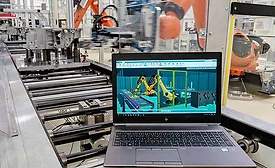
Robots are an important piece of the Industry 4.0 puzzle. Tomorrow's smart factories will depend on new types of machines, such as collaborative and mobile devices that are interconnected. Artificial intelligence (AI), cloud computing and data analytics will also make industrial robots more reliable than ever.